The chaos inside Hegseth’s defense department that left Trump ‘concerned’ by scale of purge
Want to bookmark your favourite articles and stories to read or reference later? Start your Independent Membership today.
Army Secretary Dan Driscoll became the latest high-ranking U.S. military official to leave the Pentagon on September 1 amid reports of tensions with Defense Secretary Pete Hegseth.
No official reason was offered for Driscoll’s departure after 18 months in the role but it came in the wake of CNN and Reuters reporting he had been butting heads with Hegseth for several months.
According to sources cited by The Atlantic, Driscoll attended a meeting with PresidentTrump in the Oval Office in late August at which he “brought up concerns with the administration surrounding Army transformation and readiness and Hegseth’s blocking those efforts specifically by firing the generals who were responsible.”
Trump was said to be “surprised and concerned” about the number of the cuts to the department and the seniority of those who have left, The Atlantic reported, which has left the Department of Defense with fewer generals than at any point in its recent history.
Driscoll has since given an interview to Rolling Stone in which he acknowledged differences of opinion with Hegseth, while adding: “If you polled us, we probably agreed on more than 50 percent of things. What’s been reported is all the things we disagree on.”
He said he knew that he did not “have to like” the secretary’s decisions but “would advocate as strongly as I possibly could – knowing I’m talking to my boss, and the final decision-maker.”
Sean Parnell, chief Pentagon spokesman, responded to The Independent’s inquiry about Driscoll’s interview by calling Rolling Stone “a fake news rag regurgitating months-old false narratives in an attempt to stay relevant to their ever-dwindling audience”.
He further alleged the article in question “is riddled with made-up claims regarding Secretary Hegseth’s historic achievements and transformative leadership.”
“From slashing bureaucracy, to untying the hands of our warfighters, to re-energizing our defense industrial base, Secretary Hegseth has been a generational Secretary for the Pentagon,” Parnell added.
Nevertheless, there have been multiple reports of clashes under Hegseth’s watch, with a series of high profile departures.
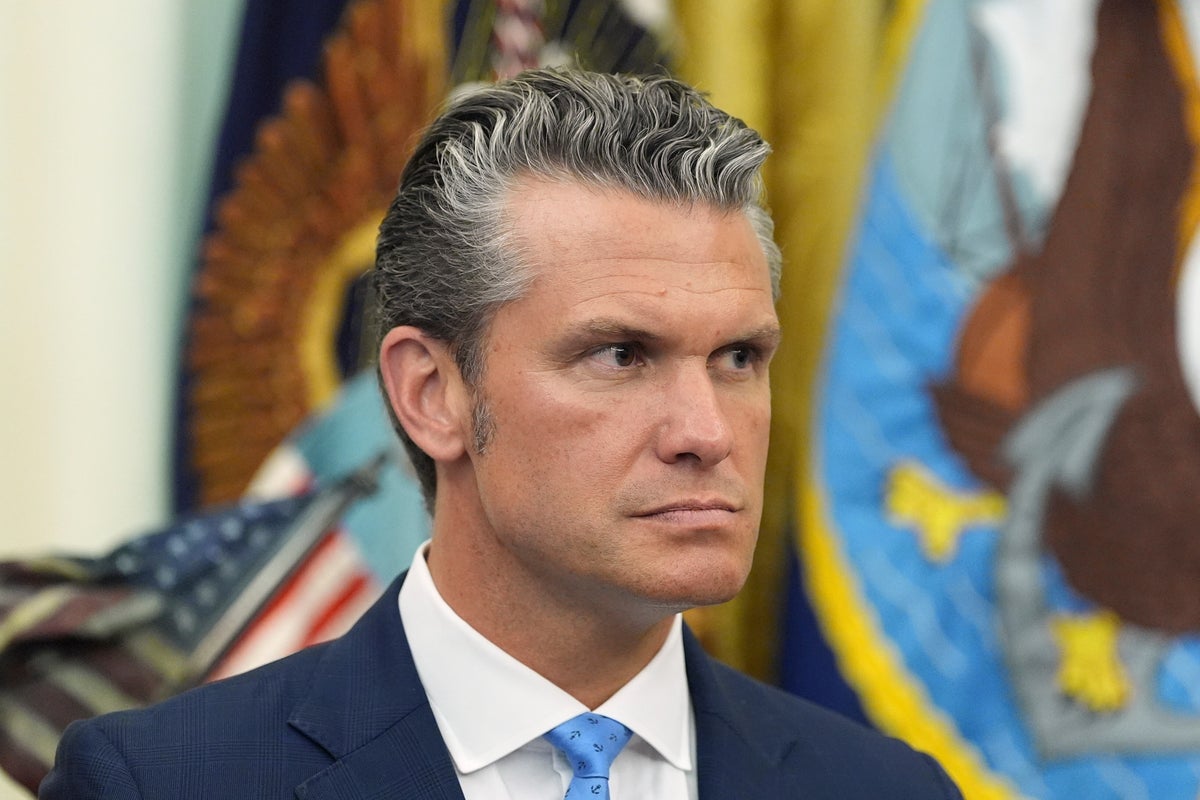
The defense secretary addressed the broader issue of cuts during an ideology-heavy speech at Marine Corps Base Quantico last month. He announced additional 10 percent cuts to positions reserved for generals and admirals, having already made 10 percent cuts to these roles last year.
“The media calls that a purge. I call it accountability and long overdue. And frankly, the bare minimum," Hegseth said.
“The ideological clowns are out. The patriotic cowboys are in with testosterone testing on top. Diversity is not our strength. Unity is our strength.”
Below, we look at some of the high profile Pentagon departures during Hegseth’s tenure so far.
The first casualty of Hegseth’s tenure was the 40-year Air Force veteran Gen. Charles Q Brown Jr, who was replaced by Lieutenant General Dan “Razin’” Caine as chairman of the Joint Chiefs of Staff in February 2025.
Brown, who had made history as the Air Force’s first African American chief of staff, had been in the post for 16 months and had expected to continue his term until the fall of 2027.
Trump said in a statement announcing Caine’s nomination that he had been “overlooked” by his predecessor Joe Biden, an apparent slight on Brown, who was nevertheless praised as “a fine gentleman and an outstanding leader.”
Hegseth also fired Franchetti – the first woman to serve as chief of naval operations and the first female member of the Joint Chiefs – that same month without explanation.
Biden had nominated her over the preference of his own defense secretary, Lloyd Austin, convinced by her vast experience in command and executive decision making.
Hegseth’s opposition invited concern from other women in the service, who feared they too could be blocked from advancing.
Next to go was the director of the U.S. National Security Agency, who was fired along with his deputy Wendy Noble in April last year.
Haugh and Noble’s departures reportedly came after consultation with MAGA influencer Laura Loomer, who beamed on X that they had been dismissed because they had been “disloyal to President Trump” and “handpicked” by former chairman of the Joint Chiefs, Gen. Mark Milley.
Loomer’s apparent role in the firings led to expressions of concern on Capitol Hill.
Four days after Haugh’s axing, the former Navy helicopter pilot and combat veteran was fired from her role as U.S. representative to the NATO Military Committee.
That came after she reportedly appeared on a “woke” list drawn up by the Trump administration, which took exception to her past advocacy for diversity in the Armed Forces.
According to the Associated Press, Chatfield was informed by Admiral Christopher Grady, the then-acting chairman of the Joint Chiefs, that the administration wanted to go in a different direction.
The following August, the Air Force chief of staff was dismissed with the same message as Chatfield, prompting him to retire two years into his four-year term.
Allvin was thanked for his “transformational” efforts in the role but an insider told The Washington Post his early retirement was “certainly not his choice.”
The general nevertheless issued a statement in which he said: “More than anything, I’m proud to have been part of the team of airmen who live out our core values of integrity, service and excellence every day as we prepare to defend this great nation.”
There were to be more departures that month, including that of Kruse as head of the Defense Intelligence Agency, which had determined that the administration’s Operation Midnight Hammer airstrikes on Iran’s nuclear facilities were less effective than Trump and Hegseth had claimed.
While the president and his secretary had repeatedly insisted Iran’s capabilities had been “obliterated,” the DIA put out a report suggesting they had only been set back by a matter of months, infuriating Trump.
Also leaving their posts at this time were Vice Adm. Nancy Lacore and Rear Adm. Milton Sands, departing as chiefs of the Navy Reserve and Naval Special Warfare Command respectively.
After a period of relative calm – other than the loss of three-star Lt. Gen. Joe McGee from the Pentagon’s Joint Staff in October – Hegseth dismissed the Army’s chief of staff in April this year, perhaps his most controversial call coming a little over a month into the Iran conflict.
The decorated veteran’s firing reportedly came after another clash with Hegseth and was met with solemn scenes when he broke the news to colleagues and indignation in Congress, where the Senate Armed Forces Committee pressed the secretary for an explanation.
The Army’s top uniformed officer has since been replaced on an acting basis by Gen. Christopher LaNeve, who has yet to be confirmed by the Senate.
Three weeks after George was let go, Hegseth ousted the head of the Navy, replacing him with then-undersecretary Hung Cao on an acting basis, shortly after Iran’s move to shut off the Strait of Hormuz caused a spike in global oil prices.
“President Trump and Secretary Hegseth agreed new leadership at the Navy is needed,” a senior administration official told The Independent at the time.
The plight of sailors aboard the USS Abraham Lincoln, diverted to the Gulf because of the war and starved of necessities, has since come to light, drawing attention to the strain being placed on U.S. military resources by the war.
Prior to Driscoll, the most recent departure from the military’s hierarchy was the commander of U.S. Army forces in Europe and Africa.
Donahue was famously the last American soldier to leave Afghanistan in 2021 and enjoyed a distinguished career leading Delta Force units in Iraq and Afghanistan before commanding the 82nd Airborne Division.
Maj. Gen. Christopher Norrie, Donahue’s deputy, has since stepped in as his interim replacement.
Driscoll is an Iraq War veteran, tech investor and former adviser to Vice President JD Vance, whom he befriended while they were contemporaries at Yale Law School.
When nominating him in 2024, Trump hailed Driscoll as “a disruptor and change agent.” He went on to make good on that reputation by championing the development of drone warfare technology – only for Hegseth to shut down a European unit focused on that field in August and order it to return to its “core” mission of airborne infantry.
Driscoll was praised by White House spokesperson Anna Kelly upon his resignation for proving himself “highly effective in advancing President Trump’s agenda to Make America Strong Again at the Department of the Army by providing outstanding leadership during historic military operations, restoring an emphasis on readiness and lethality, assisting with negotiations between Russia and Ukraine, and more.”