
The cost-of-living squeeze: prices rise quickly and fall slowly - IOL
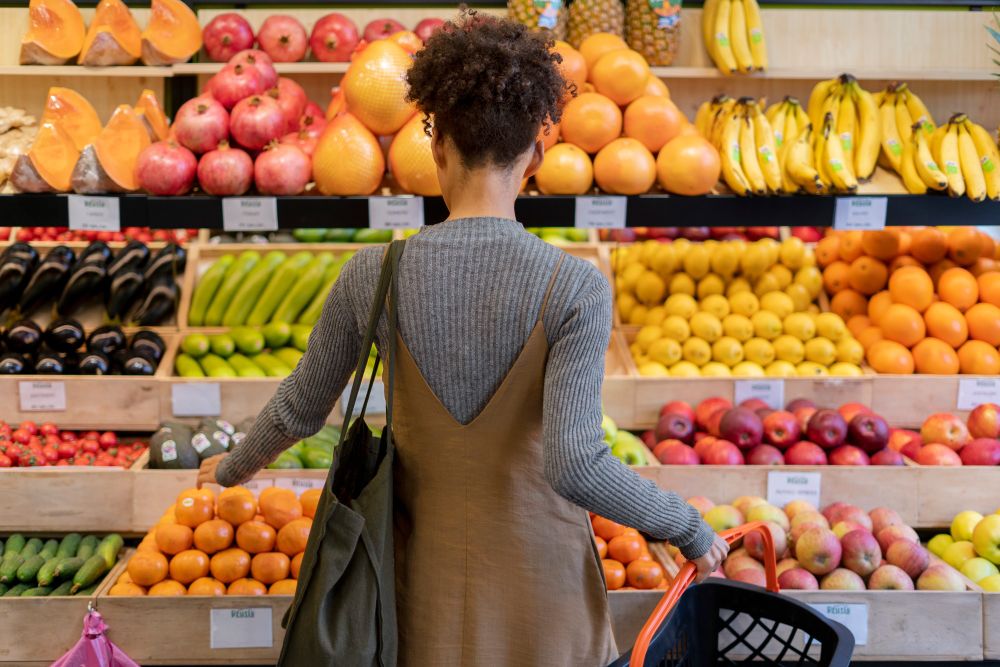
South Africans feel the pinch as essential costs take a bigger bite of incomes.
In most South African households, there's a moment on a Saturday morning that tells you more about our economy than any headline does.
You walk into the grocery shop with R100 and a shopping list. You walk out with one item fewer than the same R100 bought last year.
Brent crude has pushed back above US$100 a barrel, and the coverage has the familiar shape. A spike, a warning, a graph pointing upwards. For the person holding the R100, that means less drama and more permanence than the headline suggests.
Start with the mechanism, which is simpler than it sounds. South Africa imports most of its fuel and buys it in dollars, so the pump price rests on two numbers. What refined fuel costs internationally, and how many rands it takes to buy a dollar.
Add the taxes and levies, roughly a third of what you pay, and the regulated margins. From the pump it spreads. Nearly seven in ten people who use public transport travel by minibus taxi, and between May and June this year taxi fares rose 11.5 percent in a single month.
Every loaf of bread and every bag of maize meal arrives on a truck, and the truck runs on diesel. Fuel is not one cost among many. It is a fundamental cost sitting inside everything.
Which brings us to where most of the confusion lives. You are about to hear a great many numbers. Headline inflation, core inflation, CPI, food inflation, medical inflation, school fee inflation.
They are measured differently and reported as though each one says something separate. They do not. Every one measures how much more expensive something has become, not whether it has become cheaper.
In July the headline figure was 4.3 percent, down from 5.0 percent, and food came in under one percent, the lowest in sixteen years. Read quickly, that sounds like relief.
A lower number means prices are rising more slowly. It does not mean they are coming down.
There is a simpler way to see this. Statistics South Africa also publishes a running measure of the price level itself, tracking what an ordinary basket of goods costs over time.
Compare what that basket cost in 2015 with what it costs now: roughly seventy percent more, and it got there by rising in almost every month along the way. Not most months. Almost all ofthem.
During those same years, oil fell from US$99 a barrel to US$44, then back above US$100,then down to US$69.
The rand went from under R11 to the dollar to more than R18 and back again. Both moved aggressively, and both moved in both directions. The shelf only ever moved one way. This is not a theory, and we do not have to wait to test it.
Oil is above US$100, which is against us. But the rand is at its strongest level since 2022, trading around R16 to the dollar and dipping below that recently, which is firmly in our favour.
One dial is hurting, and the other is helping about as much as it ever does.
In July, when the oil price eased, petrol came down 7.1 percent in a month and diesel 11.7percent. Real decreases, and not small ones.
Both remain considerably more expensive than a year ago; the taxi fares that went up in June did not come back down, and a widely tracked basket of basic household food that fell about R50 in August is still R100 more expensive than it was a year ago.
Small steps down. Large steps up. Credit is owed where it is due. When the oil price spiked in March, the government cut the general fuel levy by R3 a litre from the first of April, extended the relief as the conflict continued, then tapered it through June.
That was real money and real protection, and it cost about R17 billion in foregone revenue over three months. The full levy came back on the first of July.
So the honest answer runs against the headline. This is not serious because oil is aboveUS$100. It was above US$100 in April too. It is serious because in April there was R3 a litre standing between the world and your tank, and now there is nothing.
R17 billion over three months is not a thing a country does twice. Our own Competition Commission has a name for what happens next. In its Cost-of-Living Report, published this month, it describes rocket-and-feather behaviour.
Prices rise quickly when input costs rise, then drift down slowly, or not at all, when those costs ease.
The Commission warns there are legitimate concerns that prices may not decline once the fuel price stabilises. It is worth being fair about the evidence. Not every study agrees, and research on the maize chain found no such pattern, pointing instead to drought and global shocks.
Which brings us to something that has nothing to do with oil at all.
Food inflation sits at a sixteen-year low right now, and maize meal and bread actually got cheaper in July. That is not generosity. It is two good rainy seasons in a row, which gave us a maize harvest of around 16.5 million tonnes against annual consumption of about 12 million.
The Weather Service warned at the end of August that we are moving into an El Niño from October, which is when planting starts. Roughly four out of every five hectares of our summer grain depend on rain rather than irrigation.
The last severe El Niño, in 2015 and 2016, cut the national maize crop by about a third. If that happens again, the cheapest part of your basket becomes the most expensive part of it, and no oil price will be to blame.
So here is what to watch, and it is not the oil price, because it will move again and move back. Watch the same basket instead.
Buy roughly the same things for three months running and note what the till says. Watch whether a fare that went up in June ever comes down. Watch whether the shelf responds at all to the strongest rand in four years.
Because the question was never how high oil goes. It is whether anything we buy ever becomes cheaper again.
On the evidence of the last decade, it does not. It becomes more expensive more slowly, and we have learned to call that good news.
**Yusuf Bodiat is a chartered accountant, certified director and former chief financial officer. He is the founder of Pragmatic Thinking, an independent strategic advisory firm, and serves as a non-executive director on several boards. He is the author of The Bottom Line: A CFO's Blueprint for South Africa's Turnaround, published in February 2026.
** The views expressed do not necessarily reflect the views of IOL or post.co.za
