The criminal court that answers to no one - Prothom Alo English
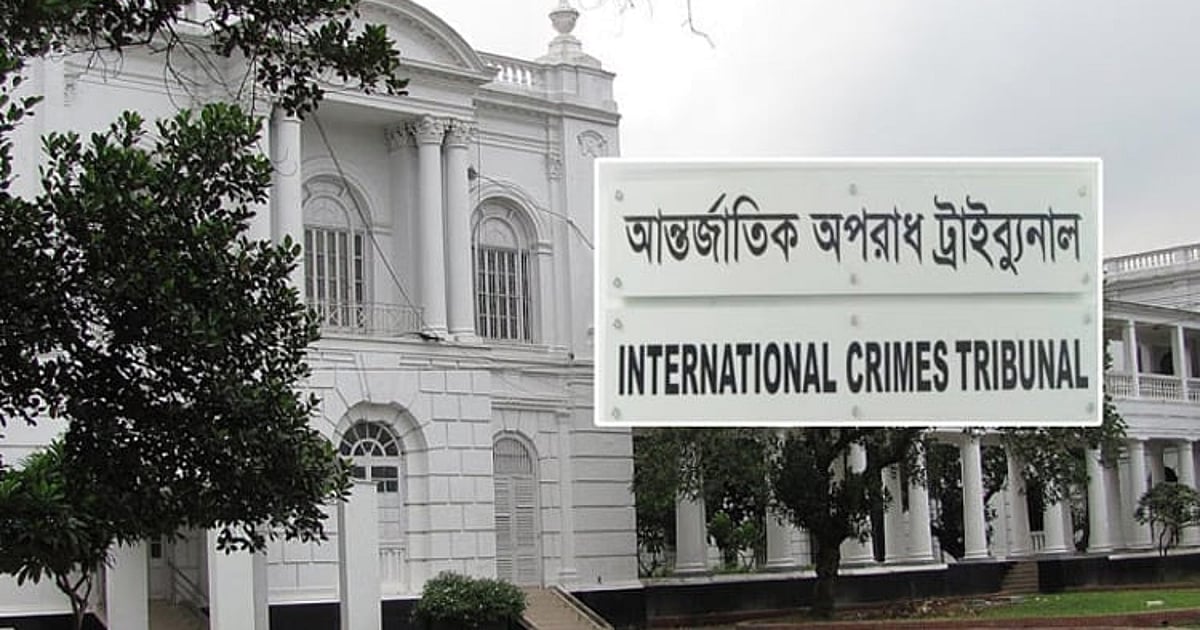
International Crimes TribunalFile photoOn 20 July 1973, some 19 months after the end of a war of independence in which hundreds of thousands of people were killed, Bangladesh’s new parliament passed the International Crimes (Tribunals) Act. Its immediate purpose was to allow the government to prosecute 195 Pakistani military officers, then held as prisoners of war in India, for genocide, crimes against humanity and war crimes.
Five days earlier, Parliament had passed the First amendment of the constitution, introducing two new articles to the constitution – 47(3) and 47(A). These did three things. It protected the law from being struck down as unconstitutional; it took away key fundamental rights from anyone to whom such a law applied, including the right to protection of law (article 31); right to protection against retrospective criminal law (article 35(1); the Right to a fair trial (article 35(3); and the right to enforced fundamental rights (article 44); and it also barred those accused under the Act from going to the Supreme Court for any constitutional remedy at all.
In the end, none of the 195 officers was tried. Under the 1974 Tripartite Agreement between Bangladesh, India and Pakistan, after Pakistan had earlier agreed to return Bengalis stranded there, the military officers were sent back to Pakistan instead.
Carve-outs from constitutional rights are hard to justify at the best of times. But in 1973 there was at least a rationale. The accused were officers of a foreign army, not Bangladeshi citizens. The alleged crimes had been committed only months earlier. And the state trying them was barely a year and a half old, with fragile institutions.
For almost four decades, the Act - and with it, the First Amendment - lay dormant: unused, and in effect little more than a legal curiosity. That changed in 2010. The newly elected Awami League government amended the Act so it could be used against "individuals" as well as members of armed forces and set up a tribunal to prosecute Bangladeshis accused of collaborating with the Pakistani army in 1971, most of them leaders of Jamaat-e-Islami.
At that point, the original rationale in support of the First Amendment and the restriction of rights did not exist. The accused were no longer foreign soldiers but Bangladeshi citizens, the very people a constitution exists to protect and whose claim to its guarantees is strongest. If anything, because of the seriousness of the offences, those being prosecuted for international crimes should have received more – not less - rights. And the alleged crimes were not months old but nearly 40 years old, with the no longer a fragile new one. However, there remained a kind of moral cover legitimising the constitutional restrictions as the offences being prosecuted related to the 1971 war.
These war crimes trials were deeply flawed, highly politicised and denied defendants basic due process rights. There were many reasons for the unfairness of the trials, but one of the most important lay with the First Amendment, and articles 47(3) and 47(A) of the constitution.It was not surprising that the senior Jamaat lawyer Abdur Razzak sought to challenge the constitutionality of these First Amendment articles at the High Court – but in the end he withdrew the writ after he realised the court would not rule in their favour.
Those provisions, however, have not gone away.
The International Crimes Tribunal is now in its third incarnation. It was created in 1973 for Pakistani officers who were never tried, revived in 2010 for Bangladeshis accused of collaborating in 1971, and is now being used to prosecute those accused of crimes against humanity during the Awami League''s rule from 2009 to 2024: the killings of protesters in July and August 2024, and extrajudicial killings and enforced disappearances over the previous 15 years. The defendants have changed. Their constitutional position has not.
There is now, absolutely, no legal or moral justification for the rights of the accused at the ICT to be constrained by Article 47(3) and 47. The defendants are Bangladeshi citizens, and are accused of the most serious offences known to law, in trials where a death sentence is a real possibility, and not accused of any offence relating to the 1971 war which had provided some kind of ‘moral’ shield over the amendments. Yet the accused are denied rights that every other citizen facing criminal charges takes for granted: the right to the protection of the law, and the right to a fair trial.
Particularly damaging is the bar on the accused to challenge decisions made by the International Crimes Tribunal in the Supreme Court – including unlawful rejections of bail, flawed decisions to take cognisance of charges, and charges framed without a proper legal basis.
The result is a court that answers to no one. Investigators, prosecutors and judges all know that nothing they do before conviction can be reviewed by another court. By the time an appeal against conviction is possible, the accused may have spent years in custody, and the damage done by earlier errors can no longer be undone.
The consequences are already visible. Many accused have been held for more than a year without formal charges, in apparent breach of the tribunal's own rules. The tribunal has taken cognisance of formal charges and framed charges where there was no legal basis for doing so – often reflecting a fundamental misunderstanding of the offence of crimes against humanity.
Particularly notable are the charges involving the TV executive Mozammel Babu and the journalist Farzana Rupa, but there are many others. In any other criminal court, these decisions could have been challenged in the High Court – and undone. At the ICT, they cannot be challenged at all.
Repealing Articles 47(3) and 47A will not guarantee fair trials; the politicisation of the process runs too deep for that. But it would remove one of the most important structural obstacles. The BNP government has the two-thirds majority needed to amend the constitution and could do it tomorrow. It seems unlikely to so do, though, at a time when the tribunal is prosecuting its political opponents and any move could be presented as protecting the Awami League. The other route is the courts: a challenge arguing that the two articles violate the basic structure of the constitution. This should, on the merits, have a strong chance of success.
As with the 1971 prosecutions, some of the allegations now before the ICT are well founded. Hundreds of people were killed during the July uprising, and enforced disappearances and extrajudicial killings were carried out over the previous 15 years. The victims and their families are entitled to justice. But the evidence in many cases is far weaker than the prosecution claims, and the law is often being misapplied and without the accused being provided full constitutional rights, they will always be subject to legitimate claims of an unfair trial.
The prosecutions brought without any legitimate basis are even worse. They are a serious injustice to those accused, and they taint the legitimate cases too, dragging the whole process into the same controversy that engulfed the 1971 trials and making it easy to dismiss every verdict as political. Restoring the constitutional rights of those tried at the ICT is not a concession to the accused. It is the only way the tribunal's judgments will outlast the government that is running it.
* David Bergman is a journalist who has covered Bangladesh for many years. His id on X is @TheDavidBergman