The danger of coalition politics: Joburg should be a warning to South Africa | LGE 2026 - IOL
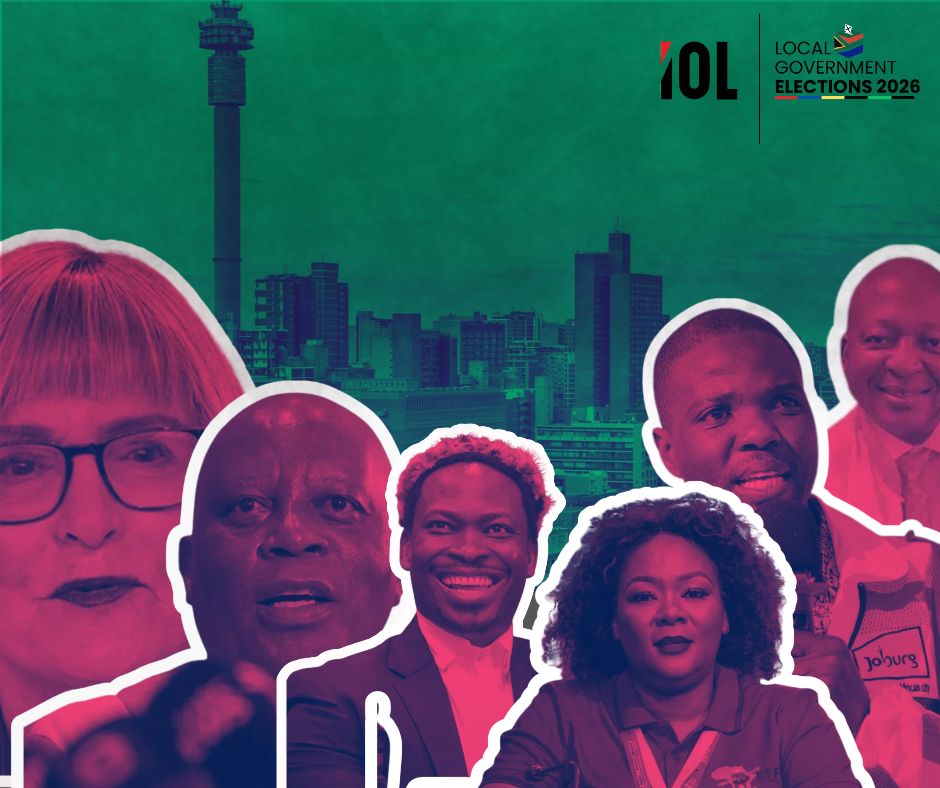
Joburg enters the November 4 Local Government Elections after a decade defined by unstable coalition politics and deteriorating services. Since 2016, the city has had nine mayors and eight coalition administrations, with no mayor completing a full five-year term.
Joburg residents frustrated by broken traffic lights, dry taps, potholes and electricity outages should consider an uncomfortable political reality ahead of the November 4 Local Government Elections.
For a decade, Joburg has demonstrated the dangers that arise when voters produce no clear governing majority and political parties prove unable to make coalition government work.
Until 2016, Joburg was governed by the ANC with an outright majority but the local government election that followed changed everything.
A DA-led administration - with Herman Mashaba at the helm - took office with support from smaller parties and the EFF, ushering Joburg into the coalition era.
Since then, Joburg has had nine mayors and eight coalition administrations. No mayor has completed a full five-year term and in the ensuing chaos, coalitions have formed, collapsed and been reconstructed.
Mayors have been removed through motions of no confidence. Smaller parties have become kingmakers - think the failed mayorships of Thapelo Amad and Kabelo Gwamanda of the single seat Al Jama-ah Party.
Political positions have become bargaining chips and while politicians fought over who should govern Joburg, the city they were fighting to govern deteriorated.
The City of Joburg was certainly not problem-free before coalitions. Non-revenue water, for example, was already 35.3% in 2015/16.
But consider where the city -South Africa’s economic hub - stands today.
The Centre for Development and Enterprise estimates Joburg’s electricity infrastructure backlog at R44 billion and says 54,132 power outages were recorded in just six months between July and December 2025.
Joburg Water has identified an infrastructure renewal backlog of R26.6 billion.
Gross unpaid bills owed to the city increased from about R15 billion in 2014/15 to more than R71 billion in 2024/25.
In inflation-adjusted terms, infrastructure investment has fallen by roughly 50% over a decade and by about 70% per resident.
The city's own 2023/24 annual report recorded electricity losses worth R4.9 billion, while physical water losses increased from R1.5 billion in 2022 to R2 billion in 2024.
None of this proves that coalitions caused every pothole, burst pipe or blackout.
Population growth, ageing infrastructure, non-payment, illegal connections, corruption and administrative failures all contribute.
But cities confronting problems on this scale require political stability, competent appointments and consistent long-term priorities.
Every time an administration collapses, it creates uncertainty over political leadership, priorities and senior appointments.
Research into Joburg's coalition experience has linked disputes over political positions and coalition arrangements to motions of no confidence and instability.
Tackling a R26.6 billion water infrastructure backlog requires decisions whose benefits may only become visible years later.
Unstable coalition politics encourages precisely the opposite - politicians worried about surviving the next council meeting rather than building the city for the next decade.
This is where Joburg residents must confront an uncomfortable reality.
In 2021, voters gave the ANC 33.6%, the DA 26.5% and the EFF 16.1%. No party came remotely close to governing alone.
Voters were perfectly entitled to make that choice, but electoral fragmentation has consequences.
When voters collectively give no party a governing mandate, they hand politicians the responsibility of constructing one afterwards.
In Joburg, those politicians have repeatedly failed and the question that must be asked is who gets punished at the ballot box for these failures?
South Africa went from 27 hung councils in 2016 to 66 in 2021 and as political support fragments further, coalition government could become increasingly common in major cities.
Joburg is therefore not merely a Joburg problem but a warning for the rest of South Africa’s major metros ahead of this year’s all important elections.
A fragmented vote may accurately represent a fragmented electorate but someone still has to govern the morning after the election.
Joburg residents have spent a decade discovering what happens when nobody receives a clear mandate and politicians cannot construct a durable alternative.
Before other cities follow that road, voters should look carefully at Joburg.
Coalition politics may give more parties a seat at the table and be lauded as the maturing of our democracy but the danger begins when everyone is fighting over those seats while the city outside that council room falls apart.
** Lee Rondganger is the deputy editor of IOL.
Lee Rondganger is the Deputy Editor of IOL.