
The era of male birth control is approaching - IOL
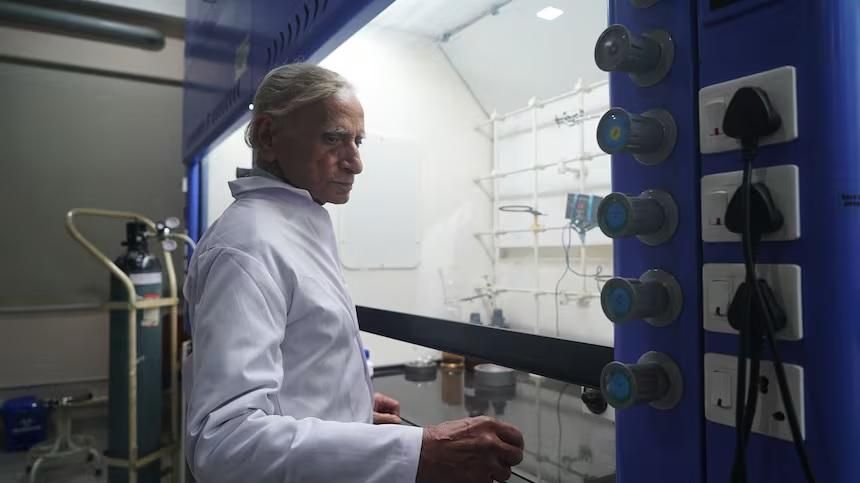
Dr Sujoy Kumar Guha came up with the idea for RISUG, a male contraceptive that’s long-lasting, reversible and shows no significant side effects, in the early 1970s. He’s been working on it ever since.
For nearly a half-century, Sujoy Guha has worked to perfect a male contraceptive. Now the 86-year-old Indian doctor’s idea is gaining momentum, raising the prospect of changing the way birth control is practiced across the globe.
Injecting hydrogel into the vas deferens - the tubes that carry sperm from the testicles - temporarily blocks sperm from passing through. Guha’s injectable contraceptive, known as RISUG, remains under development in India after decades of research, regulatory review and bureaucratic obstacles. But now companies in the United States are pursuing their own versions, racing to bring “vas-occlusive” contraceptives to market.
Next Life Sciences has been developing Plan A, which uses Vasalgel, tracing its lineage directly to Guha’s work. The nonhormonal contraceptive is designed to last about 10 years and can be reversed with a second injection of sodium bicarbonate solution, which dissolves the gel.
“You don’t have to worry about daily compliance, which is a massive issue with birth control,” says L.R. Fox, founder of Next Life Sciences. “You turn off your fertility until you’re ready to intentionally turn it on.”
Fox describes the interest in male contraception as “explosive,” with 55,000 men on the company’s interest list. One Plan A video received 4.5 million views overnight, he said.
Contraline is developing ADAM, a nonhormonal hydrogel that also blocks sperm passage through the vas deferens, initially designed to degrade on its own over two years.
Brian T. Nguyen, an OB/GYN and male-contraception researcher at University of Southern California’s Keck School of Medicine, said he is optimistic about broadscale adoption of reversible male contraception.
“From a structural standpoint, one of the main issues actually is not necessarily whether or not men want to do it, but it’s when they do want to do it, who can provide it, and can they afford it? Can they access it?” Nguyen said.
“With the advent of the first male reversible contraceptives, you’re going to have more men entering into conversations about it, whether directly relevant to them, or in abstract, or in ways that just put the idea of pregnancy prevention being in a man’s hands into social consciousness,” he said. “And that is paradigm-changing.”
Men currently have only two widely available contraceptive methods: condoms and vasectomies. Women have more than a dozen options, many with side effects. A 2024 KFF survey found that 82 percent of reproductive-age women had used contraception in the prior 12 months. Among contraceptive users who said they would prefer another method, 23 percent said they prefer that their partner get a vasectomy.
In a new documentary, “Give It a Shot,” Vaishali Sinha throws a spotlight on the long-running effort to bring a reversible male contraceptive to market while examining why responsibility for birth control has fallen so heavily on women.
“I think it’s really important that men ask themselves what they can do, what’s inside their body, what are they responsible for,” Sinha said in an interview. “Let’s turn the lens and see what that can do truly in moving the needle towards gender equity.”
There’s also the appeal of convenience and control.
“The holy grail of contraception is something that’s long-lasting and reversible,” Fox says in “Give it a Shot.”
Both Plan A and ADAM are well on their way down the regulatory path in the U.S.
Next Life Sciences recently completed Phase 2 clinical trials, according to Fox, with results he described as “showing incredible safety and efficacy.” In a trial involving 40 men, Plan A was successfully placed in the vas deferens and reduced sperm counts to zero. The company is testing whether the procedure can be reversed and sperm levels restored.
Phase 3 trials will begin soon, Fox said, adding that the company is aiming to win approval from the Food and Drug Administration in 2028. “We are laying the groundwork now to ensure a worldwide launch,” he said.
ADAM’s first human study was proof of concept - a first step to assess safety and feasibility, before a larger efficacy study to gain regulatory approval.
Kevin Eisenfrats, co-founder and CEO of Contraline, said in an email that ADAM “could be placed into the vas deferens and could quickly reduce sperm concentration to very low levels without doing so permanently.”
Contraline has since redesigned the product to be faster to use and extend the hydrogel’s lifespan.
“The next major step is a clinical study of ADAM 2.0, including evaluating the reversal procedure,” Eisenfrats said.
The company recently received $92.5 million in financing, Eisenfrats said. The larger share will go toward NES/T, the company’s hormonal contraceptive arm/shoulder gel for men, as it is the more clinically advanced program, he added.
RISUG, meanwhile, has traveled a much longer path.
“Give it a Shot” highlights the evolution of the technology, as well as the history behind it - the massive 1970s “sterilization drive,” in which more than 6 million men were targeted for forced vasectomies. Since then, the focus has shifted to women.
Today, sterilization is the dominant contraceptive for women across the world.
The documentary spends time in Chittorgarh, a major Indian city in the western state of Rajasthan, where about a dozen women spoke about their experience with sterilization. One woman drew laughs when she shared that the only man she knew who agreed to a vasectomy had 14 kids and a wife who refused the operation.
“There was a great sense of joy between these couples,” Sinha said, “and equity that I sensed from their conversation when they would talk about RISUG and how that was navigated and negotiated.” She noted that 500 men in India stepped up to participate in a clinical trial.
Sinha identified hurdles the contraceptive has faced in India, including lack of interest among major pharmaceutical companies and “the lack of this being on anyone’s agenda, whether nonprofits, governments, or capitalists.”
To administer it, a pinhole-size opening is made to expose the vas for injection, followed by a bandage and brief observation.
Sinha recalls one man proudly telling her, “Madam, in 30 minutes, I was good to go back home on my scooter.”
The filmmaker says that’s a badge of honor in India. “It means you put your balls on your motorbike and you’re good to go on the bumpy roads.”


