The High Cost of Winning a Michelin Star - Time Magazine
Two out of every five Michelin-starred restaurants close their doors within a few years of receiving the honor, a statistic so counterintuitive that it forces us to ask what, precisely, the star confers and what it destroys.
A 2024 study by Daniel Sands, then of the UCL School of Management, tracked New York City's elite restaurants that had opened between 2000 and 2014 and earned a glowing review in The New York Times. Sands found that receiving a Michelin star significantly increased a restaurant’s likelihood of closing compared with equally acclaimed restaurants that never received one: 40% of Michelin-starred restaurants had shuttered by 2019, against roughly 20% of their unstarred but similarly lauded peers.
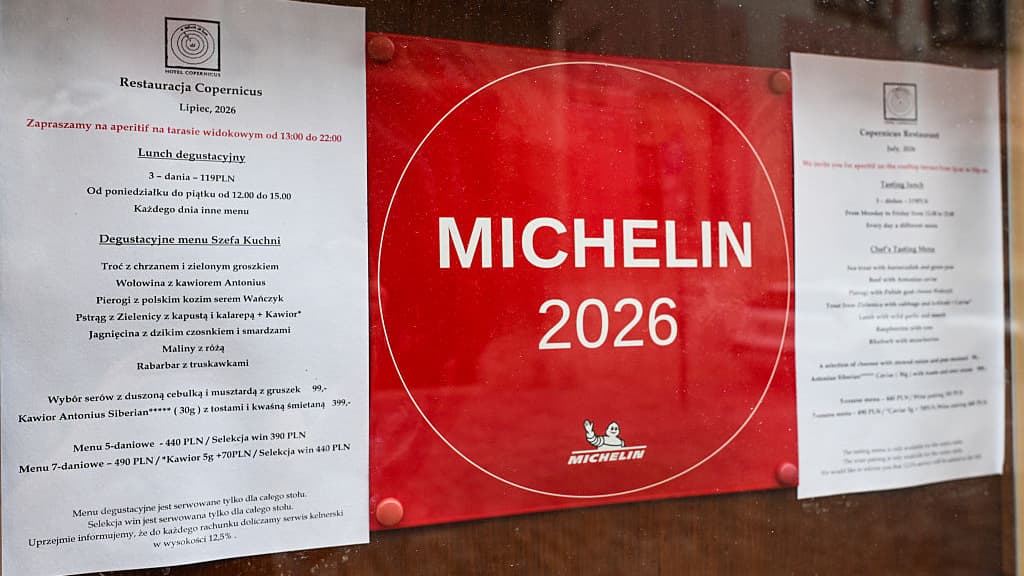
One reason: The arrival of the star and crimson plaque can alter the entire local food ecology around a restaurant. Suppliers and vendors, aware of a kitchen’s new status, often increase prices. Landlords like to raise rents. Staff, suddenly more marketable, must be paid more to be retained. The kitchen, chasing the standard the star implies, tends to reach for costlier and rarer ingredients. Every plate becomes more expensive to produce, yet few diners can absorb the escalating cost of eating there. That change can be lethal.
Fine dining, by its nature, runs on razor-thin margins. Exclusive guest lists cap revenue, rare ingredients inflate costs, and a kitchen brigade requires constant, expensive supervision and training. Consider what a plate costs at a typical three-star establishment: at Alain Ducasse au Plaza Athénée in Paris, Ducasse’s own three-star flagship, a single main course runs €80 to €135, and the tasting menu alone costs €260 to €360 per person, before wine, tax, or service—figures that hold across most three-star houses, where a full tasting menu routinely clears $400 to $600 a head once the bottle list is opened. Even at those prices, industry accounts suggest that margins remain thin once the true cost of labor, rare ingredients, and the theater of service is tallied. After all, the diner is paying as much for craft and spectacle as for food.
To keep the star, a restaurant must submit to a rigid, largely unwritten catalog of expectations—the wine list, the choreography of service, the physical opulence of the room—that locks owners and chefs into an inflexible, high-overhead model precisely when they most need room to adapt to shifting economics and changing appetites.
Chefs who sought the star in pursuit of creativity often find themselves instead locked into an endless rat race simply to preserve the status quo. Michel Roux Jr closed Le Gavroche, London’s pioneering two-Michelin-starred institution, in January 2024 after 56 years, citing the toll of the grind and his need for a different balance of life and work. Magnus Nilsson closed his celebrated two-star Fäviken in rural Sweden in December 2019 after 11 years, confessing that he had simply stopped waking up excited to go to work. Both talented chefs were crushed, at least in part, by Michelin’s expectations.
Chasing a Michelin star takes nerve; keeping one takes a very deep pocket. Atelier, a 22-seat tasting-menu restaurant in Chicago’s Lincoln Square, opened in February 2023 under chef Christian Hunter and won a Michelin star within its first year. But the restaurant could not sustain its costs against rising rent, wages, and inflation, and it closed abruptly in May 2026 with owner Tim Lacey telling staff and guests that the restaurant’s finances had left the team no choice.
A growing, if still informal, collective of chefs worldwide is now actively requesting the removal of their own stars, choosing instead to reclaim food as a site of authentic community, relational care, and cultural survival.
Their conclusion: The economics of the Michelin star simply does not work.
So how did we get here? The Michelin Guide was launched in 1900 by tire manufacturers André and Édouard Michelin as a free promotional roadmap distributed to fewer than three thousand motorists then on French roads—a way to encourage driving, and with it, tire wear.
By 1926, the guide had transformed into an arbiter of taste, awarding a single star to mark exceptional dining; by 1931 it had formalized the now-iconic one-, two-, and three-star hierarchy, alongside the red cover and the roly-poly figure of Bibendum, the Michelin Man. The red-bound guide became, over the following century, shorthand for elite dining the world over. Restaurateurs quake at the prospect of an anonymous inspector’s unannounced visit, yet the status a star confers is so vast that chefs the world over continue to chase it. And when the star finally arrives, the regular, vernacular diners who sustained a kitchen through its lean years are often displaced by gastro-tourists chasing a commodified edible experience and influencers eating for the camera rather than for the plate.
And then are the ways in which the Michelin system has undervalued certain cuisines. For instance, despite Indian cuisine standing among the world’s great culinary traditions, only Indian restaurants located outside India have received a star; only recently, in 2024, did a Mexican establishment—the taco stand Taquería El Califa de León in Mexico City—receive one, becoming the first taquería in the world to do so. I had long assumed this asymmetry was a matter of distinctly European taste and bias. It turns out I was only partly right. It is also a matter of money.
The Michelin Guide is ultimately a business that manufactures and confers value. And to be sure, a Michelin star does come with benefits. So much so that municipal chambers of commerce understand precisely what a Michelin presence does for a city’s status as a gastronomic destination, and in recent years cities have begun paying substantial fees for the privilege of having Michelin inspectors visit their food halls and restaurants.
The issue is that these privileges tend to carry a hefty price tag. While a Michelin star can bring notoriety and exposure, these benefits are often outweighed by unsustainable costs
Michelin figured out how to sell status back to us, one unsustainable plate at a time.