
The Independent Factor: Did general-caste anger hurt BJP?
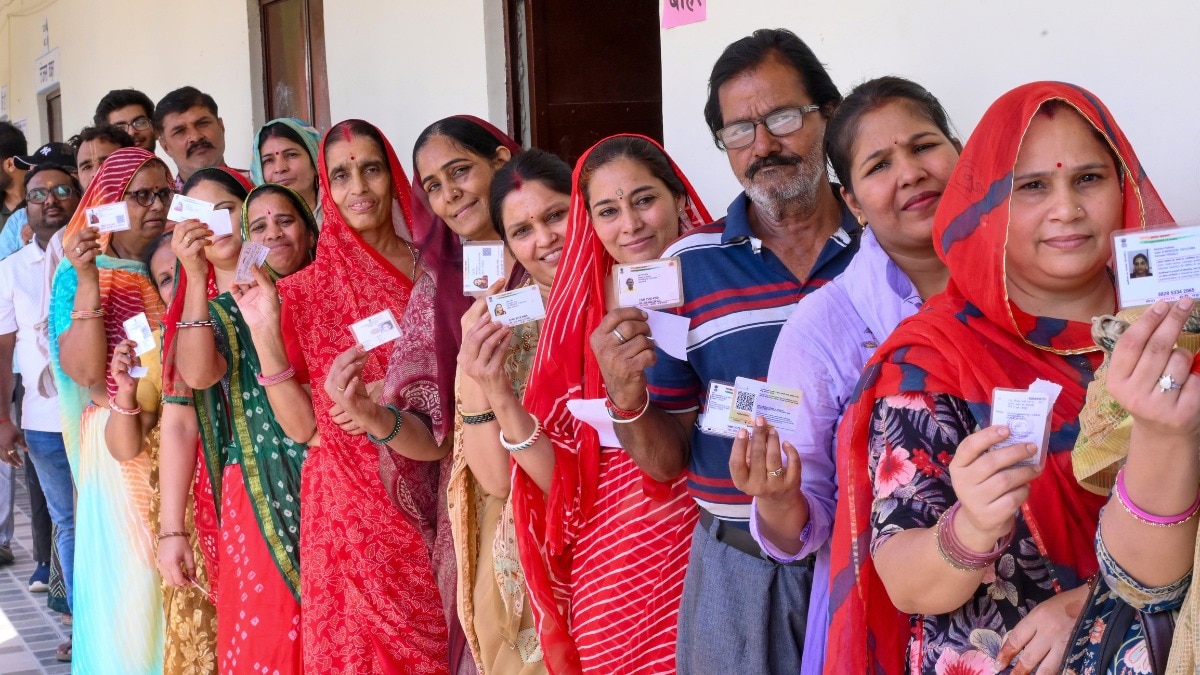
The 2026 Rajasthan urban local-body elections have thrown up a political puzzle for the BJP. The party won substantially more wards and urban local bodies than the Congress, but its statewide vote-share advantage was less than one percentage point. At the same time, Independents polled a formidable 27.38 per cent of the vote—29.07 lakh votes—making them the third-largest electoral force in the state’s municipal elections.
At first sight, that could be read as evidence of a backlash among sections of the general category against the BJP, particularly over the controversial University Grants Commission (Promotion of Equity in Higher Education Institutions) Regulations, 2026. The regulations had triggered sustained opposition from dominant-caste organisations in Rajasthan, including the Rajput Karni Sena. The Supreme Court put the regulations in abeyance in January, while the controversy has continued, with protests and demands for their complete withdrawal. Protesters had called for voting for Independents or pressing NOTA.
NOTA, however, got only around one per cent of the urban vote—not much fluctuation compared with the previous two elections. The much larger Independent vote was a longstanding feature of Rajasthan’s municipal politics, not a new anti-BJP phenomenon. It does not support the argument that this issue created a new anti-BJP electoral constituency in the civic polls.
The most revealing number is not 27.38 per cent but the historical trend. Independents secured roughly 27 per cent of the vote in the 2015 urban local-body elections, 27.72 per cent in 2019 and 27.38 per cent in 2026. In other words, despite a major political controversy over the UGC regulations, the Independent vote has remained almost exactly where it was before the controversy started.
This makes it difficult to attribute the 2026 Independent vote wholesale to general-category anger over the UGC issue. The data point instead to a structural third force in Rajasthan’s municipal politics: local personalities, dissidents denied party tickets, caste equations, factionalism and voters unhappy with both major parties have long made Independents a significant part of the urban electoral landscape.
The same applies to another potentially sensitive general-category issue: EWS (economically weaker sections) reservation. Sheo MLA Ravindra Singh Bhati has recently sought changes in EWS eligibility, arguing that the five-acre land criterion does not adequately reflect differences in land productivity and economic circumstances. He has also demanded recognition of state-issued EWS certificates for central services and educational institutions, longer certificate validity and other concessions for EWS candidates. Bhati has said more than 75 MLAs have given written support to the demands.
This is potentially a politically important constituency-building issue. A five-acre holding in the arid western districts, for instance, cannot necessarily be equated economically with five acres of highly productive or expensive agricultural land elsewhere. But, again, there is no evidence in the statewide civic vote to establish that the EWS issue produced a new Independent surge.
There is another complication for any simple “general caste versus BJP” explanation. The Congress cannot automatically be positioned as the beneficiary of anger over the UGC regulations. The party has its own longstanding political commitment to affirmative action and representation, while the UGC controversy itself has centred on regulations intended to address caste discrimination in higher education. The Congress, therefore, does not offer an obvious alternative political home for voters whose principal grievance is against reservation-linked policy.
Yet, the Congress did have an interesting EWS connection in Ajmer. Former Rajasthan Tourism Development Corporation (RTDC) chairman and Congress leader Dharmendra Rathore has actively campaigned for changes in EWS eligibility, including the relaxation of conditions that he argues disadvantage economically weaker families. In 2024, Rathore specifically cited the Ashok Gehlot government’s relaxation of EWS conditions and demanded similar changes by the Centre. He has continued to campaign on EWS issues in 2026.
His role is particularly relevant because the Congress produced one of its more significant urban results in Ajmer, where it won 37 of the 80 corporation seats against the BJP’s 32, while the Independents won 11 seats. Rathore led the Congress campaign there.
The larger lesson from the 2026 numbers is, therefore, more nuanced. There may well be pockets of general-category dissatisfaction with the BJP over the UGC regulations, EWS rules and other reservation-related questions. But the statewide Independent vote provides no evidence of a new electoral wave.
Indeed, the BJP’s 35.18 per cent vote share in 2026 was only marginally ahead of the Congress’s 34.24 per cent, while Independents remained at their decade-long level of around 27 per cent. The dramatic difference came at the ward level: the BJP won 4,179 wards against the Congress’s 3,613, a 566-ward gap despite the tiny statewide vote-share difference. This is attributed to the delimitation of wards—new wards were chalked out keeping in mind strongholds of the BJP to ensure a win.
For the Congress, there is an equally uncomfortable conclusion: even where anti-BJP sentiment exists, it does not automatically translate into Congress votes. The party’s challenge is to convert scattered grievances—over UGC rules, EWS criteria, local governance or candidate selection—into a coherent political alternative. The 2026 civic verdict shows that voters dissatisfied with the BJP have several outlets, and the Independent vote remains one of the most durable.


