
The latest electoral dispute is not just an ANC problem - IOL
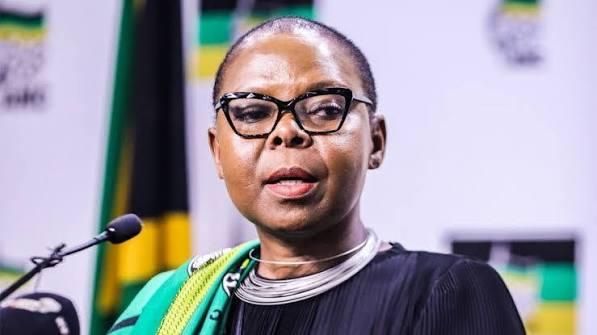
As South Africa approaches local government elections, a contentious electoral dispute unveils critical questions about fairness, representation, and the integrity of our democratic institutions.
South Africa's latest electoral dispute has quickly become an ANC story. That is understandable — the ANC remains the country's largest political party, and what happens inside the organisation attracts intense public and media scrutiny. But if we look beyond the political contest and consider the figures now at the centre of the dispute, a bigger question emerges. On the Electoral Commission's own count, as cited in the ANC's case, 2,274 candidates from 45 political parties stand in the same position. Forty-four of those parties are not the ANC.
That matters. It means this conversation should not be reduced to whether one supports or opposes the ANC, nor should it become another predictable exchange between government and opposition. A broader democratic question lies before us, about electoral participation, consistency, and how our institutions handle disputes when political parties and the Electoral Commission interpret an electoral process differently.
The ANC's position is straightforward. It lodged 9,128 candidates, of whom 8,947 were accepted at lodgement, representing 97% of wards and 90% of proportional representation seats nationally. The dispute concerns 181 candidates in six councils. In four of those six councils, the full ward slate is already on the ballot. These numbers matter because the scale of the dispute can easily get lost in the noise surrounding it.
The ANC is also not asking for additional candidates to be introduced, lists to be changed, or the electoral timetable to be extended. Its case is that information which was on the Commission's system before the prescribed hour should be recognised. The Commission has put forward its own position. That disagreement is now properly before the Electoral Court, and the Court must be allowed to do its work. That principle should matter regardless of which political party is involved.
South Africa has spent three decades building an electoral system that has survived fierce political competition, difficult elections, and increasingly fragmented politics. The Electoral Commission has been central to that achievement. Its independence and institutional credibility are important national assets and should be protected. But protecting an institution does not mean that its decisions or interpretation of electoral law can never be questioned.
Democratic institutions are strengthened, not weakened, when disagreements are dealt with through the mechanisms provided by law. Political parties are entitled to approach the courts. The Commission is entitled to defend its position. The courts are empowered to consider the arguments and decide. That is constitutional democracy at work.
Another reason the discussion deserves to move beyond party politics is this: according to the figures advanced in the matter, the 2,274 affected candidates come from 45 parties. Every one of them came through the electronic channel, while 224 parties that lodged manually report no similar difficulty.
That is a fact worth examining carefully, without jumping to conclusions about its legal meaning. The Court, not commentators or political parties, must determine the legal significance of the circumstances before it. But from a democratic perspective, the number and diversity of parties involved should make us pause before treating this purely as an ANC problem. Behind every candidate is a political party that chose to contest an election. Behind many of those candidates are communities expecting to exercise a choice at the ballot box.
Local government elections are particularly personal. Voters are not choosing an abstract national government; they are choosing people who will represent their wards and make decisions about water, roads, electricity, refuse collection and the everyday functioning of their communities. That is why participation matters. Rules matter too. The two principles should not be presented as opposites.
South Africans should expect electoral rules to be applied consistently. Deadlines, procedures and administrative requirements exist for good reason. Without certainty, elections would quickly become vulnerable to political pressure and endless contestation. At the same time, our democracy provides mechanisms for resolving genuine disputes about how those rules should be interpreted and applied. Seeking judicial clarity is part of that system, not an attempt to circumvent it.
The principle should be simple: no political party deserves a favour, but every political party deserves equal treatment under the law. That applies to the ANC. It applies to the DA. It applies to the smallest party contesting a single municipality. And it applies equally to all 45 parties whose candidates are affected by the present dispute.
This is also why political rhetoric should not be allowed to outpace the legal process. There will inevitably be strong opinions about what happened and who should prevail — that is part of democratic debate. But political commentary differs from the legal question the Electoral Court must determine, and we should keep that distinction clear.
The ANC and the Electoral Commission do not need to agree for both institutions to respect the same democratic framework. The Commission can defend its position. The ANC can exercise its right to seek judicial determination. Other political parties can make their arguments. And ultimately, everyone must respect the Court's decision. There is something reassuring about that.
The absence of disagreement does not demonstrate democracy. It is demonstrated by how disagreement is resolved.
As South Africa approaches the 4 November local government elections, the country has more important challenges ahead than turning an electoral dispute into another test of political loyalties. Communities want functioning municipalities. Voters want meaningful choices. Political parties want to contest elections. The Electoral Commission wants to administer a credible process. Those interests need not be incompatible.
Whatever the Electoral Court ultimately decides, its judgment will provide clarity. The political parties involved must then accept that determination and move forward. Until then, we should resist reducing a matter involving 2,274 candidates and 45 political parties to a headline about one organisation.
The ANC may be the biggest name in the story. But the democratic questions it raises go beyond the ANC.
* Mahlengi Bhengu is the ANC National Spokesperson.


