The Legacy of Merebank: Our People, Our Culture, Our Stories - IOL
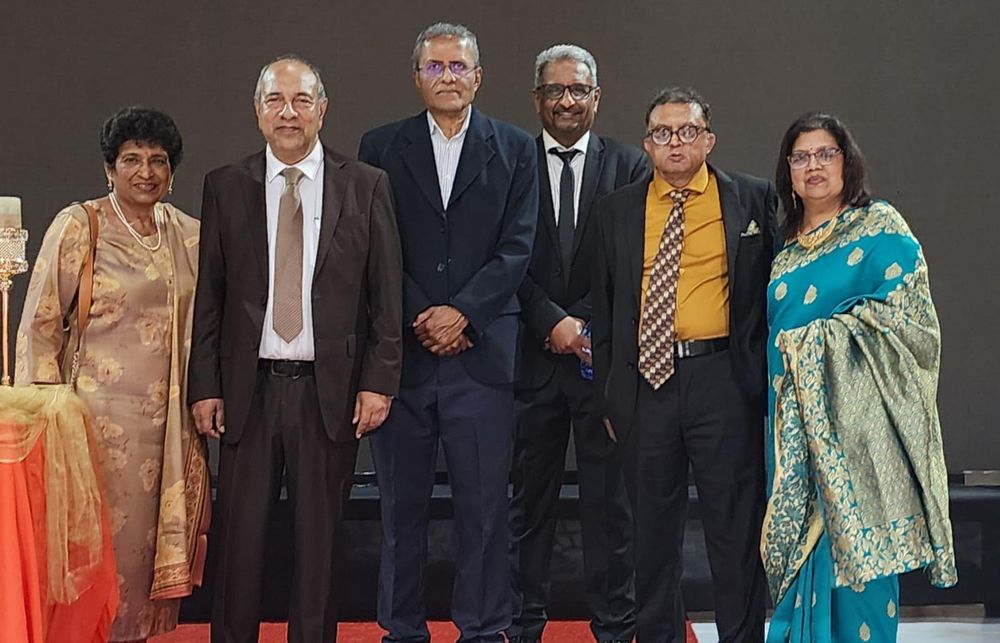
The editorial team of the Merebank Book Project: Shamla and Viren Singh, Brij Maharaj, Kumrasen Govender, and Ashok and Logas Madhunlall. The book was launched on Saturday at the MTSS Hall.
ON SUNDAY, the much-anticipated book The Legacy of Merebank: Our People, Our Culture, Our Stories was launched. What makes this publication particularly distinctive is that it has been researched and written by the community itself rather than by a single author.
The book is not the story of one individual, but of an entire community.
According to Professor Karthy Govender, the “Merebank book is a collective autobiography, steeped in love, of a resilient and diverse community, not just surviving despite formidable odds, but thriving and succeeding beyond most expectations”.
It includes a range of voices and perspectives from residents, former residents, community leaders, educators and organisations. What emerges is a rich, authentic and inclusive account of the history of Merebank based on the lived experiences of residents.
The story of Merebank is one of resilience, sacrifice, community spirit and collective action. More than simply documenting events, this book chronicles how a displaced community confronted apartheid-era injustice and socio-economic hardship, produced freedom fighters and transformed adversity into strength and neighbours into lifelong family.
After reviewing the manuscript, Dr Juggie Pather wrote: “The Merebank community revealed its mettle and resilience and rose above all the odds to convert the ghetto it was compelled to move into, into a thriving suburb.”
The book shows how ordinary residents used solidarity, self-help and determination to build strong institutions, defend their rights, nurture future generations and turn Merebank into a thriving, vibrant community.
As Professor Jayanathan Govender notes, the book “frames Merebank not merely as a geographic locality but as the biography of a place, where personal memories, collective struggle, and civic action intersect".
From the start, Merebank was marked by a spirit of selflessness, generosity and dedication to the common good. Our parents and grandparents overcame major challenges because they knew the power of community. Neighbours were not just acquaintances. They were family.
More specifically, the book, at its heart, according to Professor Managay Reddi, is a “tribute to the generations whose courage, foresight, and commitment to justice left an imprint on both Merebank and the nation it helped transform. Merebank's story is South Africa's story, and within these pages you may find a part of your own."
Education was seen as the pathway to social and economic progress. Institutions such as the Merebank State-Aided Primary School and Hillside School became centres of excellence because of the commitment of remarkable teachers who moulded generations of young minds. Equally influential were the religious, cultural, sporting and civic organisations that inculcated values, promoted social cohesion and fostered community leadership.
The book highlights the important role played by the Merebank Residents’ Association (MRA) in fighting for the community’s rights and interests against the injustices meted out by the apartheid-era Durban City Council. Residents, through collective action and self-help initiatives, transformed modest, uniform houses into thriving family homes, often to the point that the original structures were barely recognisable. These achievements are enduring symbols of the determination, resilience and ingenuity of the people of Merebank.
The history of Merebank is also the story of remarkable people whose lives embodied service to others. The likes of Mr MR. Moodley, who became synonymous with MTSS, the Parashakti Temple, and the MRA; and Mr Abinand Harase, who served at Settlers Primary School, the Merebank Indian Association, school sport, and the Woonathee Sabha, were the epitome of selfless leadership that helped shape our community.
The book is replete with countless acts of generosity and sacrifice that have come to epitomise Merebank’s tradition of self-reliance and service to the community.
VS Pillay donated the land on which the first school in Merebank was built. The first Hindu temple was set up on land donated by EM Paruk. The land on which MTSS was first erected was donated by ST Nadasen Odayar. Jogie Naidoo and RK Naidoo mortgaged their homes to finance critical MRA community litigation against the racist Durban City Council.
Mr MR Moodley obtained an interest-bearing loan and then lent the money to MTSS interest-free. R Gopaulsingh also made similar sacrifices for Hillside School. What these examples show is a powerful truth: that unity is strength.
As the book illustrates, Merebank has often been ahead of its time. One of its greatest strengths has been its tradition of dialogue, engagement, and collective problem-solving. That tradition found renewed expression through the Merebank Book Project (MBP), which evolved into far more than a historical exercise.
Since its inception, the MBP has provided an inclusive platform through which residents, stakeholders, and community leaders have been able to reconnect, share perspectives, identify challenges, build consensus, and explore solutions. In many ways, it represents a practical expression of the values that have long defined Merebank: participation, collaboration, and shared responsibility.
These values are especially important in today's world. We are living in an era in which political, racial, religious, and social intolerance can spread faster than our ability to counter it. When intolerance and corruption become normalised, it threatens the foundations of democracy, social cohesion, and peaceful coexistence. This reality places a special responsibility on all of us to promote understanding, cultivate empathy, encourage dialogue, and uphold ethical leadership.
The MBP has also given many of us a moment for personal reflection. It has reminded us of the journey we have taken from our humble beginnings in Merebank, while reaffirming the enduring impact of the friendships, values and shared experiences that continue to shape our lives.
In the words of MBP team member (and poet) AK Madhunlall: “...Rooted in Merebank yet boundless in spirit, this is a story that speaks to readers everywhere, wherever they may call home...”.
This book is therefore much more than a historical record. While honouring the past, it seeks to inspire action in the present and help shape a brighter future. It serves as a catalyst to rekindle community pride, build social cohesion, and motivate future generations to keep alive the traditions of selfless service, leadership, and collective responsibility that have long distinguished Merebank.
Rich in memory, meaning, and hope, The Legacy of Merebank honours those who came before us while challenging us to build upon their successes. It reminds us that when Merebank stands united, remarkable achievements are possible. The last word from Judge Mohini Moodley: “The many laudable achievements of the people of Merebank and the community as a whole are meticulously recorded in this marvellous book, which should find a place in every home of a former, present or future resident of Merebank.”
Professor Brij Maharaj is a son of Merebank and a member of the editorial team of the MBP. For more information, call Logas Madhunlall at 0837754401.
** The views expressed do not necessarily reflect the views of IOL or post.co.za