The More Extreme Donald Trump’s Language Sounds, the Weaker He Looks | Opinion - Newsweek
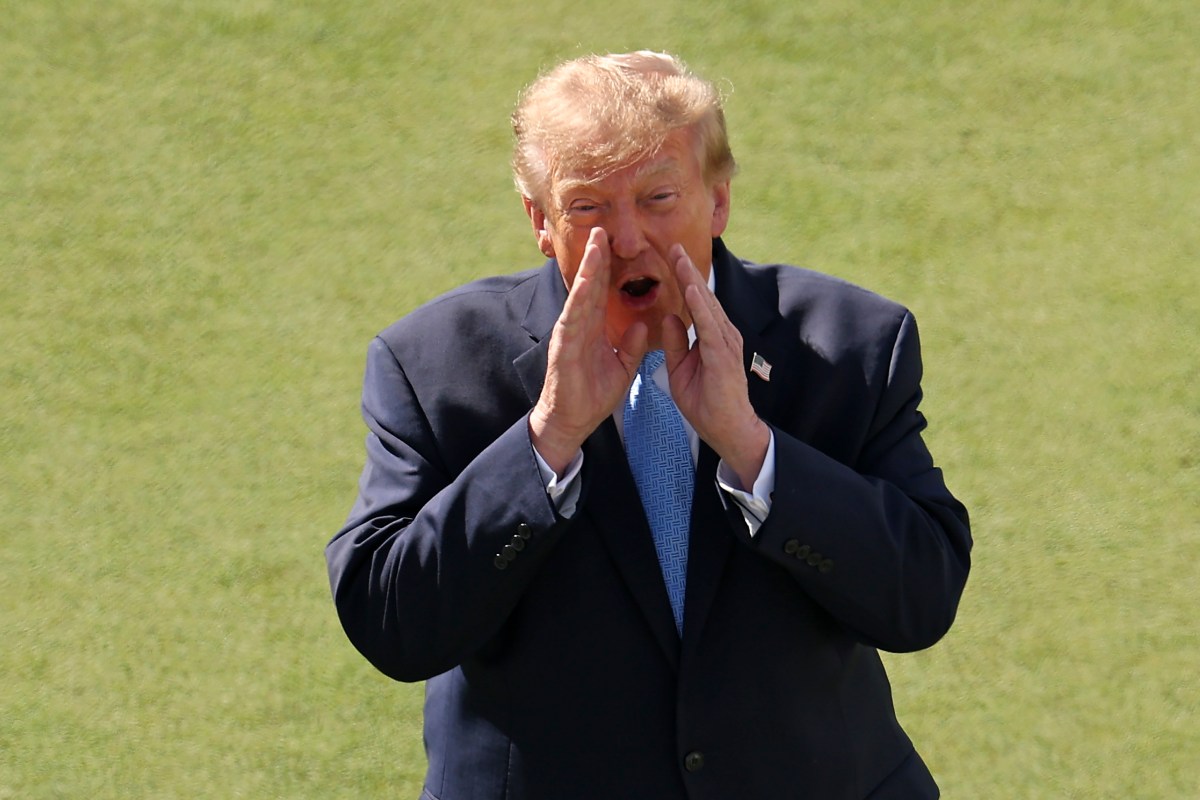
Maybe it’s an exaggeration to say Donald Trump is approaching his "Ceaușescu moment," but for a president untroubled by doubt or caution, there has been a definite vibe shift. That’s because when Trump used extreme or crazy rhetoric in the past it was always from a position of strength. The next two years will be different.
With Republican midterm defeats looming and the prospect of a limping, if not lame, duck presidency plus a GOP inevitably casting its eyes over the horizon at the post-Trump universe, his style of language risks making him look impotent. It’s inevitable that the link will be made between ever-escalating rage and ever-decreasing agency.
This week Trump labeled neighbor and ally Canada "one of the worst countries in the entire world." Of course, there’s little novel about his wild semantic choices. We’ve all heard this sort of thing before and that’s the problem as the off-ramp approaches.
Mark Carney now looks at Trump like a schoolgirl who has "moved on" from her immature first boyfriend. "They take advantage of us," said Trump. "Canada is going to come in and say, 'Sir, we are very sorry’." You can probably see the Canadian prime minister’s side-eye from space. And that mixtape Trump was making is in the trash.
Carney knows the end isn’t that far off and so cozies up to the European Union and China while Trump rants and raves in frustration that world leaders are not bowing and scraping to his tariff threats. Ceaușescu-esque you might say. The moment the end becomes imaginable everything changes. That is true of all politicians, in democracies or dictatorships.
For those too young to remember, Nicolae Ceaușescu was the communist tyrant of Romania, whose sudden downfall was recorded in one of the most extraordinary bits of political film ever captured. Standing on the balcony above Bucharest’s Palace Square on December 21, 1989, the man whose every terrifying whim had been doted on for 24 years realized the crowd was no longer listening to him. It’s the look on his face that is unforgettable: the impossibility of not having power.
It escalated quickly, as Ron Burgundy might say. On Christmas Day, Ceaușescu and his fur-clad wife were shot dead by soldiers. There will come a moment in the next two years when Trump will face the symbolic equivalent of this horror. His ever-inflating language will only speed up the process, because the world will start to look beyond him toward the place they will inhabit after he has gone, making that scattergun, take-no-prisoners hot air ever less meaningful.
Last week, Trump said—at the U.N. of all places—he could "annihilate" Iran. (This is the lexicon used by Iran, ironically). A president using apocalyptic language is all very well until his country has been in a conflict with another for more than six months and faces an awkward negotiated settlement.
"Will a deal be made with Iran…Or do I annihilate the Islamic Republic and do it quickly?” Five days later, Trump added, "If you want to see turmoil, and a travesty, let them take out a city with a nuclear weapon…I'm not only talking about Israel and big parts of the Middle East, but let them hit us with a nuclear weapon."
Whether Trump’s self-awareness is such that he really believes annihilation is an option is hard to know. Does he think it’s just another bartering tactic by a deal-making genius? Maybe he was just being knowing and ironic. These considerations matter less than the fact that everyone—including Iran—knows that talk of annihilation is meaningless. It’s fine when you are on the upward curve of a powerful administration; less so when you are winding down for the Götterdämmerung of 2028.
Trump’s use of language has always been extreme, especially for that of a man who holds an office that has historically set such a premium on dignity and the expression of lofty ideals. Presidents of the past have not, in general, been elected after being overheard talking about "pussy grabbing." So with language, as on so many other subjects, Trump made his own rules. And, by and large, he won playing his inimitable way.
Trump is far from impotent in practical terms. He still wages war. He still commands the stage unlike any other president before him. Lesser foreign leaders still wriggle in confusion and discomfort at his unpredictability. (The powerful ones do not—Xi Jinping made Trump look uncomfortable during his recent state visit.) The inevitability of Trump’s exit creates a new dynamic: his rhetoric becomes easier to dismiss or ignore as his absence from the stage becomes tangible.
For now, the shift is symbolic, not material. But more and more extreme rhetoric from Trump coupled with less and less mastery of events means everyone—his allies and hangers-on, his political opponents, his rivals on the global stage and America’s voters—will read the narrative of decline. They will see an escalation of bombast as corresponding to the downward curve of his power. That’s not a good look for any leader, even more so for one who has been so dominant for so long.
Maybe Trump should avoid balconies for a while.
George Chesterton is Newsweek's Director, Publishing & Subscription Strategy.
The views expressed in this article are the writer’s own.