The NCPI puzzle: Did BJP design the TMC escape route?
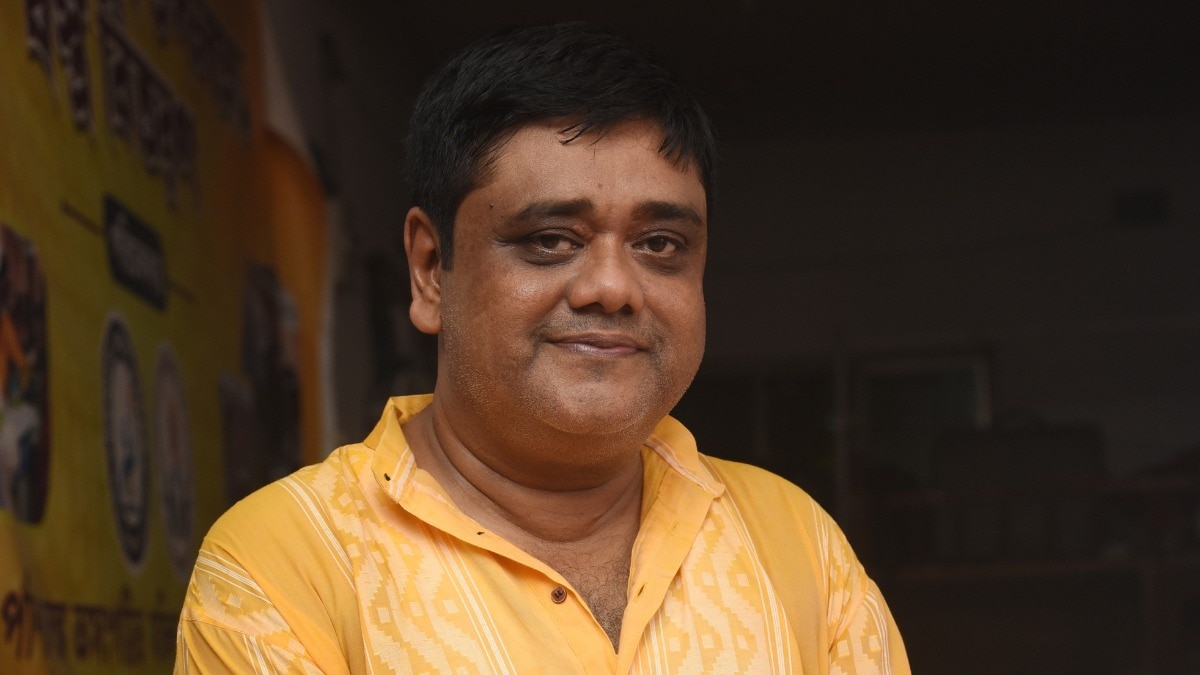
The man now heading the Nationalist Citizens Party of India (NCPI), which absorbed 20 rebel Trinamool Congress (TMC) MPs, once worked for the Bharatiya Janata Party (BJP). The NCPI’s founder, now a general secretary, has been a part of the Rashtriya Swayamsevak Sangh (RSS) ecosystem. And the rebels themselves allege that BJP leaders helped engineer their move to the little-known outfit. No wonder the emerging NCPI trail raises questions about whether the June defection was planned much earlier.
When the 20 Lok Sabha MPs announced in June that they were leaving the party and merging with the NCPI, the choice of their new political home appeared almost inexplicable. The NCPI has never won an election. It contested only a handful of seats in the 2023 Tripura assembly polls and had an electoral presence so marginal that its reported donations for 2022-23 were just around Rs 1.13 lakh. Yet, overnight it became the parliamentary home of 20 sitting MPs.
Three months later, a new development has added a potentially significant layer to that story. The NCPI has now unveiled a 27-member national committee headed by Jyotiprakash Chatterjee, a former BJP functionary who had worked for the party as a youth leader and a media panelist. In the 2024 election, he was involved in the campaign for Rekha Patra, the BJP candidate for the Basirhat seat against the TMC.
Seven of the former TMC MPs have now been formally accommodated in the NCPI’s national hierarchy. Abu Taher Khan, Deepak Adhikari Dev, Yusuf Pathan, Jagadish Chandra Barma Basunia and Rachana Banerjee have been appointed vice-presidents, while Mitali Bag and Bapi Halder have been made general secretaries.
Chatterjee is not the only part of the new arrangement with a BJP/RSS-related past. Uttiya Kundu, one of the founding figures around whom the NCPI was built, is now a general secretary. It was at Kundu’s residence in Sankrail, Howrah, that the party’s formation was discussed sometime in 2022, says another founding member, Shantanu Dey. At that time, Kundu was made vice-president and his wife Shewly became president.
Kundu’s background is worth examining. He was associated with the Bharatiya Mazdoor Sangh (BMS), a trade-union organisation affiliated with the RSS. This is significant as it suggests the NCPI’s BJP links are not merely a product of the sudden absorption of TMC MPs.
Conceived in 2022, the NCPI was registered in January 2023 with the Election Commission as a ‘registered unrecognised political party’. Despite being headquartered in Bengal, its first electoral experiment was in Tripura. It contested the 2023 assembly election but failed to win a seat. Its campaign then carried an apparently incongruous message for what would later become the home of political defectors: “Reject political turncoats.”
The party’s ideological and organisational history, though, was more complicated. Dey has acknowledged his own earlier association with the RSS. Other accounts from within the organisation have described members campaigning for the BJP during the 2026 Bengal assembly election. Shewly has said the party decided to support the BJP after the 2023 panchayat elections and that many of its members have a BJP-RSS background. Uttiya, meanwhile, has posted photographs with Suvendu Adhikari, including one after Adhikari became chief minister.
None of these facts, individually, establishes that the NCPI was created as a BJP vehicle. Taken together, however, they make the party’s sudden role in the TMC split harder to view simply as an accidental development.
The NCPI became nationally relevant almost overnight in June, when 20 TMC Lok Sabha MPs announced their merger with the party. The timing and mechanics were unusual. The rebels had meetings with senior political figures in Delhi, including one at Union minister Bhupender Yadav’s residence, before meeting Lok Sabha Speaker Om Birla. They subsequently declared their support for the BJP-led National Democratic Alliance (NDA).
The choice of NCPI appeared to serve a specific political purpose: it allowed the rebels to claim they had merged with another political party rather than simply defected individually to the BJP. The constitutional and parliamentary validity of that claim remains contested, and is for the Speaker to determine.
The BJP connection became even more explicit in September when rebel MP Basunia claimed that the original plan was for all 20 MPs to join the BJP directly. According to him, three minority MPs were unwilling to do so, following which BJP leaders facilitated their move into the NCPI. Basunia specifically named Union minister Yadav, CM Adhikari and Amit Shah, and said meetings had been held at Yadav’s residence.
The claim has been disputed. Khan, one of the Muslim MPs in the group, has said he has no intention of joining the BJP or supporting the NDA. Bengal BJP leaders have also denied Basunia’s account. Therefore, the allegation cannot be treated as established fact. It has acquired a new context, however, with the latest NCPI appointments.
Chatterjee’s elevation is particularly notable because of his political history. He was part of the BJP’s political and media machinery in Bengal before becoming NCPI president. His association with the 2024 Basirhat election campaign places him within the BJP’s electoral operation in a constituency that became one of the party’s major political battlegrounds in Bengal. Now he heads the political organisation into which 20 TMC MPs have moved.
Chatterjee was contacted for his response to questions about his previous association with the BJP, his role in the Patra campaign and the circumstances in which the 20 TMC MPs came to join the NCPI. His response was brief: “No comments.”
That response is significant not because it proves anything, but because the questions concern the precise chain of political relationships that has taken the NCPI from obscurity to the centre of Bengal’s biggest opposition-party rupture.
There is another curious element. The new committee does not simply absorb the former TMC MPs into an existing organisation. It effectively places several of them at its top. Seven former TMC MPs now hold national posts, while the original organisational figures have been rearranged. Uttiya, who was once at the centre of the party’s founding structure, is now a general secretary, while Chatterjee, who was not part of the party’s original public profile, is president.
Meanwhile, Dey has alleged that the former TMC MPs were attempting to “capture” the NCPI without consulting the people who had built it. He has written to the Lok Sabha Speaker on the issue.
The internal confusion was already evident in June. Founding members had told the media they had learnt about the proposed merger through news reports and social media. One former office-bearer said he had not even been informed who the new president was.
The NCPI story, clearly, has now acquired an unusual symmetry. A party that began around the Kundu family and a handful of founding members has absorbed 20 TMC MPs. Those MPs have subsequently been given formal positions in the party. And the man appointed to head the organisation has a BJP past.