The Rs 2,000 line: India has drawn it, and almost every payment sits below
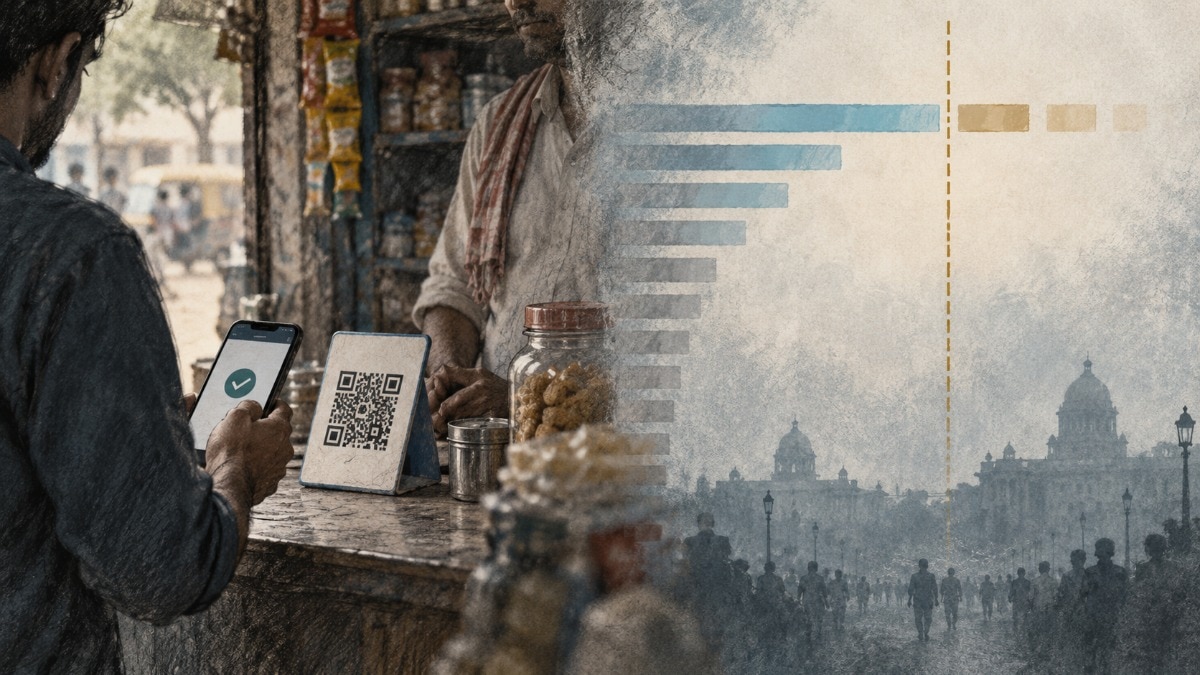
Scan, tap, done. No card machine, no cash, no fee. For six years, that was the law — not a favour. Since September 14, it is the law only up to Rs 2,000.
What happened this week? Two things, a day apart.
On Monday, the government said two kinds of payment must stay free. One is a RuPay debit card. The other is a UPI payment of Rs 2,000 or less. On those, no bank "shall impose, whether directly or indirectly, any charge". Above Rs 2,000, the order says nothing at all. That silence is what opens the door to a fee.
Then on Tuesday, the National Payments Corporation of India reportedly called banks and payment apps in to talk about that fee, and discussed how big it should be, and who gets a cut of it.
The order is called S.O. 5067(E). It was still not in the government gazette on Tuesday evening. So its exact words come from news reports, not from the document.WILL I HAVE TO PAY?
No. The government says you never will. "Consumers making payments will not face any transaction charges," the finance ministry said on August 8. Any fee would be small, it said, and only on some payments to shops. The people who described Tuesday's meeting say the same. Shops will pay. Money you send a friend stays free.
The order protects "UPI transactions up to Rs 2,000". It does not say whether the money went to a shop or to a person. And in August, the average amount one person sent another was Rs 2,319. That is above the line.
So free transfers between people rest on a promise. They do not rest in this order.
The fee is not fixed either. Some reports say 0.4 per cent, with banks keeping about 40 per cent of it. Others say a quarter per cent. Earlier ones said up to half a per cent, and only for bigger shops. Nobody quoted in any of these reports is named. The NPCI and the Reserve Bank did not reply when asked.WHY DOES RS 2,000 MATTER SO MUCH?
Because Indians pay in small amounts. The average UPI payment to a shop in August was Rs 577, according to the NPCI. That is two or three trips to the grocer. That’s nowhere near Rs 2,000. And India made 15.51 billion such payments that month.
It is also shrinking. In August, shops took 3.6 per cent more payments than in July, but 1.2 per cent less money. So the average fell from Rs 606 to Rs 577. The same month, the government drew its line, and the typical payment moved further below it.
Almost none. The NPCI splits shop payments into 30 trades. In August, only two had an average above Rs 2,000: stockbrokers, at Rs 7,569, and debt collectors, at Rs 3,441. Neither is a shop you can walk into.
The other 28 trades make up 98.1 per cent of all shop payments. A grocer's average payment is Rs 217; a restaurant's is Rs 174; a bakery's is Rs 140; and fast food is Rs 122.
The government said the "vast majority" of shop payments would stay free. On its own numbers, that is true.SO HOW MUCH MONEY IS IN THIS?
Less than the noise suggests. Put the reported rates on the only two trades above the line, and you get about Rs 4,100–8,300 crore a year. At 0.4 per cent, the figure most outlets reported, it is about Rs 6,600 crore. Jefferies, a brokerage, reached a similar place by another route. It put the pool at Rs 5,000–10,000 crore a year by 2027–28.
Now add that to a fee on every shop payment, which would raise Rs 39,917 crore. The Rs 2,000 line gives up most of the money before anyone argues about the rate.WHO PAYS FOR IT NOW?
The taxpayer. And not much. A free payment is never free. Someone covers the cost. For years, that has been the government, through a scheme that pays banks a small cut on RuPay debit cards, and on UPI payments to shops up to Rs 2,000. This year's budget set aside Rs 2,000 crore for it.
So Rs 2,000 is not a new number. It is where the government has already stopped paying. It has now made free exactly what it was already paying for, and left everything above to the market.
Read the order again. It names two things. "Debit Card powered by RuPay" and "Unified Payments Interface transactions up to Rs 2,000". The Rs 2,000 limit sits on the second one only.
Read that way, a RuPay debit card payment of any size stays free. A UPI payment of Rs 2,001 does not.
The government's own scheme is built the same way. It pays banks on RuPay debit cards with no limit, and on UPI to shops only up to Rs 2,000. The order uses the same wording as the scheme. But not every report reads it like that. Until the gazette is out, it rests on how those two lines are written.WHAT HAPPENS NEXT?
The rate. Tuesday's meeting started that argument. It did not finish it. No rate, no split, no start date. Until one arrives, nothing changes in any shop. The line is law. The fee is still an idea. And the Rs 577 payment sits under both, getting smaller.- EndsPublished By: Pathikrit SanyalPublished On: Sep 15, 2026 17:03 IST