
The suburban explorer putting Durban’s trains back on the map - IOL
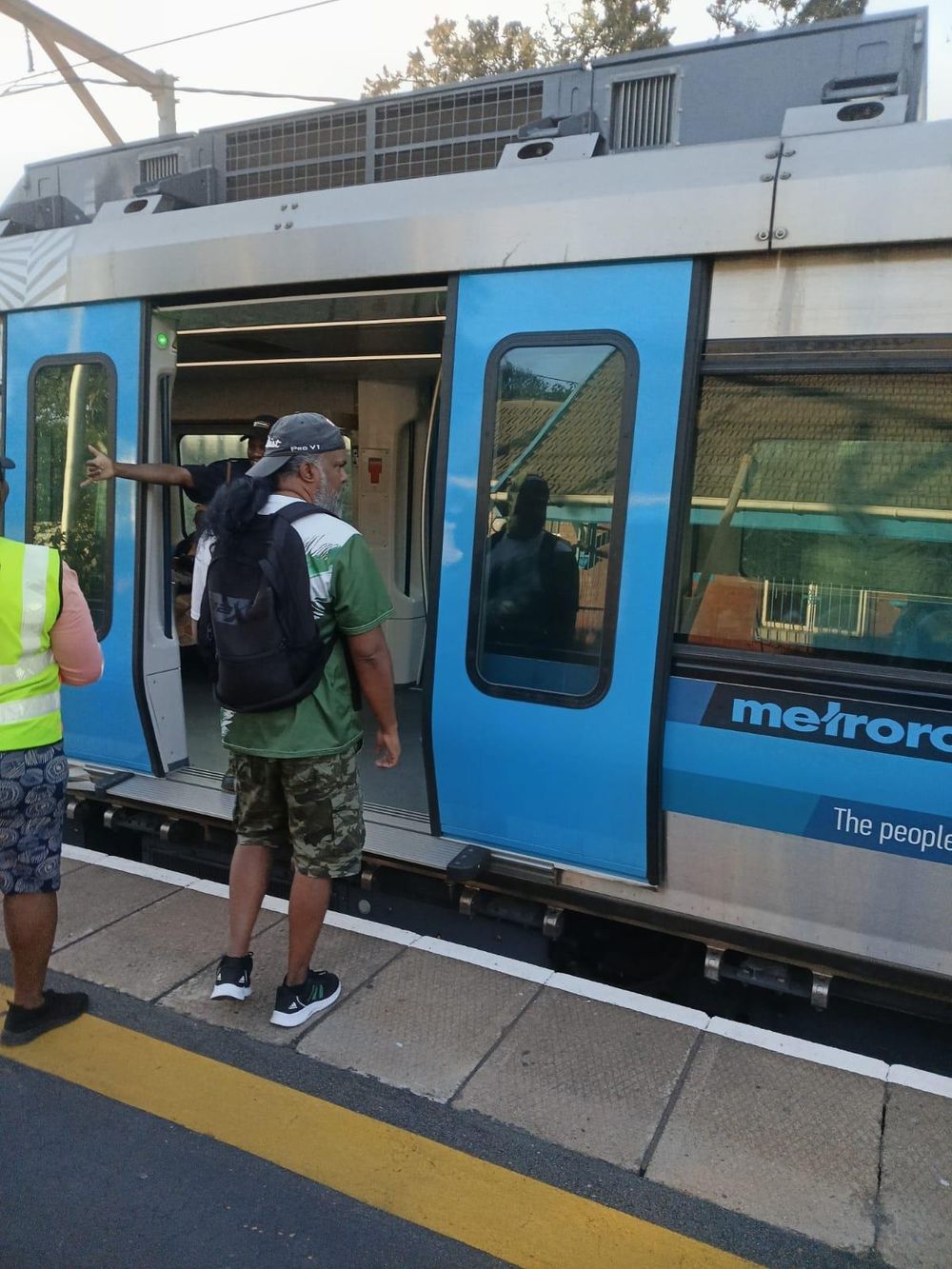
Dees Chetty boards a Metrorail train as he continues exploring Durban and documenting his public transport experiences for his growing social media audience.
For Dees Chetty, a train journey is about far more than getting from one destination to another. The 49-year-old Kingsburgh resident is using Durban’s rail network and other forms of public transport to explore the city, document what he discovers and show others that experiencing life does not necessarily require a lot of money.
His Facebook videos now average about 800,000 views every 28 days, with between 50,000 and 70,000 engagements, while about 4,400 followers have joined his journey since mid-May. His most successful video, documenting a train trip to China Mall, has attracted more than 150,000 views. About 99 per cent of his audience is South African.
Through his videos, Chetty is not just highlighting the rail network by showing people how to get a train, buy tickets, and travel around the city, but he is also sparking interest and helping to grow local tourism.
His work comes at a crucial turning point for local infrastructure. The Durban Metrorail service collapsed between 2019 and 2022, cutting off access to affordable transport for hundreds of thousands of people. Since the collapse, the Passenger Rail Agency of South Africa (PRASA) has spent almost R622 million on infrastructure upgrades, bringing most routes in the city back online and leading to a slow increase in passenger numbers.
uShaka Marine World Dees Chetty’s public transport adventures have taken him to popular Durban attractions such as uShaka Marine World, which he documents as part of his mission to show people what the city has to offer.
However, the passenger rail service still faces major problems. Some routes remain closed, trains are slow, and passenger demand remains low compared to pre-collapse levels. By detailing his everyday journeys, Chetty's content has unintentionally played a role in the emancipation and revival of the local rail network by bridging the gap between PRASA's restored services and an uninformed public.
Yet Chetty’s story is not really about social media or trains. It is about a man who once pursued the conventional symbols of success—a business, a large home, cars and possessions—before deciding that the price of maintaining that lifestyle was too high.
Born in Estcourt in 1977 and schooled in Umzinto, Chetty moved to Durban determined to build a successful life. He established a manufacturing business and eventually acquired a 12-bedroom house, cars and the lifestyle that came with them.
Then everything became overwhelming. "There was too much to see to. No time to rest. One day led to another becoming blurry," he said.
The pressure of running the business was compounded by emerging health problems. Eventually, Chetty stopped everything, closed the business, let his staff go and rented out his house to cover the bond. The tenants eventually bought the property.
He moved in with his mother and took a year off to reconsider his future.
A move to Pretoria followed, where he worked for three years before deciding that he had simply entered another version of the "rat race". He quit, experimented with buying and selling cars and tried turning his passion for classic-car restoration into a business.
But once again, something he enjoyed became complicated.
By 2017, Chetty had returned to his mother while health concerns were beginning to surface.
Today, his definition of success is very different.
He lives in an apartment in Kingsburgh overlooking the ocean and railway station. He does not own a car, earns some income selling power-tool parts online and receives financial support from his family, whom he describes as his "biggest fans".
"I was taught by my elders that success is measured by the size of your house and the cars that you own," he said. "But no mention of what it takes to achieve all of that and what one has to do to maintain all of that."
For Chetty, success now means good health, peace, learning new skills and having the freedom to explore.
People Mover ticket A People Mover ticket forms part of Chetty’s practical approach to documenting Durban’s public transport options. He says the service offers affordable access to various parts of the city, with single journeys and day passes available.
Public transport has become central to that new life.
"Interestingly, I had no particular fascination with trains growing up. I only boarded a train for the first time in 2024, largely because one was conveniently available near my home," he said.
He quickly became fascinated by the experience—the sound of the train travelling along the tracks, the views that motorists miss while concentrating on the road, and especially the people he meets.
"I am by no means a social person but the train journey fills that gap of being a recluse," he said.
Durban Botanic Gardens The Durban Botanic Gardens is among the attractions Chetty has explored during his public transport adventures, sharing the experience with his growing social media audience.
He also believes public transport has taught him patience, time management and humility.
Chetty began uploading videos again in May this year, initially with no intention of becoming a professional content creator. He simply wanted a record of his adventures that he could return to later.
Then one simple, unedited train video surpassed 70,000 views.
Durban content creator Dees Chetty, whose train and public transport journeys are encouraging people to discover more of the city without spending a fortune.
The response revealed something Chetty had not expected: many people did not even realise Durban had modern passenger trains running again.
That became the catalyst for his current direction.
His videos now attempt to answer the practical questions he once had himself—how train timetables work, where to get off, where to catch connecting buses and what facilities and attractions can be found around stations.
His China Mall journey became his biggest success, surpassing 150,000 views.
The audience response has also moved beyond the screen.
"I noticed three ladies at the station who seemed a bit lost and were getting confusing advice on where to go," Chetty recalled.
"I stepped in to escort them to the bus, and at first, they were a bit hesitant—until they realised who I was. The most surprising part was that they had taken that trip purely because of my travel posts on Facebook, and they even knew me by name."
That was not an isolated encounter.
"It is still surreal when people approach me. A woman came up to me while I was filming at Baggies Beach, and even a train driver who recognised me from the station cameras came over to tell me she watches my videos," he said.
Even station management has taken notice of his growing impact on public participation.
"A station manager told me my videos were genuinely useful and that my name had even come up in PRASA meetings," Chetty said.
"It is encouraging to hear that public feedback and comments on my page are actually helping drive positive changes on the ground."
Chetty stresses that he does not work for PRASA.
In fact, despite the size of his audience, he has not earned money from Facebook. Some of his journeys take him from morning until night, followed by hours of editing. For now, he balances earning a living with producing his content, with his family helping to finance the project.
His ambition is to expand beyond trains. He is exploring buses, taxis, the Muvo card system and Durban Transport, while boat trips and other adventures are also on his radar.
Crocworld Chetty’s journeys extend beyond Durban, with public transport and budget travel allowing him to explore attractions such as Crocworld Conservation Centre south of the city.
His unconventional approach to life extends into his creative ambitions. He describes himself as the "black sheep" in a family of teachers, lecturers and professors with PhDs. He left school three months before his matric final examination because he felt the traditional education system did not cater for what he wanted.
Now he wants to teach in his own way—by sharing what he learns.
His planned YouTube project, "The Poor Man’s Quest", will showcase inventions and projects that can be created with limited money and basic tools.
For Chetty, the philosophy behind all of this is simple: experience life rather than merely accumulate things.
"I want people to find my content as credible and authentic content. No fake stuff. I want to build trust with my audience," he said.
And perhaps that is what makes his journey worth watching.
A man who once measured success in houses and cars now measures it in freedom, experiences, people met along the way and the ability to wake up with peace. He is still searching, still learning and still travelling.
Only now, he is more interested in the journey than the possessions waiting at the destination.


