The True Story Behind Netflix's 'The Widower: Til Death Do Us Part' - Time Magazine
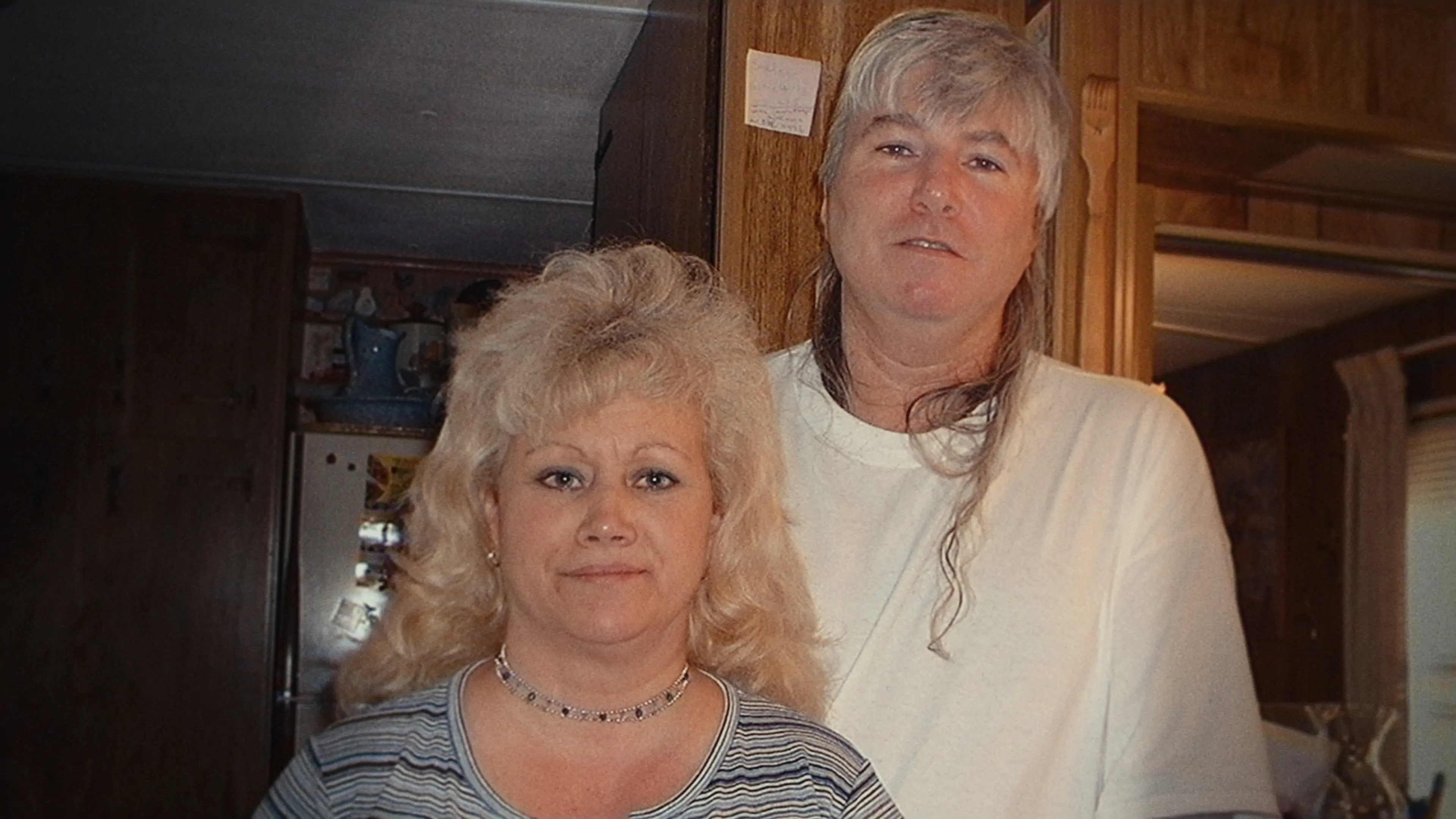
On the night of May 8, 2008, Thomas Randolph called Las Vegas police with a disconcerting alert. “My wife’s been shot,” he told the 9-11 dispatcher. “There’s a guy in my house and I shot him.” That night, Randolph and his sixth wife, Sharon Causse, had gone out for a Mother’s Day dinner. But once they returned home, Randolph stayed in the car to listen to the radio, letting Sharon go inside by herself. Minutes later, an intruder wearing a ski mask and carrying a bag of jewelry fired a couple of fatal shots at Causse.
Upon hearing the gun discharge, Randolph later said, he entered the house, relaying to police in a walkthrough that he’d found Sharon lying on the floor bleeding out. At that moment, after seeing a moving shadow, he grabbed a gun from a nearby room and reactively shot the intruder multiple times, killing him with a bullet to the head, before clearing the rest of the house and calling authorities.
The initial layout of the case was shocking, but it also seemed cut and dry. At least until detective Dean O’Kelley began examining the chain of events a little more closely. Why was the intruder’s ski mask on the garage floor without any blood on it? How were multiple rounds shot in the hallway but no bullet casings were left there? Why did a neighbor hear gunshots at 8:33 p.m., but Randolph’s 9-11 call didn’t occur until 8:45 p.m.?
The next day, veteran Dateline NBC producer Dan Slepian heard about the murders from O’Kelley’s colleague, who offered an intriguing message: “You might want to pay attention to this one.” Slepian had previously worked alongside the LVPD homicide unit, filming real-time investigations, so he was accustomed to documenting cases as they unfolded. This seemed like another prime opportunity to do just that.
Except when Slepian and O’Kelley teamed up, neither realized they were embarking on a 15-year journey—one that would eventually expose the truth about Randolph, a former paralegal who received life-insurance payouts after three of his previous wives all died under suspicious circumstances. Over the years, Randolph, known as the Black Widower, would escape two death penalty convictions, repeatedly finding ways around the legal system for as long as he could.
That lengthy investigation, along with Randolph’s sinister history, is the subject of a new Netflix documentary, The Widower: ‘Til Death Do Us Part. Directed by Chris Smith, the executive producer of Tiger King, the documentary leans on Slepian to tell the complete story, featuring his real-time footage of interviews with Randolph, witnesses across the country, and family members of his victims, as authorities worked to eventually convict him of murder, put him behind bars, and keep him there.
“Normally, the more you investigate, the closer you get to an answer,” Slepian tells TIME. “This investigation did the exact opposite. Every answer widened the frame. Another marriage, another state, another death, another witness. And that's when I realized that what we were covering wasn’t just a single murder case, but a pattern that had been unfolding over decades.”
As Slepian and O’Kelley began digging more into the Mother’s Day murders, the pair found more alarming circumstances and reasons to believe Randolph had been lying about the sequence of events. Causse's daughter Colleen told them that Randolph had become the beneficiary of her mom’s will three months into their marriage. He’d also taken out a $350,000 life insurance policy on her—raising Colleen’s suspicions even further.
The pair also traveled to North Carolina to interview family members of the intruder, Mike Miller, with whom Randolph had developed a working relationship. According to his brothers, Miller had become Randolph’s handyman and was constantly on the phone with him about various things—inlcuding one call in which, according to Miller’s friend, Randolph asked Miller if he’d be interested in killing his wife. It was juicy hearsay, and key context, but the prosecutor’s office declined to issue an arrest warrant. They’d need to do more digging.
The rest of the documentary unfolds much like O’Kelley and Slepian’s real-time investigation, criss-crossing the country and unearthing new information about Randolph’s past that eerily informs the Causse case. “That kind of documentation as things unfold adds a value to not only the journalism but to the storytelling itself,” Slepian says. “There's a layer of suspense because the viewer understands that neither we nor the detectives have any idea what's about to happen.”
The reality was more vast than either Slepian or O’Kelley could believe. It started with a visit to Randolph’s first wife, Kathy, who shared that after marrying Randolph in 1975, he’d taken out a life insurance policy on her. After having two kids with him, Kathy filed for divorce and remarried to Steve Thomas. Unbeknownst to her at the time, Thomas told O’Kelley and Slepian that Randolph had previously tried to groom to kill Kathy, but he refused to cooperate. Then a larger trend emerged.
In 1983, on the same day his divorce to Kathy was finalized, Randolph married his second wife, Becky Gault. Three years later, Slepian and O’Kelly would find out that Gault had died of a gunshot to the head inside her Utah home. Her death was initially ruled a suicide. But in 1988, her death was reclassified and Randolph was put on trial for murder, after he’d collected a $500,000 life-insurance payout.
It didn’t help his case that his friend and handyman, Eric Tarantino, testified that Randolph had hired him to kill Gault and had been planning her murder for six months before Tarantino eventually backed out of the plan. A year later, Randolph was acquitted after his lawyers convinced the jury that Gault had died by suicide, though Randolph was convicted of witness tampering (which would later be expunged) after he was found guilty of offering an undercover cop money to kill Tarantino.
Three more marriages ensued, each culminating under strange, sometimes fatal circumstances. There was Gaynal Allmon, who was “stupid enough to marry him,” she says in the doc, after admitting he’d also taken out a life insurance policy on her. They divorced before anything nefarious happened, but Francis Randolph wasn’t as fortunate.
Throughout their marriage, Frances had a heart condition that required surgery, so Randolph himself selected the doctor to perform the operation. She made it out to the recovery floor, but then Randolph called her family and indicated she’d taken a turn for the worse. “He insists she died from malpractice,” Slepian says in the doc. “He ends up not only collecting on her life insurance money, but he sues the hospital for wrongful death.” And this occurred after Randolph had recorded Frances reciting her will on videotape. Not long after her death, he married Leona Stapleton, but she died of cancer soon after their nuptials.
“I went to 10 states and was embedded with [investigators], but what was surprising to me was when I told everyone we met that I was with NBC News, almost every witness in every state said, ‘Oh yeah, you can film this,’” Slepian says, suggesting to him that they all believed Randolph was guilty and wanted to help catch him. “The extraordinary thing is that as we traveled digging into his past, it felt like we were walking into the present.”
The pile of evidence and statements was finally enough to take Randolph into custody. He was arrested in January 2009, effectively hiding out at his mother’s home in Utah, where police had to drag him through the snow to their vehicle, an incident Slepian recorded on camera. By then, Slepian had developed a rapport with Randolph over the phone, gleaning insight into his behavior throughout the investigation. But his access only deepened once Randolph was detained and Slepian obtained his permission to keep the camera rolling.
Over the next few years, Randolph became convinced he could sway public opinion. He repeatedly delayed his 2008 murder trial, fired lawyers at the last minute, and tried to keep Gault’s case from the ‘80s out of the court. “It was just all kind of a big challenge or game for him,” Slepian says. “He turned suspicion into entertainment and would use his charm and the uncomfortable charisma to camouflage the suspicion.”
Looking back, it became clear to Slepian that Randolph had learned from his first murder trial. Given that Tarantino tried to burn Randolph on the witness stand, Slepian came to believe Randolph had killed Miller to eliminate loose ends. Still, he never felt confident that a jury would see it the same way. “The more the facts around him grew darker and more absolute,” Slepian says, “the more he seemed to grow confident in his ability to shape the narrative.
Throughout this time, Slepian had struggled to tap into Randolph’s impenetrable psyche and cocky personality. The Dateline producer worked to remain unbiased, in part to keep Randolph talking throughout his stay in Clark County jail. “We’re going to become infamous together,” Randolph tells Slepian in the documentary, further creeping him out. “The things that he said were so unsettling so often,” Slepian says. “But the unsettling part wasn't what he was saying, it was how comfortable he was saying it.”
Slepian had spent much of his previous work fighting for inmates who had been unjustly imprisoned. The irony of taking on this case was stark. “My focus normally is on people who are screaming into the wind from a prison cell who have had an injustice done to them and they can't get anybody to listen. They feel like the system has manipulated them,” he says. “This was kind of the same, except that Randolph was the one manipulating the system. He played the bureaucracy like a piano and kept winning over and over again. And that to me speaks volumes about the system as a whole.”
In June 2017, eight years after Causse’s death, Randolph’s case finally went to trial, where he was found guilty of conspiracy to commit murder and two counts of first-degree murder and was sentenced to death. But that wouldn’t be the end. Three years later, the Nevada Supreme Court reversed the conviction and death sentence, ruling that the trial should not have allowed evidence from Gault’s case—just like Randolph had told Slepian. “I put nothing past him,” Slepian says. “It really is because of him that the trial was delayed for nearly a decade. And I think he was waiting for witnesses [to die].”
But during his retrial in 2023, Randolph couldn’t pull any more strings. O’Kelley, who, according to Slepian, had “encyclopedic” knowledge about the case, testified and laid out all the inconsistencies in Causse’s case. His testimony, combined with Randolph’s performative reenactment video the night of the murders, convinced the jury of his guilt. “Had it not been for Dean O'Kelly, Thomas Randolph would likely be free today,” Slepian says. “I think Randolph saw the camera as giving him a stage. But it also gave detectives a record.”
Randolph, now 71, was sentenced to 60 years to life at the Lovelock Correctional Center in Nevada. And, as noted in the documentary, he’s had multiple appeals denied, including one in early September. Slepian, who still calls Randolph in prison, notes that the Black Widower continues to claim his innocence and has people on the outside handing out flyers around the courthouse about his case.
At this point their conversations remain strictly about his legal case, but Slepian is glad that he’s kept his word and remained objective throughout the years. Otherwise, he never would have gotten to share this story. “I had to keep my footing, just listening, knowing why I was there, and using the archive of him over time to create a record,” he says. “The archive itself became a witness to him over time. Now, the whole world gets to know who he is right now.”