The US housing market’s widening wealth gap comes down to luck and timing - The Business Times
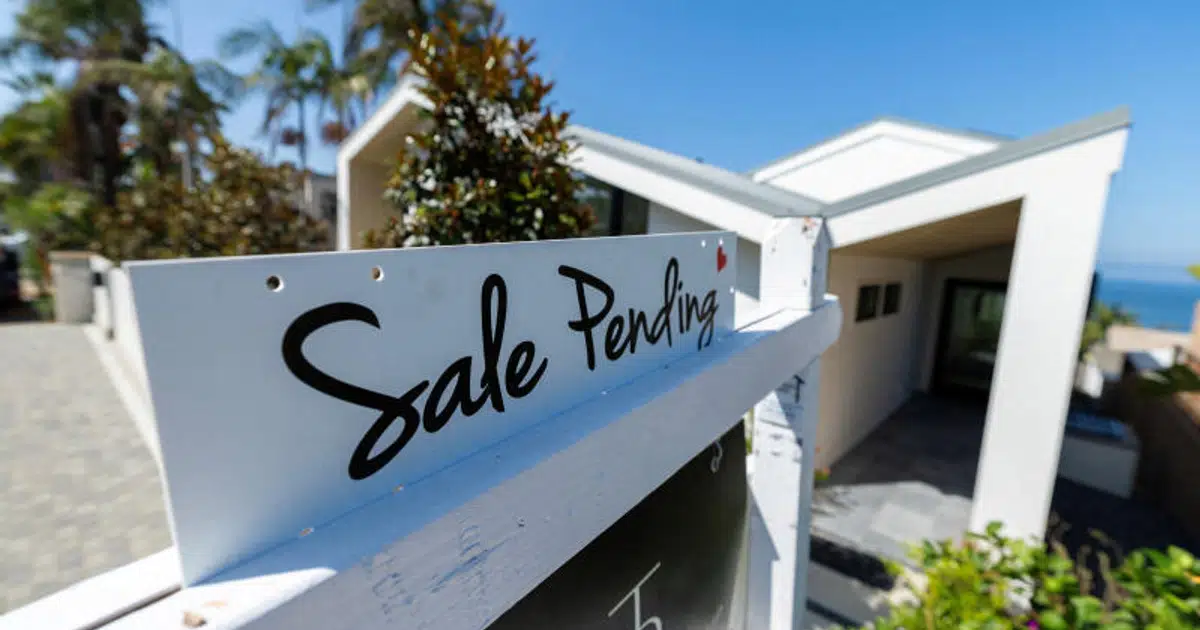
[BOSTON] In today’s US housing market, whether you are a winner or a loser comes down to a quirk of timing.
Roughly 2.4 million homeowners with mortgages are sitting on at least US$1 million in equity, almost triple the number before the pandemic-era boom and near a record.
At the other extreme, more than 1.1 million borrowers owe more than their homes are worth, according to data from Intercontinental Exchange as at September.
The two groups are a stark illustration of a housing market that has become increasingly frozen and divided.
Pending home sales plunged in October to a record low, the National Association of Realtors reported on Wednesday (Nov 18), as elevated borrowing costs discourage buyers.
The average 30-year mortgage rate climbed to 7.28 per cent this week, the ninth straight week above 7 per cent.
With the US Federal Reserve widely expected to raise interest rates in December, there is little prospect of relief anytime soon.
How homeowners are faring depends largely on when they got in.
Millions who bought when rates were historically low are sitting on enormous gains with cheap loans that they are reluctant to give up.
Those who entered later face an opposite reality: higher borrowing costs and homes purchased near peak prices.
“Equity largely boils down to timing and location,” said Andy Walden, head of mortgage and housing market research at Intercontinental Exchange. “People who bought before 2022 have ridden years of price growth. Those who bought more recently, especially in the South and West with a low down payment, have a lot less cushion.”
The consequences have the potential to extend well beyond the current housing cycle. Families with substantial home equity have an asset they can draw on to help the next generation buy houses, pay for education or meet other major expenses, potentially extending their advantage for decades.
Even without selling, equity-rich homeowners can borrow against their properties to help adult children with down payments or co-sign mortgages, said Dowell Myers, an urban planner and demographer at the University of Southern California.
For families with little or no equity, that type of financial support is largely unavailable.
“There’s a class divide,” Myers noted. “The American Dream is that everybody has a chance to break through, and that’s more and more difficult as houses get more expensive and the entry cost gets higher and higher.”
Much of the home equity divide also comes down to geography. While the number of equity millionaires rose 6 per cent nationally in September from a year earlier, it jumped 31 per cent in Chicago, 22 per cent in New York, 19 per cent in Philadelphia and 16 per cent in Houston, according to Intercontinental Exchange data.
At the other end of the spectrum are parts of the South and West, where prices have retreated from their peaks, the firm’s data show.
In Cape Coral, Florida, 11.2 per cent of mortgaged homeowners are underwater, followed by Lakeland, Florida, at 8.9 per cent and Austin, at 8.4 per cent.
Dallas has the greatest number of underwater borrowers of any major market, about 63,000.
Even within the same region, the fortunes of homeowners can be dramatically different.
In the Kingston area of New York’s picturesque Hudson Valley, real estate agent Kate Quintard has clients preparing to cash in on the pandemic housing boom.
The empty-nester couple from New Jersey bought a 3,800-square-foot house with sweeping views of the Catskills for US$445,000 in 2019, then added a heated pool and outdoor entertainment space. Their adult children spent part of the pandemic there.
As the children started families of their own, the couple found themselves using the property less often. They listed it for US$1.425 million in October, and it is now under contract for more than US$1 million above what they originally paid.
“They are over the moon,” Quintard said. “They didn’t expect it to go like that.”
Craig Smith, who works alongside Quintard on Compass’ Upstate Curious team, had a buyer who lost out in the recent bidding war for that property.
But the market has cooled considerably, he pointed out, and other sellers have had a much tougher time.
One of them bought a house in the city of Hudson for US$425,000 in 2019 then spent about US$400,000 adding an accessory dwelling unit and a climate-controlled one-car garage.
After two price cuts, the property is listed for US$799,000, less than the combined cost of the purchase and improvements. Six similarly priced homes are for sale on the same street.
“Buyers are sitting on the sidelines until it’s turnkey and special, and then they’re fighting for the same house,” Smith said. “A group of sellers waited too long, and the market slowed down.”
For many homeowners, there has been little reason to test the market and give up low-rate mortgages. Their decision to stay put has limited the supply of homes for sale, helping sustain property values and preserve wealth accumulated during the boom.
But prices are beginning to weaken in places where more homes are coming onto the market.
In areas such as Austin and Denver, higher borrowing costs have discouraged house hunters even as inventory has grown, putting downward pressure on prices.
Recent buyers who had low down payments are particularly exposed.
Some 88 per cent of underwater mortgages were taken out in 2022 or later, according to Intercontinental Exchange.
Their numbers have climbed almost 30 per cent over the past year to the highest level for this time of year since 2017, though at about 2 per cent of mortgage holders, the share remains very low by the standards of the post-2008 financial crisis.
But even housing winners are subject to quirks of timing. Home equity gains depend on values holding up, and someone being willing to pay for the house.
“It’s all paper wealth until they start selling,” Myers added. “It all depends on them having a future buyer.” BLOOMBERG
Decoding Asia newsletter: your guide to navigating Asia in a new global order. Sign up here to get Decoding Asia newsletter. Delivered to your inbox. Free.
What shattered Crystal Jade? How the culinary empire shrank from 120 to just 9 outlets