The war on climate change has failed. Only self-loathing Britain hasn’t noticed - The Telegraph

Imagine that you are a minister or a senior official in charge of UK climate policy. You are convinced that the world is heating because of human activity and that the impact will be somewhere between harmful and cataclysmic. You want to reduce carbon emissions in a way that, if not cheap, is at least affordable. Your aim is to transition to renewables without crashing the economy and, if possible, without turning the electorate against the whole concept. How would you go about it?
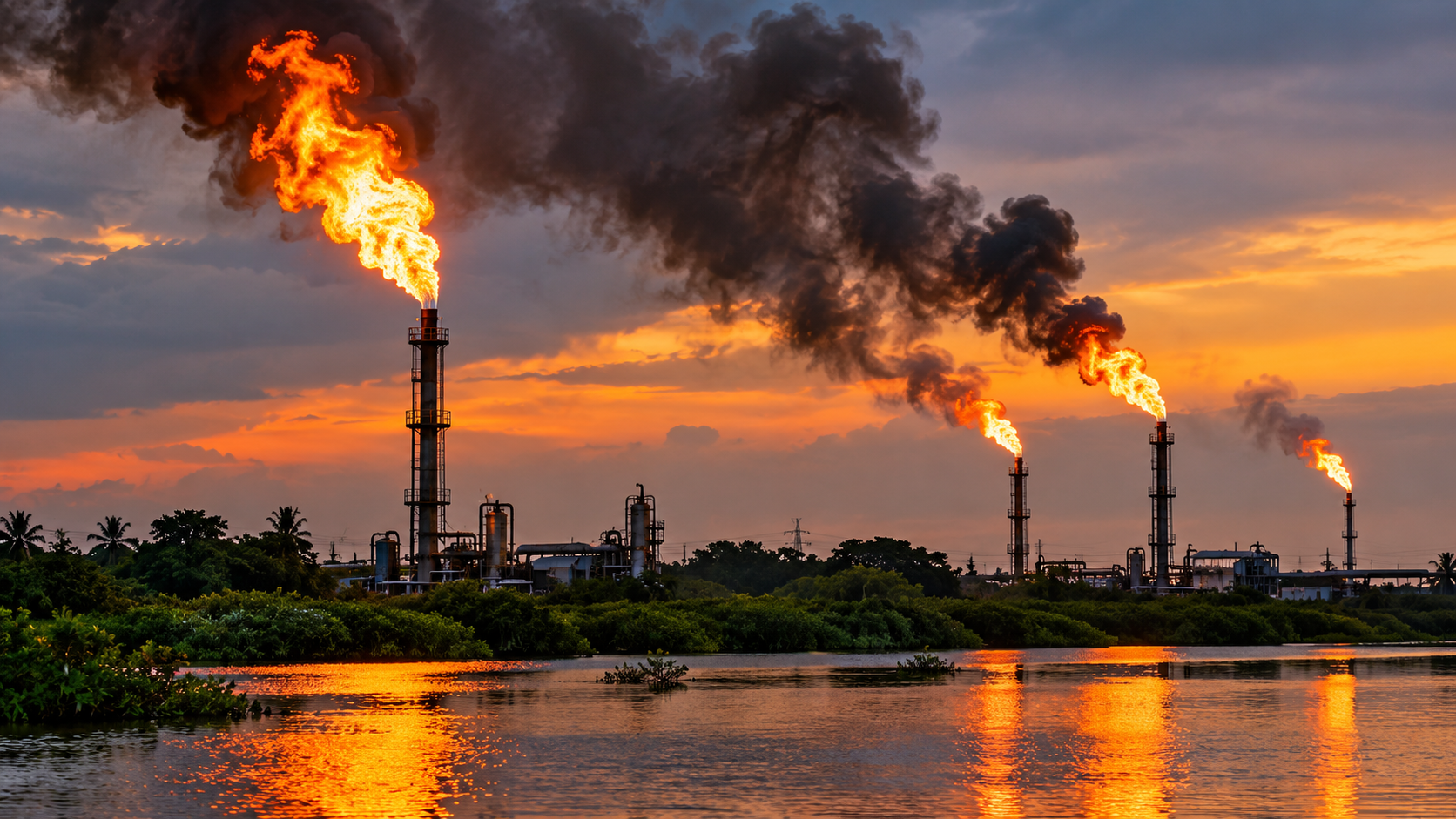
Would you start by phasing out imports from countries that extract fuel dirtily and inefficiently, countries that ship their fuel to you over long distances, countries that, into the bargain, are often repressive dictatorships? Or would you start by wiping out your domestic production, which is relatively clean and low cost, and which generates tax revenues, only to make up the difference by importing more of the dirtier fuel?
That is the question that we should be asking at the climate summit in Turkey – a summit which no G7 leader except Andy Burnham bothered to attend. Instead, consumed with the theatricality of the occasion, and perhaps feeling a twinge of post-colonial guilt, our leaders congratulate themselves on the poverty they are inflicting on the rest of us.
Here are some numbers, numbers which have been almost excised from our debate. First, 78 per cent. That is approximately the proportion of our total energy needs that were met by fossil fuels in 2024. While it might dwindle over time as the energy sources that are easiest to reach are depleted, and as the costs of alternative technologies fall, no one disputes that it will remain high in the medium term.
Second, 44 per cent. That is, on government figures, the proportion of our total energy that we import from overseas while choosing to make prohibitively expensive or outright illegal the exploitation of our own resources.
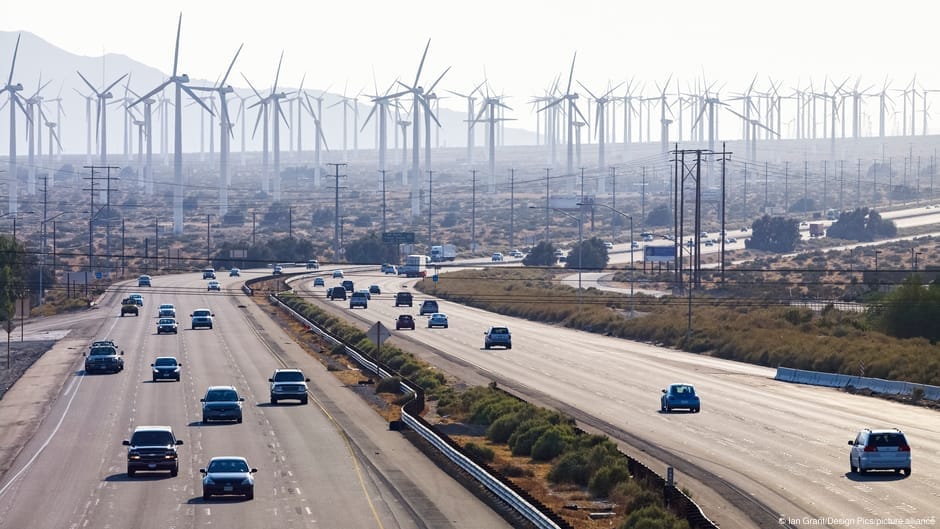
Under our green meadows, and under the pewter waves of the North Sea, we have well over one billion barrels of oil, about 150 billion cubic metres of natural gas and substantial unexploited coal reserves. Have we stopped drawing on all these bountiful gifts because we have such efficient wind farms? Have we found a way to make photovoltaic panels meet the deficit in a country which, meteorologically, is poorly suited to using solar energy?
No. We have simply decided to ship in energy from less environmentally friendly places. We import nearly half our oil and gas. Global carbon emissions continue to rise while our energy prices spiral, our industries relocate, our tax revenues dwindle, our debt grows and our politicians preen and posture and prate (as the PM did this week) about “a new era of British leadership”.
It is almost pathological, this desire to immiserate ourselves so as to make a point. We are doing something that no country has ever attempted, ripping out an entire energy infrastructure in order to replace it with a more expensive and less reliable one.
Refineries, steel plants, aluminium works, cement factories, ceramics makers – all are being closed as the price of energy is masochistically cranked up. Our downstream, industries, too, are hit. One of our largest goods export sectors, vehicles and aircraft parts, relies on aluminium, but our primary aluminium production has collapsed.
Our housing crisis is exacerbated by the rise in cement, glass and steel costs. What might have become a massive AI industry is being asphyxiated at birth, for few sectors are more energy thirsty.
And all for what? To quote Sir Jim Ratcliffe, the chairman of Ineos, Britain’s largest chemicals business: “Deindustrialising Britain achieves nothing for the environment. It merely shifts production and emissions elsewhere.”
Why are we doing this to ourselves? For some bad reasons and one slightly more plausible one. The bad reasons continue to animate eco-campaigners. Some hate capitalism more than they hate climate change, and see the end of affordable energy as a way to bring down the market-based system that has delivered unmatched global growth.
“If you ask me,” opined the early ecologist Amory Lovins in 1977, “it’d be little short of disastrous for us to discover a source of clean, cheap, abundant energy because of what we would do with it.”
Others are motivated by Third Worldism, a sense that developed countries somehow owe the rest of the planet a debt for having industrialised early, which is why it is fine for India to celebrate fossil fuels (yes, literally celebrate: Narendra Modi called it “a proud moment for India” when his country mined its billionth ton of coal last year) while Britain makes itself poorer, darker and colder.
Still others are motivated by a kind of asceticism, an aesthetic distaste for growth, a longing for more wilderness and fewer people – though, when they end up getting less growth, as following the financial crisis, they don’t seem to like it in practice.
These, as I say, are bad arguments. But there was a more realistic one, namely that, for the world to cut its carbon emissions, someone had to set the ball rolling. That was the attitude when Britain started passing climate change legislation 20 years ago and, while it was wrong, it was at least arguable.
Today, it is impossible to make that case. The only thing other countries have learned from us is what not to do. China has tripled its CO2 production since the turn of the century, and now accounts for a third of global emissions. We have handed the autocrats victory on a plate.
Decarbonisers often point, as Burnham did in Turkey, to hot summers, such as this year’s. But they are inadvertently making the opposite case to the one they intend. The fact that global temperature is rising despite Britain having halved its emissions is not an argument for Britain to sacrifice even further. It is evidence, rather, that the sacrifice was purposeless. The war against climate change has failed. We gave it our best shot, but others continued to increase their emissions and, in the end, we lost.
Instead of pouring what few resources we have left into a futile battle, we should be realistic about mitigation. What do we need to spend on sea defences? How will our agriculture change? How might we build cooler homes? Above all, how can we remove some of the carbon from the atmosphere rather than simply reducing future emissions? The technologies here are still primitive, and they will remain so if we continue to eschew economic growth.
To make an unpopular point, a 1.8-degree rise in temperature will bring benefits as well as costs to Britain. Yes, it will be tough on many countries, but we are better placed than most. That is not to say that it will not bring challenges even here: sea rises, migratory pressures and the like. Still, it is worth asking why one of the nations with the least to lose has been paying the highest price.
I wonder whether the answer is to be found in the world of meteorology. I suspect we are seeing something more emotional and vibesy, a sense that Britain had it good for too long and must embrace sackcloth and ashes as a form of historical atonement.
Even Norway, one of the most internationalist countries in the world, is happy to fast-track exploration in much the same North Sea deposits which Britain has closed, and then to sell us the oil and gas, to the point where we are Norway’s single biggest export market. But Norway’s leaders, unlike ours, do not suffer from oikophobia, that peculiar self-loathing that permeates our intellectual elites.
Some final numbers. The mean annual temperature in London is 11.3C; in Bangkok it is 28.6C; in Ulan Bator it is 0.2C. All three cities sustain large human populations. With a bit of effort, I think we might just manage to adapt.