The World's Best Airports of 2027 - Time Magazine
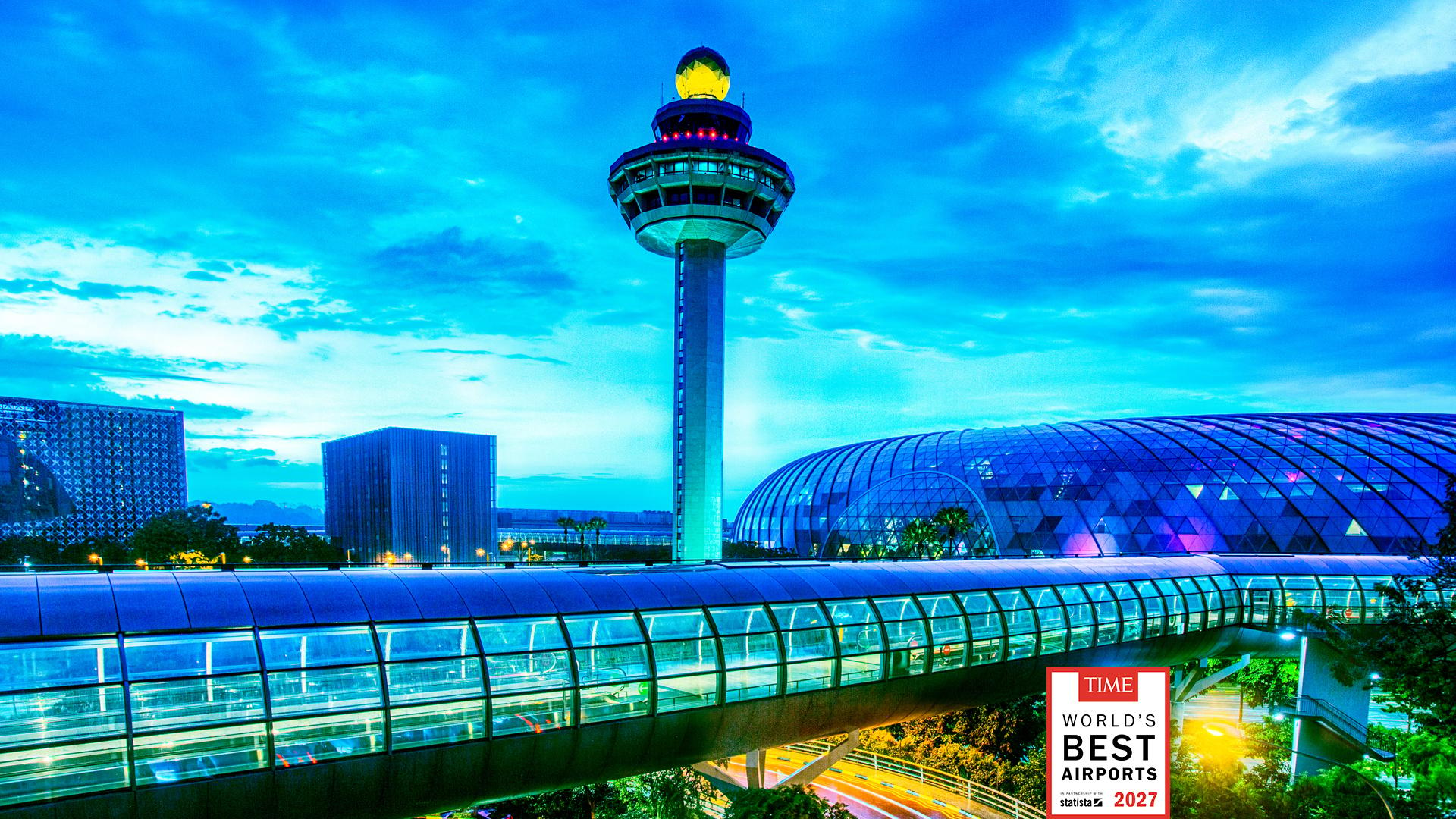
When U.S. flights were grounded by the FAA on Nov. 13, many travelers spent far longer in an airport than they’d planned. To some, airports are simply liminal spaces where time is passed between connections. But airports have a large economic (and political) impact on the local community. “Some big airports have… turned themselves into giant national projects, such as the Changi Airport in Singapore. It's a destination. People go there as a mall,” says Seçkin Özkul, assistant professor and director of the University of South Florida Supply Chain Innovation Lab.
Changi Airport tops the ranking for the World’s Best Major Airports, one of the sublists in the first edition of the World’s Best Airports ranking that TIME has partnered with Statista to launch. These rankings aim to highlight airports across the globe that excel in passenger experience and operational performance based on consumer surveys conducted in the past three years and independent flight data analysis provided by OAG, and have been divided into sublists based on size and specialty.
Airports are both gateways and last stops for travelers. Since COVID lockdown policies were lifted, demand for air travel continues to rise. Meanwhile, revenues, both aeronautical and non-aeronautical, are sky-high. The former comes from fees charged to airlines for landing, using terminals and gates, security, maintenance, fuel and cargo processing, for example. The latter includes income from parking, rent for in-airport shops, lounges, advertising, and concessions on services like banking and car rental. Just before the pandemic, airports generated around $158.6 billion in 2019, according to the 2023 ACI Airport Economics Report. Following a pandemic drop-off, business has largely returned, with airports globally generating revenues of $194.9 billion in 2024.
Changi is consistently ranked as the top airport in the world by multiple metrics. Part of its success Özkul attributes to the fact that Changi is owned and funded by the national government of Singapore. “Their investment capabilities are different. When you are Changi, the national government can make so much more investments, can incentivize the airport to be able to attract more businesses, charge less to the airlines,” he says. “This is a little bit more difficult to do in the United States because most of the time airports are owned by cities or counties or states…The constraints of belonging to a city or county versus the national government makes a big difference on investment, on incentives, on how much taxes you want to charge.”
Travelers can see the effect upon arrival. The Changi Airport offers everything from luxury shopping to hotels to restaurants to pools, gardens, trails, and dedicated relaxation spaces. It is the number one airport mall, according to Travel and Leisure, reportedly raking in $1.17 billion in non-aeronautical revenue each year. The big investments into building out all of these amenities are what enables airport operators to think outside of the box in terms of maximizing non-aeronautical revenue. “If you go to smaller airports, it's not much happening there, and therefore not much non-aeronautical money is coming in,” Özkul says.
However, smaller airports can have their draws, especially for no-frills budget airlines. Since more central airports have a limited number of gates available at any given time, airlines have to compete for space. Smaller airports located slightly wayside of metropolitan areas will offer competitive prices to attract low-cost airlines. For example, Allegiant and Breeze might fly into Provo Airport an hour outside of Salt Lake City instead of to Salt Lake City International. Smaller airports are also important regional connectors that serve as hubs tying together local economies and underserved markets, all the while reducing strains and bottlenecks at bigger hubs. Halifax Stanfield International Airport, the top ranked on the World’s Best Small Airports sublist, serves as a portal between remote Nova Scotia and the rest of the world. It has seen year-over-year increases in trans-border traffic, cementing its role as a Canadian gateway for global travelers.