Third Russia-Africa Summit: Building on Our Partnership - IOL
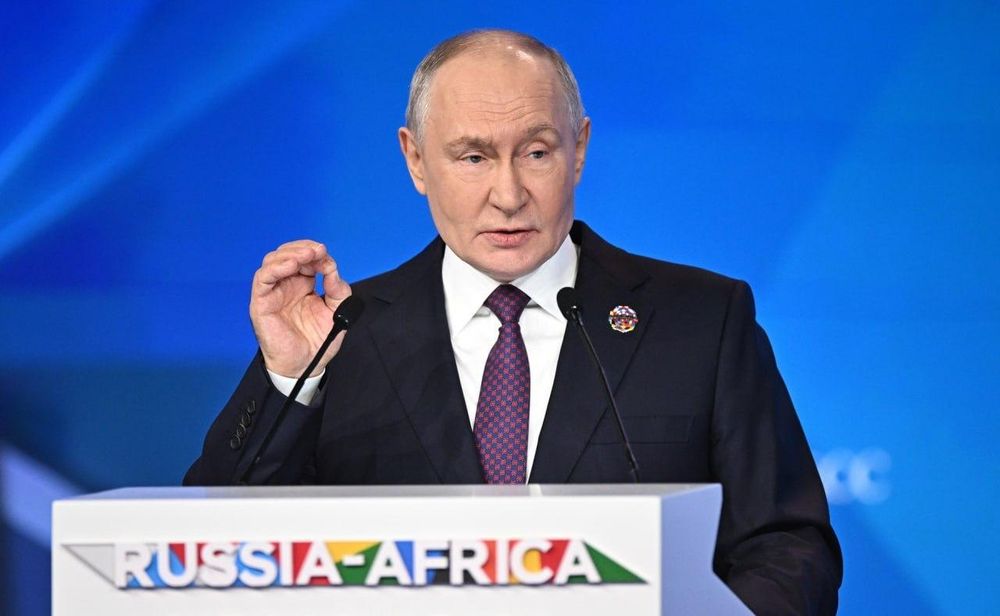
Russian President Vladimir Putin addresses the third Russia-Africa Summit 2026.
On October 27-29, Moscow hosted one of the major events on the international calendar – the Third Russia-Africa Summit and the Russia-Africa Economic and Humanitarian Forum. I had the honour of taking part in these high-level gatherings, which brought together representatives of 51 out of 54 African countries, prominent business people and experts from across the continent.
The Russian capital welcomed its African guests with customary warmth and hospitality. Every effort was made to ensure the smooth running of the summit and the wider Africa Week programme, with the highest standards of organisation and particular attention to the safety and comfort of the numerous delegations. This was widely acknowledged by participants, as well as by journalists and influencers who travelled to Moscow.
For many visiting Africans, particularly those who had never been to Russia before, the trip proved to be a real eye-opener. It gave them an opportunity to look beyond familiar stereotypes and form their own opinions based on first-hand experience. Almost all of them spoke of discovering what they called the “real Russia” – a country quite different from the image they had previously encountered in Western media.
The gathering also demonstrated that attempts to isolate Russia have failed to prevent its active engagement with the international community. Countries of the Global Majority are, in fact, showing growing interest in developing closer ties with our country. The adoption of the Moscow Declaration and the signing of numerous bilateral agreements with African states provided further evidence of this engagement.
I listened attentively to President Vladimir Putin’s address and the contributions of African leaders. A clear message emerged: both sides are committed to building relations founded on equality, mutual respect and tangible results.
This cooperation is not about exploiting resources or pursuing one-sided benefits, but about creating shared opportunities. Russian companies are encouraged to invest in local economies, establish production facilities, share expertise, work with local businesses and create jobs.
This is important. Cooperation should bring tangible benefits to the people of the countries involved. African states should be able to process more of their own natural resources, develop industries and strengthen their economies rather than remain simply suppliers of raw materials.
The President also spoke about the changing international landscape. The world is becoming more multipolar, and Africa is playing an increasingly important role in it. Its voice deserves to be heard in international affairs and in the institutions that shape global decisions. Russia supports greater representation for African countries in the UN Security Council and other international bodies.
The Summit was held under the motto “For Peace, Security and Development”. Its discussions covered a wide range of issues, from international affairs and regional security to trade, investment, artificial intelligence, education, healthcare and culture.
I particularly appreciated the open nature of the discussions. African participants had the opportunity to present their views, raise concerns and put forward proposals. The continent is diverse, and its countries have different priorities and experiences. It is important that this diversity is reflected in our dialogue.
For Russia, listening to our African partners is just as important as presenting our own ideas. The best results come when we identify shared interests and work out solutions together.
The Summit concluded with the adoption of the Moscow Declaration, a comprehensive document consisting of 101 points and covering the main dimensions of Russia-Africa cooperation. It covers political cooperation, security, economic development, humanitarian ties, environmental protection and climate issues.
An important place is given to overcoming the consequences of colonialism. The Declaration supports efforts to establish legal mechanisms for assessing and compensating the damage inflicted on African countries during the colonial period, as well as the return of cultural property taken from the continent during that era.
In the field of security, the parties reaffirmed their commitment to promoting peaceful settlement of conflicts in Africa in accordance with the principle of "African solutions to African problems". The Declaration also provides for the establishment of a permanent Russia-Africa high-level dialogue mechanism to coordinate efforts against terrorism and extremism and address issues of food and information security.
The sides also adopted the Russia-Africa Partnership Forum Action Plan for 2027-2029. It gives us a practical framework for taking forward the agreements reached and developing cooperation between summits. An additional milestone was the signing of a Joint Action Plan between Russia and the Southern African Development Community (SADC). This is particularly relevant to the countries of Southern Africa, including the Republic of South Africa and the Kingdom of Lesotho, with which Russia maintains close and longstanding relations.
These documents are not an end in themselves. Their real value will depend on how effectively we translate them into projects, agreements and results that people can see and benefit from. And we are committed to deliver them.
Russian President Vladimir Putin prepares to embrace President of the Union of the Comoros Azali Assoumani. The third Russia-Africa Summit and the Russia-Africa Economic and Humanitarian Forum brought together representatives of 51 out of 54 African countries, prominent business people and experts from across the continent.
Economic cooperation was naturally one of the central themes. Russia-Africa trade turnover exceeded US$27 billion in 2025, demonstrating the potential of our relationship. We believe there is room to expand it further, diversify the range of goods and services exchanged and encourage more investment.
One practical development is the growing use of national currencies in our trade. Around 85 per cent of commercial transactions between Russia and African countries are already settled in national currencies, including the Russian rouble. This helps make payments more independent of external financial restrictions and can make trade more convenient for businesses.
Energy is another area offering considerable potential for mutually beneficial cooperation. Reliable and affordable electricity is essential for economic growth and industrial development. Russia is ready to expand partnerships with African countries across the energy sector, including oil and gas, hydropower, and nuclear power.
The Third Russia-Africa Summit gave fresh impetus to nuclear cooperation. On its sidelines, Russia’s state nuclear energy corporation Rosatom signed three important documents with Togo, Rwanda and Uganda, covering the development of nuclear infrastructure, assessment of national capabilities and preparations for potential nuclear energy projects. Our cooperation encompasses specialist training, technology transfer and the peaceful application of nuclear technologies in medicine, agriculture and research. We aim to support African countries in developing their own expertise and long-term energy capabilities, with solutions tailored to their individual needs and priorities.
Food security is equally important. President Putin reaffirmed that Russia willremain a reliable supplier of grain and other agricultural products to African markets. In 2025, Russia exported more than 18 million tonnes of grain to African countries, followed by another 13 million tonnes in the first nine months of 2026. We are also increasing supplies of fertilisers, which are essential for agricultural production.
But our cooperation should go further than supplying food. President Putin noted the interest of African partners in attracting Russian expertise and technology to increase agricultural production. Russia is ready to share its experience in crop and livestock farming, as well as in food processing and storage. Stronger local agricultural production can help African countries improve food security, create jobs and build more resilient economies.
Technological independence is another priority that President Putin highlighted in his address. He described technological sovereignty as a strategic choice and noted the progress Russia has made in developing its own technologies and digital solutions. We are ready to share our experience and advanced expertise with African partners.
I believe this is one of the most promising areas of our cooperation. Technological independence is not simply about having access to modern equipment or software. It is about developing the knowledge, skills and capabilities needed to create, manage and improve technologies independently. Without a risk of being cut off by some cloud service from abroad.
A strong partnership goes beyond trade and infrastructure. It is equally about people, education and the exchange of knowledge.
Healthcare remains a key area of cooperation. President Putin reaffirmed, that Russia will continue to support African partners in combating infectious diseases, training medical professionals and strengthening public health systems. The programme of cooperation with African countries in this field has been extended until 2029.
Cultural, humanitarian and media ties are equally important. Exchanges in education, science, sport, tourism and culture bring our societies closer, foster mutual understanding and build lasting connections between people – often extending across generations.
The Third Russia-Africa Summit confirmed that there is a strong interest on both sides in taking our partnership forward. We have agreed on priorities, adopted important documents and identified areas where cooperation can deliver real results.
But the most important work begins now. We need to follow up on the agreements, maintain regular contact with our African partners and turn the ideas discussed in Moscow into concrete projects.
Russia is ready to work together with South Africa, Lesotho and all our African friends – on the basis of equality, mutual respect and shared interests.
We have agreed on the direction. Now it is time to get to work.
* Roman Ambarov, Ambassador of the Russian Federation to the Republic of South Africa and the Kingdom of Lesotho.
** The views expressed do not necessarily reflect the views of IOL.