This Is What ‘Globalize the Intifada’ Looks Like - Newsweek
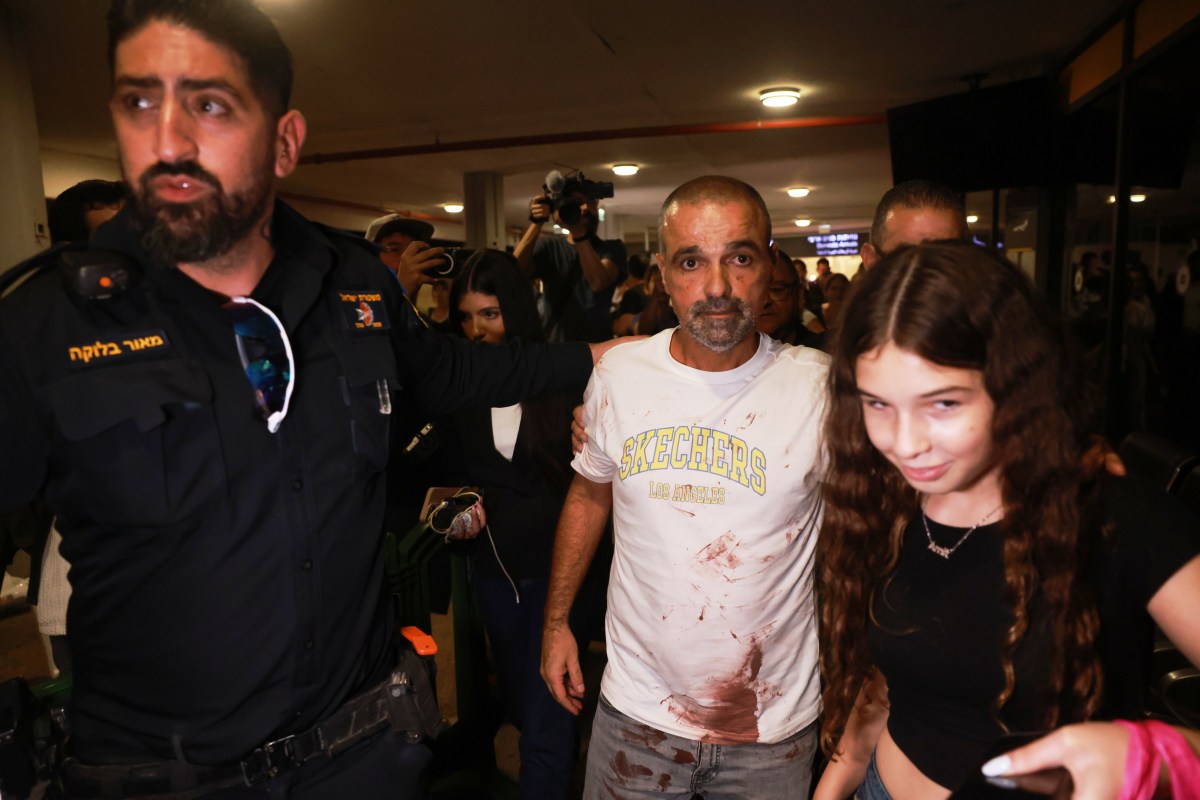
The details are still emerging, but Israeli Prime Minister Benjamin Netanyahu has confirmed the early suspicions about what motivated the thwarted hijacker of FlyDubai’s Tel Aviv-bound Flight FZ1073.
"We know that he underwent Islamist radical indoctrination," Netanyahu said on Thursday morning, appearing on Fox & Friends, though the investigation is ongoing. Israel’s defense minister had already called it attempted jihadist terrorism.
President Donald Trump said the night before, after speaking to Netanyahu, that the Omani national arrested was "perhaps a terrorist or perhaps a whack-job." The evidence is increasingly pointing to the former, though they’re not mutually exclusive.
It’s worth quickly recapping exactly what happened. The Omani co-pilot of Flight FZ1073 allegedly attacked his captain with an ax as the jet neared Israel on Wednesday.
The Boeing 737, carrying 174 people to Tel Aviv, most of them Israelis, then plunged some 14,000 feet in under 30 seconds, in an apparent attempt to crash the plane.
Captain Smit Machchhar, an Indian national, managed to open the cockpit door despite his severe injuries, a heroic feat followed by the bravery of passengers and crew who flooded in to overpower the co-pilot and take control of the aircraft.
Much of what went on was caught on video by passengers. The bloodied captain, the passengers taking control of the situation, the screams of terrified travelers, many of them children, as the plane nose-dived.
Mercifully, the jet was guided to a safe landing in Saudi Arabia, where the co-pilot was detained by authorities, before the flight finally reached its destination in Israel.
This incident is many things. One of them is the stark reality of a phrase echoing around Western cities, including many in the U.S., cheered by progressives and pro-Palestinian activists during Israel’s Gaza war, triggered by the Hamas attack of October 7, 2023.
"Globalize the intifada." For nearly three years the chant has been a fixture of pro-Palestinian protests. Last November, demonstrators shouted it outside a Manhattan synagogue whose senior rabbi survived the Holocaust. The progressives who defend it call it a cry for justice, not blood. They say it is misunderstood by their critics.
Intifada means "shaking off" in Arabic, and the first one, which began in 1987, was fought largely with strikes, boycotts, and stones. Asked about the chant last year, Zohran Mamdani, now New York City’s mayor, said he heard in it "a desperate desire for equality."
He added that the U.S. Holocaust Memorial Museum had used the word, in Arabic, for the Warsaw Ghetto Uprising. The museum’s reply: "Since 1987 Jews have been attacked and murdered under its banner."
But slogans mean what they summon, not what their roots say. The intifada within recent memory is the second, from 2000 to 2005. It featured suicide bombers on buses, in a Tel Aviv disco, and at a Passover Seder in Netanya.
Hamas and Islamic Jihad sent many of the bombers, and Human Rights Watch, no one’s idea of an Israeli mouthpiece, judged the campaign a crime against humanity. That is the uprising the chant invokes in the minds of many, especially Jewish people.
If progressives are bothered by the association with violence, they could drop the phrase in favor of another that says what they mean without the connotations of suicide bombings and, as now appears, flying planes full of Israeli civilians into the ground.
"Globalize" is the tell. Solidarity is already global. A march in Manhattan about Gaza proves that.
What "globalize" adds is a broader geography. If you export an uprising against an occupation to places with no occupation, the only targets within reach are Jews and Israelis going about their lives.
We know what a globalized intifada looks like. In May 2025, a man accused of gunning down two Israeli Embassy staffers outside Washington’s Capital Jewish Museum allegedly declared inside: "I did it for Palestine. I did it for Gaza."
Eleven days later in Boulder, Colorado, a man shouting "Free Palestine" firebombed a walk for Israeli hostages. He has since pleaded guilty to murdering 82-year-old Karen Diamond.
Jihadists never needed an American campus to hate Jews. What the chant offers them is a naive chorus. Proof that their method—civilians, anywhere, for "Palestine"— can be shouted in English by activists who would never lift a knife.
If the slogan meant only what its defenders say, a globalized intifada would look like a boycott or peaceful resistance. Perhaps even some civil disobedience. In practice it looks more like a sidewalk in Washington, a pedestrian mall in Boulder, and a cockpit over the desert.
After last December’s Bondi Beach massacre, police chiefs in London and Manchester vowed to arrest people who chant the slogan, declaring that "the context has changed."
America’s First Amendment would almost certainly forbid that. But a right to say something is not proof that it is harmless.
It’s time for well-meaning pro-Palestinians to retire the words. Even Mamdani eventually said he would discourage them. A chant that needs a translator to sound peaceful has already told you what it means. The 174 people aboard FZ1073 didn’t need one.
The true sound of "globalize the intifada" isn’t the noise a bunch of college students marching through the streets of New York City. It’s the screams of children plummeting to their deaths.