Three Indian startups launch payloads into space aboard SpaceX's Falcon-9
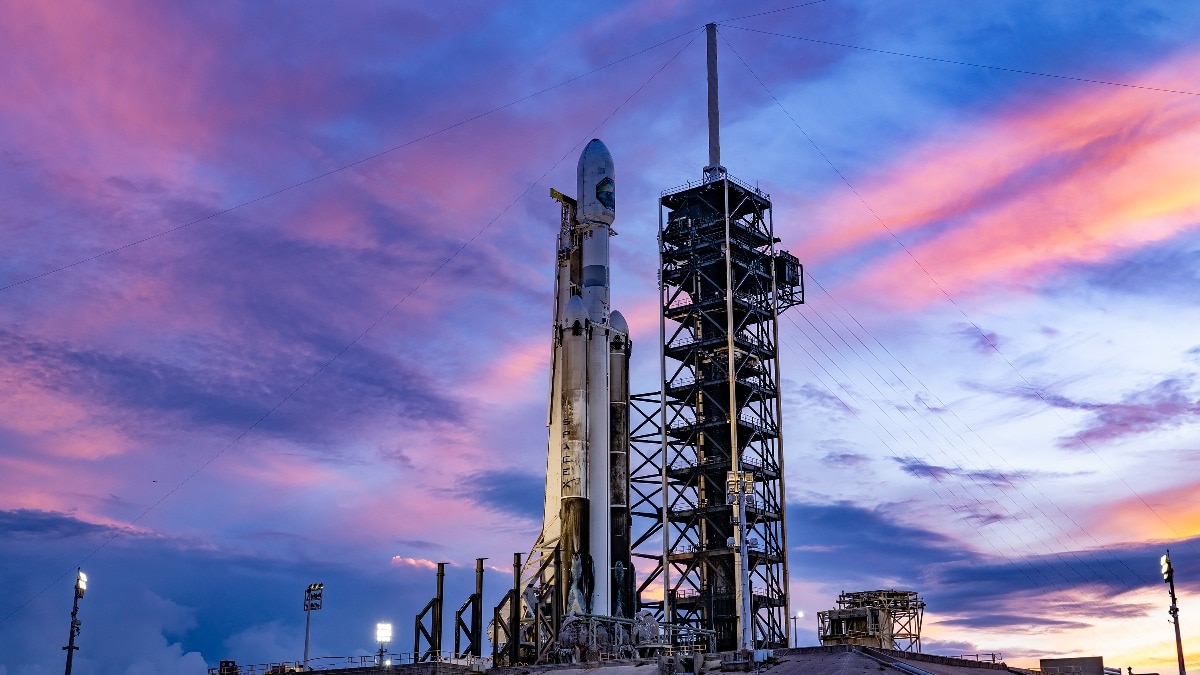
Three Indian space startups have sent their latest technology demonstrations into orbit aboard SpaceX’s Falcon 9 as part of the Transporter-18 rideshare mission, marking another step forward for India’s growing private space sector.
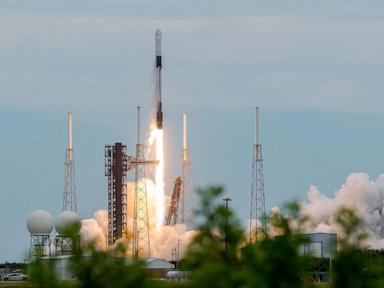
The Falcon 9 lifted off from Vandenberg Space Force Base in California at 11:48 pm IST, carrying around 130 payloads to orbit. Among them were missions from Hyderabad-based Dhruva Space and TakeMe2Space, along with Ahmedabad-based SatLeo Labs.
The three missions are aimed at testing different technologies, which include hosted payload platforms, thermal imaging and artificial intelligence-powered computing in orbit.WATCH FALCON-9 LAUNCH WITH THREE INDIAN PAYLOADS TO SPACEWatch Falcon 9 launch the Transporter-18 mission to orbit https://t.co/W4VS07HPRZ— SpaceX (@SpaceX) October 1, 2026DHRUVA SPACE’S LEAP-2
Dhruva Space’s LEAP-2 is part of its Launching Expeditions for Aspiring Payloads programme, which provides hosted-payload opportunities using the company’s P-30 satellite platform.
SpaceX listed Dhruva Space's LEAP-2 on its official Transporter-18 manifest, with deployment scheduled roughly 58 minutes after liftoff. The mission is also carrying France’s Sodern HORUS star tracker for an in-orbit demonstration.Orbit called. We picked up. #LEAP2, our second commercial hosted payload mission, is gearing up for lift-off on 01 October via @SpaceX’s Falcon 9, hosting a stack of global technologies.The satellite has been integrated to the Falcon 9.The countdown is on.See you pic.twitter.com/krDi21SSeE— Dhruva Space (@DhruvaSpace) October 1, 2026One of the payloads hosted on LEAP-2 is SatLeo Labs’ TAPAS-1, making the mission particularly significant for India’s commercial Earth-observation sector.SATLEO’S THERMAL EYE TO CHECK EARTH'S FEVER
TAPAS-1 is a roughly 3-kg CubeSat-category thermal payload that uses long-wave infrared sensing to measure land-surface temperatures from orbit.
Unlike conventional optical cameras, which primarily capture reflected sunlight, thermal sensors can detect temperature differences across the surface. This could provide information useful for monitoring urban heat, crop stress, industrial activity, disasters and other environmental changes.Ahmedabad-based SatLeo Labs (@satleolabs) has developed TAPAS-1, India’s first dedicated commercial CubeSat thermal payload.It uses thermal sensing to detect heat patterns invisible to regular cameras to monitor urban heat, farms, disasters and infrastructure from space. pic.twitter.com/XUtWA6ccJx— Runtime (@RuntimeBRT) October 1, 2026
SatLeo plans to use the mission as a technology demonstration before developing PYRO, a proposed constellation of 10–15 thermal-imaging satellites by 2029. The company is also developing TAPAS-2 for a planned 2027 mission.TAKEME2SPACE PUTS AI IN ORBIT
Hyderabad-based TakeMe2Space has launched MOI-1A, which the company describes as India’s first orbital computing satellite.
The satellite carries an Nvidia Jetson Orin NX-based computing system capable of 117 TOPS of processing, along with 2TB of onboard storage and a nine-band multispectral imager. Instead of sending large volumes of raw Earth-observation data to the ground, customers can upload AI models to the satellite, process information in orbit and receive only the resulting insights. An image of the MOI-1A satellite which is aboard SpaceX's Falcon 9. (Photo: TakeMe2Space)
MOI-1A replaces the company’s earlier MOI-1 spacecraft, which was lost during the PSLV-C62 failure in January 2026. The startup subsequently rebooked the mission on the first available Falcon 9 rideshare opportunity.
MOI-1A is expected to be deployed through a D-Orbit orbital transfer vehicle, with orbital injection targeted by October 8.
Together, the three missions demonstrate how Indian startups are increasingly moving beyond satellite manufacturing into thermal intelligence, onboard AI and commercial space infrastructure.- Ends