Todd Blanche says media coverage can become national security issue - Newsweek
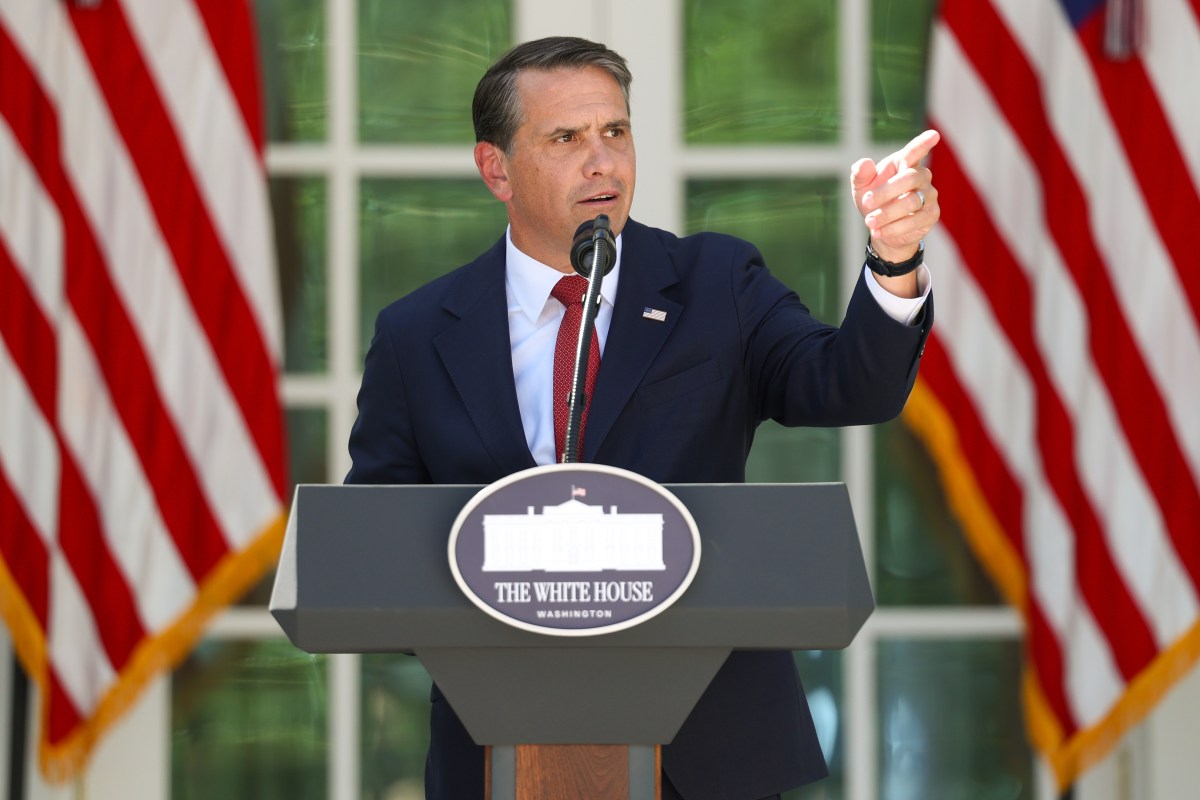
Attorney General Todd Blanche on Sunday defended the Trump administration's restrictions on several news organizations, arguing that certain media coverage can become a national security issue as the White House remains embroiled in a legal battle over press access.
Speaking on ABC News' This Week, Blanche backed President Donald Trump's decision to bar CNN from traveling aboard Air Force One for a trip to Tennessee on Saturday and reiterated the administration's position that access to the White House is not guaranteed.
"It is a privilege to be in the White House for anybody," Blanche told moderator Martha Raddatz. Later in the interview, he added: "It is the people's house. It is a privilege, not a right, to be there."
The comments come days after U.S. District Judge Timothy Kelly temporarily blocked the administration from enforcing its ban on CNN, Politico and MS NOW while their lawsuit proceeds. The three outlets argue the restrictions violate the First Amendment and amount to retaliation for unfavorable coverage.
Following the ban, the White House launched its own streaming channel, Trump TV.
Newsweek reached out to the White House and the Justice Department for comments on Sunday.
Raddatz pressed Blanche repeatedly on the administration's decision to exclude CNN, which had been scheduled to serve as the rotating television pool network during Trump's Tennessee trip.
"The president has every right to decide who gets to fly on his plane," Blanche said, referring to Air Force One.
Blanche argued that inaccurate reporting can harm U.S. interests abroad.
"What we expect and it is for the protection of our country, so that when foreign leaders, when foreign governments, when citizens that are around the world hear what's happening in the administration, that it happens to be accurate," he said.
The attorney general also claimed that "the complete misinformation and the inaccuracy and the one-sided news out of certain organizations does become a national security issue."
Those comments touched on an issue central to the administration's ongoing court fight over the restrictions.
In his order, Kelly, who was appointed by Trump during his first term, wrote that "nothing in the record that predates this suit suggests that the revocation of Plaintiffs' hard passes was motivated by national security concerns" and noted that Trump had instead focused on the outlets' allegedly negative and inaccurate coverage when announcing the restrictions. He also said the court was "skeptical" that safeguarding national security was the administration's actual motivation for revoking the credentials.
Kelly further wrote that the administration had offered little evidence that revoking the outlets' credentials would protect national security, saying the record lacked factual support for that claim.
Raddatz challenged that assertion on Sunday, pointing out that Trump initially justified the restrictions by accusing outlets of unfair coverage rather than citing security concerns.
"The president said nothing about national security when he announced this ban," she said.
"Well, I'm not going to get into what the judge says," Blanche responded. "That litigation is ongoing, but our position has been clear from the beginning. What they say is exactly the issue when it comes to national security."
The dispute stems from Trump's decision earlier this month to ban CNN, Politico and MS NOW from the White House, saying the outlets had repeatedly published inaccurate coverage.
The president has defended the move on Truth Social, writing that media organizations "shouldn't be able to constantly write or report FICTION and LIES" while covering the administration.
After the outlets sued the White House, Kelly issued a temporary restraining order restoring their press credentials for 14 days while litigation continues.
The president has argued that the dispute is not about suppressing journalism but about limiting access for organizations he says spread false information.
Following the lawsuit from the banned outlets, Trump wrote that the White House was not attacking a free press but rather fighting what he described as "FAKE NEWS." He later argued that outlets that publish what he describes as false reporting should not receive special access to the president.
"It is a threat to our National Security, and must be stopped, NOW!" he wrote on Truth Social.
Vice President JD Vance said the affected organizations are not being prevented from reporting but are being denied what he described as special access.
"He's not banning media outlets," Vance said earlier this week. "We're not going to give you special access to the White House if you engage in what is effectively propaganda."
The Trump administration has consistently argued that the dispute concerns access, not censorship. In court filings, the Justice Department contended that White House credentials are "a privilege, not a right" and that the First Amendment protects an outlet's ability to publish without guaranteeing a hard pass, briefing-room seat or place in the press pool.
The president has also maintained that the restrictions are about a broader pattern of coverage rather than any single article. Asked about the decision earlier this month, Trump told reporters there was "no particular reason" and described it as the result of "cumulative stories over the last two years."
The dispute has also disrupted the traditional television press pool, with ABC, CBS, NBC and Fox News refusing to replace CNN when it was removed from scheduled pool assignments.
The judge set a schedule for both parties to argue if the court should issue a longer preliminary injunction, with CNN, MS NOW and Politico having until Monday to file their motion while the White House is given until Friday, October 2 to respond. After that, the outlets may reply by Monday, October 5.
Kelly said he "intends to rule expeditiously" on the preliminary injunction request. The current court order restoring the outlets’ access ends on Thursday, October 8.
Newsweek’s reporters and editors used Martyn, our AI assistant, to produce this story. Learn more about Martyn here.
Contact Newsweek editors for this story: Steve Mollman and Anthony Murray.