Toronto’s Kardinal Offishall on frank new album: ‘Every day we are alive is a victory’ - Toronto Star
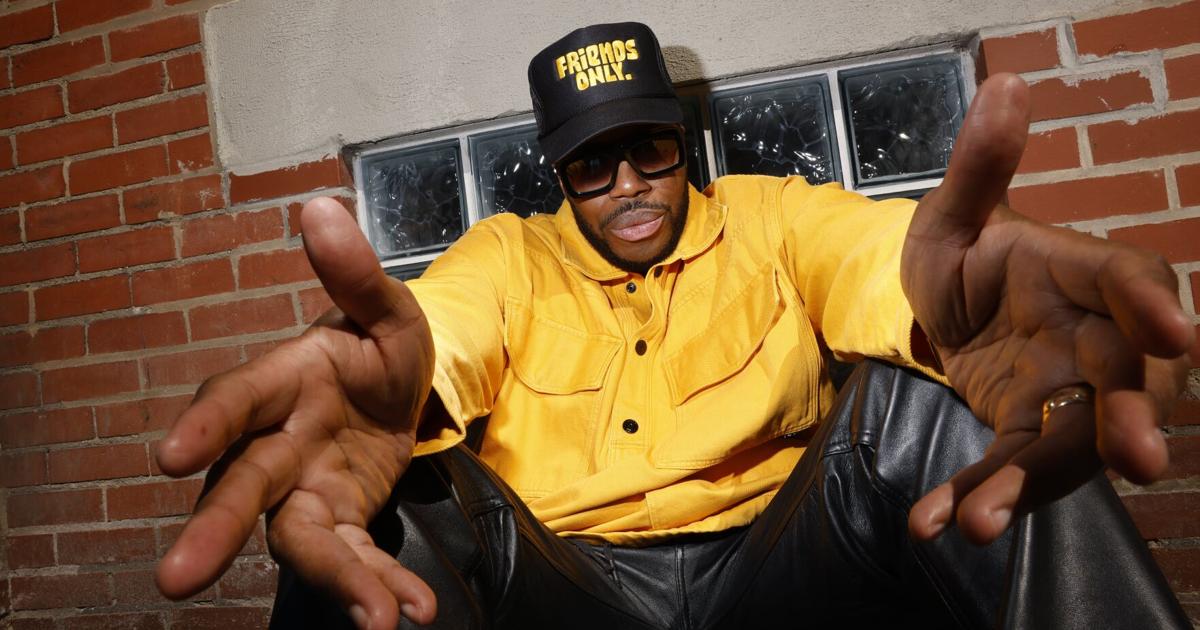
'Firestarter, Vol. 2' features guest spots by Black Thought and Idris Elba.
To say that it’s been a long time since we’ve heard from Kardinal Offishall might seem strange.
After all, it’s not like the Toronto hip-hop star has been out of the public eye. He’s been a familiar face on TV screens in recent years as a judge on “Canada’s Got Talent” and with appearances on series such as “Private Eyes” and “Run the Burbs.” His 2008 worldwide smash single “Dangerous” has found new life as a recurrent TikTok trend, and besides his role as global A&R lead for Def Jam Records, he curated and hosted 22 days of live music during the city’s 2026 World Cup festivities.
Still, it has been a while since we’ve heard new music from the five-time Juno Award winner born Jason Harrow. In fact, it’s been more than a decade since he released his last album, “Kardi Gras, Vol 1.: The Clash,” back in 2015. Kardinal is remedying the situation with a new 10-track album titled “Firestarter, Vol. 2: Everyday, Sometimes …,” which beyond boasting an impressive list of collaborators, is also deeply personal and introspective.
“After all these years, I’m literally learning what it means for me to be a pure artist,” Kardinal Offishall said, “where I may have been reluctant to say certain things or express certain things, even though sometimes it is uncomfortable.”
When I asked him on a recent Zoom call if the long delay between releases could be attributed to the hectic work-life balance of his multi-tentacled career, he immediately concurred, referencing the album’s subtitle: “Do I do Def Jam work? Yeah, every day, sometimes. You know what I mean? Am I in the studio? Yes, every day, sometimes.
“That’s literally what it’s all about,” he continued. “That is what my life is. I look at it as a blessing to be able to have had all these experiences. I mean, listen, it’s the 25th-anniversary since ‘Firestarter, Vol. 1,’ and it’s like I’ve lived 100 lifetimes in the last 25 years.”
Released in 2001, Kardinal’s “Quest for Fire: Firestarter, Vol. 1” was a landmark statement for Toronto hip-hop, featuring the hit singles “BaKardi Slang,” which shrewdly describes the city’s diasporic cultural makeup, and the party-starting anthem “Ol’ Time Killin’,” which led to his working with superstar artists like Pharrell Williams, Rihanna, Akon and Timbaland.
The album built on the reputation Kardinal had earned locally for his energetic live shows since the mid-1990s, when he was part of the pioneering crew the Circle, which counted Canadian hip-hop and R&B stars Choclair, Saukrates and Jully Black among its double-digit membership. Undeniably, “Firestarter, Vol. 1,” announced the performer’s distinctive style of hip-hop, heavily influenced by reggae, dancehall and Jamaican patois, to an international audience.
“I wanted to represent Toronto, I wanted to represent Jamaica, I wanted to represent everything that we were in Canada,” Kardinal said. “The same way that they talk about Brooklyn, Los Angeles, anywhere else, I wanted people to really start to understand what we were dealing with in Toronto. That was my biggest goal at the time, just represent the vibrations and energy that was going on in the city. I wanted to bring that worldwide.”
Indeed, at various points during his 30-plus-year career, Kardinal has referred to himself as “Mr. International.” But it’s clear that he values the recognition and staying power his music has at home. Citing subsequent hits such as 2005’s “Everyday (Rudebwoy),” 2008’s “Numba 1 (Tide Is High),” and 2010’s “The Anthem,” Kardinal recognizes how the songs have resonated and have been integrated into the city’s pro sports landscape.
During his 30-plus-year career, Kardinal Offishall has often referred to himself as “Mr. International,” but he values the recognition his music has at home.
“They still play at every Blue Jays game, every Raptors game, Toronto FC,” he said. “It’s become a part of the ethos of sporting in Toronto. I think those things are dope screenshots. These are joints that represented where I was at the time. A bunch of them represent where the city was at the time. You know, it’s fire when I think about it, because a lot of these things are also dreams actualized.”
Kardinal strikes a similarly reflective mood when discussing his new music. “I wanted to be able to have (the album) reflect more on the human experience, more than (being) worried about the industry experience,” he said. “Before I was trying to conquer the world professionally. And I think this one — although it is professional — this is me trying to conquer the world personally.”
Despite his long and storied career to this point, Kardinal is still motivated to evolve an artist. Bookended by the songs “Heavy Is the Head” and “Everyday, Sometimes,” the album features several introspective tracks dealing with mental health, wellness and generational trauma, as well as resilience and drawing strength from what he calls “chosen family.”
“After all these years, I’m literally learning what it means to be a pure artist,” he said, “where I may have been reluctant to say certain things or express certain things, even though sometimes it is uncomfortable.”
Kardinal Offishall has been a judge on “Canada’s Got Talent” since 2022.
The album provides frank insights to Kardinal’s inner life, when he isn’t the gregarious and humorous personality that he often presents to the world — when, for example, he finds it hard to just get out of bed and to face the day.
“I’ve had those days, where you almost feel defeated,” he said. “But the incredible thing is that every single day that we are alive is a victory, because it means no matter what our worst day is, we got past that day. For me, it’s staying grateful to keep the plate full. That’s really what it’s all about.”
And despite the introspective themes of some tracks, Kardinal has not extinguished the frenetic energy that informs much of his music.
While he’s known for his thought-provoking and rapid-fire lyricism, Kardinal’s often underrated skills behind the boards also come to the fore on this project, which he mostly produced himself, seamlessly synthesizing several musical styles and collaborators to satisfying head-nodding effect. Grammy-winning R&B singer Melanie Fiona as well as Grammy-nominated Glenn Lewis make appearances on a stacked guest list that features a few artists who were on Kardinal’s bucket list.
Black Thought of the Roots, one of hip-hop’s most revered MCs, contributes a trademark extended verse to “40 Acres and a Ferrari,” which he delivered to Kardinal a mere 12 hours after hearing the track’s string-laden stomping beat.
Similarly, an appearance by dancehall superstar Buju Banton — on “Top 3” — is something Kardinal had been trying to arrange since 2005. That track features Idris Elba, who also shows up on “Bombay Sunsets.” Elba’s bond with Kardinal Offishall goes back to the actor-DJ’s pre-fame days as a fan.
“We have a full album that we did together during the pandemic,” Kardinal said, hinting that it could be released next year.
When Kardinal says he’s received positive feedback for his latest project from his three children and Toronto producer and longtime Drake collaborator Boi-1da, he sounds like someone who has just released their debut album.
And while he appreciates being able to cultivate a multi-faceted career over decades, it’s clear that despite not releasing an album for many years, Kardinal still sees music as his driving force.
“My fan base is from the age of four to 94. All these different things that I’ve been able to do have really contributed to my journey and my legacy,” Kardinal said. “And sonically, I wanted to be able to do something and put something out to the world that will create a lot of love, laughter and joy for people to experience in their best years.”
Del Cowie is a writer and editor and the author of “This Is a Throwdown: A Toronto Hip-Hop History,” coming from ECW Press in early 2027.