Trump Ally Bolsonaro vs. Lula: Final Polls as Brazil Votes for President - Newsweek
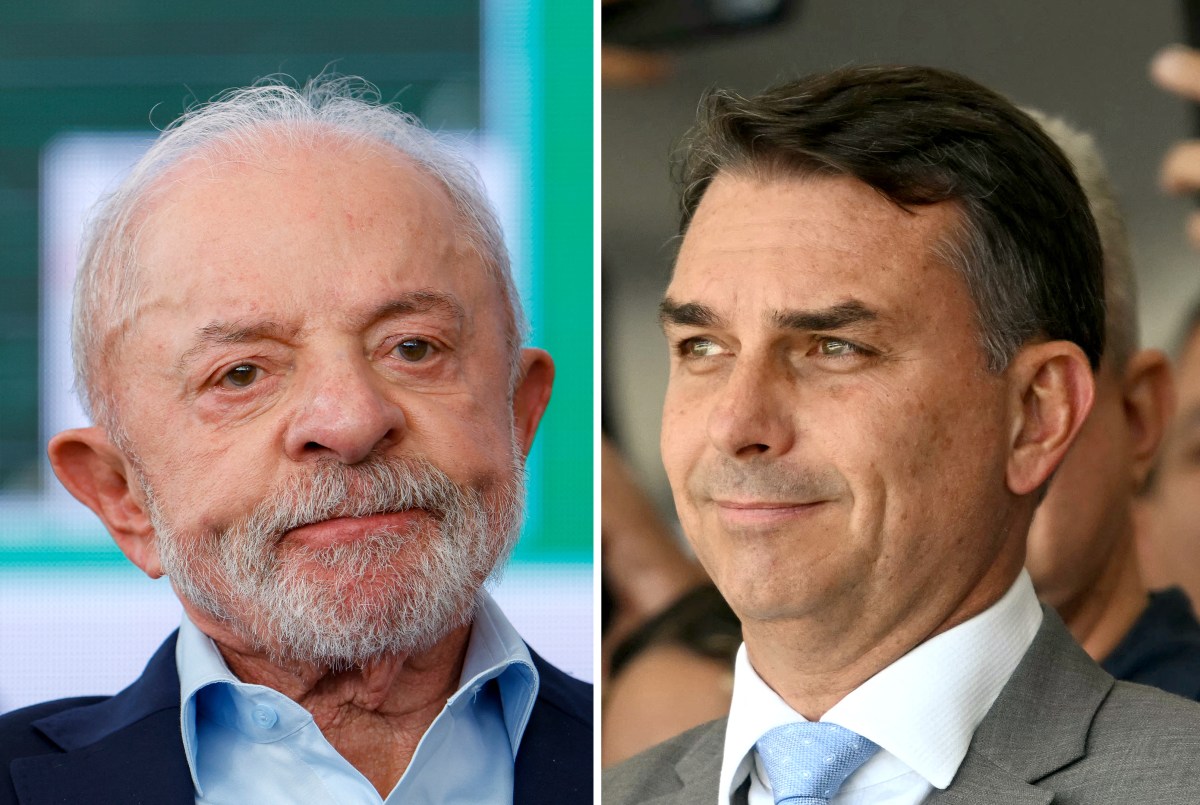
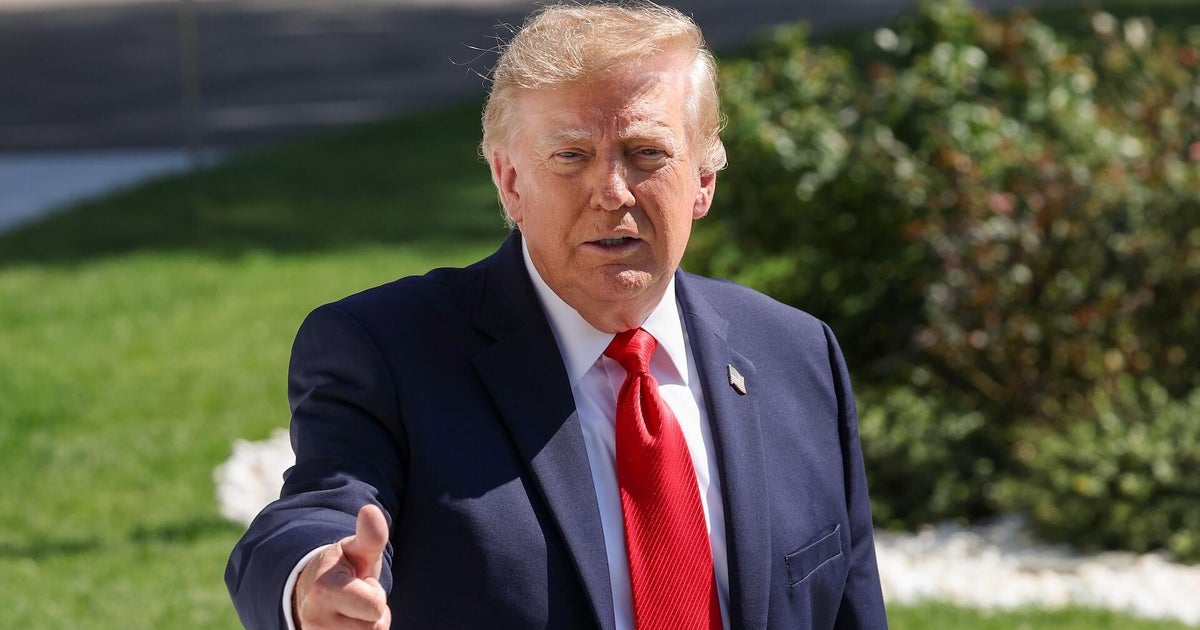
Brazilians will vote on Sunday in the first round of a presidential election that final polls show is too close to call, pitting President Luiz Inácio Lula da Silva against Senator Flávio Bolsonaro, a close ally of President Donald Trump.
Lula, 80, leads every major first-round survey but falls well short of the majority needed to win outright. In a head-to-head runoff, the two candidates are statistically tied.
Prediction markets, meanwhile, have swung decisively toward Bolsonaro, the eldest son of former President Jair Bolsonaro.
Brazil is Latin America's largest country and economy, and Sunday's vote has become the biggest test yet of Trump's effort to line up friendly governments across the hemisphere, following wins by Trump-endorsed candidates in Honduras last year and Colombia in June. The Trump administration has spent the past year pressuring Lula's government with tariffs, sanctions on a Supreme Court justice, terrorist designations for Brazil's largest gangs and a diplomatic standoff over visas.
A Bolsonaro win would bring Brazil into Trump's regional security coalition and mark the return of the Brazilian right less than four years after Jair Bolsonaro left office. Jair Bolsonaro is serving a 27-year sentence for plotting a coup after his 2022 loss to Lula and is barred from running.
A last wave of national surveys released Saturday showed Lula ahead by one to six points in the first round, short of the outright majority he would need to avoid a runoff. If no candidate tops 50 percent of valid votes, which exclude blank and null ballots, the top two advance to a second round on October 25.
Head-to-head, three of the four major polls had the race within the margin of error.
Datafolha, among Brazil's most closely watched pollsters, put Lula at 45 percent of valid votes to Bolsonaro's 42 percent in the first round. Its runoff numbers tightened to 47 percent to 46 percent, down from a three-point Lula edge in its previous survey. Datafolha interviewed 4,006 people on October 2 and 3, with a margin of error of 2 percentage points.
Quaest, surveying 3,702 people over the same two days, found the first round nearly level, with Lula at 46 percent and Bolsonaro at 45 percent, and gave Bolsonaro a 44 percent to 42 percent lead in a runoff. It was the only one of the four to show the senator ahead head-to-head.
AtlasIntel's final poll for Bloomberg, which surveyed 4,945 people from September 27 to October 2, had Lula at 47 percent to Bolsonaro's 44.1 percent in the first round. The runoff was a dead heat: 47.6 percent to 47.4 percent, well inside the poll's 1-point margin of error.
The CNT/MDA poll was the most favorable to the president, showing him at 47.8 percent to Bolsonaro's 42.1 percent in the first round and ahead 47.3 percent to 43.1 percent in a runoff. MDA surveyed 2,007 people from September 30 to October 2, with a margin of error of 2.2 points.
Writer and psychiatrist Augusto Cury, Renan Santos of the Missão party, former Goiás Governor Ronaldo Caiado and former Minas Gerais Governor Romeu Zema are each stuck in single digits, with Santos reaching as high as 4.6 percent in the AtlasIntel survey. How their voters break in a second round could decide the presidency.
Recent Datafolha surveys found roughly 46 percent of voters say they would never vote for Lula, and about the same share say so of Bolsonaro.
Some analysts warn that polls may again understate the right.
"In the 2022 election, Jair Bolsonaro, Flávio's father, outperformed the polls, the surveys by almost 10 percent," Christopher Sabatini, a senior fellow for Latin America at Chatham House, told Newsweek. "So there could be a surprise on Sunday."
Datafolha's final 2022 poll had Jair Bolsonaro at 36 percent of valid votes in the first round; he finished with about 43 percent.
To win the presidency on Sunday, a candidate must take more than 50 percent of valid votes, a count that excludes blank and spoiled ballots. If no one clears that bar, the top two finishers meet in a second round on Sunday, October 25. Every Brazilian presidential election since 2002 has gone to a runoff, and with Lula polling in the low to mid-40s on valid votes, a rematch three weeks from now is the overwhelming expectation.
Voting is mandatory for literate Brazilians between 18 and 70, and ballots are cast on electronic machines nationwide, which typically produce a clear national picture within a few hours of polls closing at 5 p.m. Brasília time (4 p.m. ET). Voters will also choose all 513 members of the Chamber of Deputies, two-thirds of the Senate, governors and state legislators on Sunday, with governor's races in some states also heading to October 25 runoffs.
The three-week sprint to a runoff will hinge on the voters who back neither front-runner on Sunday, along with turnout among the roughly 46 percent of the electorate that rejects each candidate. Lula has historically dominated in Brazil's northeast and among lower-income voters, while Bolsonaro draws his strongest support from the south, evangelical Christians and higher-income voters.
Prediction markets are seeing the race differently than pollsters. On Polymarket, Bolsonaro was priced Friday at about a 57 percent chance of winning the presidency, runoff included, against 43 percent for Lula. Kalshi gave Bolsonaro roughly 58 percent as of Friday afternoon.
The winner takes office on January 5, 2027, the first inauguration held on that date under a 2021 constitutional amendment that moved the ceremony from January 1.
"Elections are always local affairs," Patricio Navia, a clinical professor of liberal studies at New York University, told Newsweek. Voters who think Brazil is headed in the wrong direction will punish Lula on Sunday, he added, and those who approve of his government will reelect him. "I know President Trump thinks that he is on the ballot in Brazil, but he is not."
Security sits at the top of voters' concerns. "In Brazil, the number one issue for voters is security," Gimena Sánchez, director for the Andes at the Washington Office on Latin America, told Newsweek. "There is a perception that security has worsened, but this is not the case."
Sánchez is skeptical of the hardline crackdowns that have become popular across the region. "In our view, the mano dura approach will not diminish violence and crime in a sustainable manner," she said, arguing inequality and a lack of access to land, markets and opportunity have to be addressed. She also warned that the Amazon has become a hub for criminal groups pushed deeper into the forest.
Whoever wins will need Congress, which is elected the same day. "Congress's composition will be decisive in determining how much of Lula's or Flávio's agenda can move forward," Sánchez said, adding that evangelical influence over lawmakers will also matter. One plausible outcome, in her view, is a Lula victory paired with an opposition-controlled Congress.
Washington's pressure campaign has hung over the entire race. Sánchez said the Bolsonaro family's lobbying in Washington "backfired with the trade tariffs that are very unpopular in Brazil," which "forced Flávio to step back on that issue." The U.S. terrorist designations of the Primeiro Comando da Capital (PCC) and Comando Vermelho (CV), she added, are seen by many Brazilians as a possible prelude to American strikes and "a huge infringement on the country's sovereignty."
"Trump's actions have hurt the Brazilian economy, and that indirectly damages Lula's chances of reelection, but Lula has made sure to campaign underlining Flávio's proximity to Trump and thus, the net impact of Trump policies is probably not going to matter that much," he said.
If Flávio wins, Sánchez expects Brazil to join the Shield of the Americas and pursue a sweeping crackdown on the newly designated gangs, possibly including joint operations with U.S. forces. On trade, she said Flávio "may be able to negotiate a decrease by giving the U.S. access to Brazil's rare minerals."
Pulling Brazil away from China is another matter. Washington "will seek to restrict China's expansion in Brazil but it is unlikely to achieve this," Sánchez said, pointing to Argentina, which tried but could not quit Beijing economically.
Navia doubts Flávio's loyalty to Washington would buy Brazil much.
"Being close allies of the U.S. does not automatically mean getting a much better treatment," he said. "If Trump treats Flávio with disrespect, as he has treated other allied governments, there will be bumps in bilateral relations. After all, leftwing and rightwing Brazilians believe their country deserves respect as the largest and most important economy in Latin America."
A Lula win would leave Brazil among a shrinking group of holdouts.
"If he loses, only Mexico and Uruguay will be the bigger countries not in the coalition," Sánchez said, who predicted that Shield governments would keep up the pressure, including "efforts to paint Lula as inept, corrupt, and unable to address violent crime."
She also said the first task for a fourth Lula term would be repairing a relationship so frayed that Washington revoked the visa of Brazil's ambassador.
For Navia, the broader risk for the White House is China.
"If the U.S. does not lower trade barriers to Latin American exports, China will continue to make gains," he said. "Latin Americans want to have stronger and better relations with the U.S., but President Trump does not have a good track record making friends abroad."
Newsweek’s reporters and editors used Martyn, our AI assistant, to produce this story. Learn more about Martyn here. Contact Newsweek editors for this story: Jason Lemon and Anthony Murray.