Trump and Mamdani’s Gracie Mansion Alliance Is About Real Estate - Newsweek
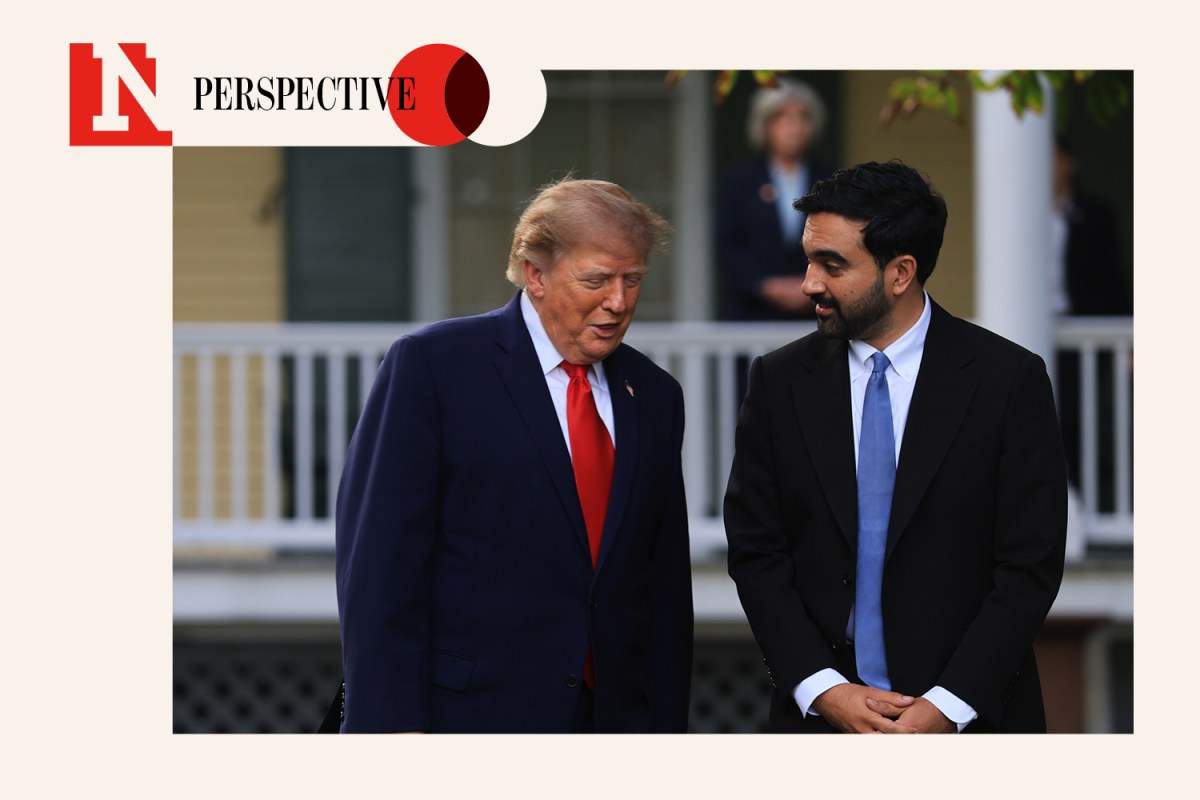
For two men who spent much of the past year describing each other as dangers to the republic, Donald Trump and Zohran Mamdani looked pretty comfortable discussing zoning.
On Monday, the president visited the New York City mayor at Gracie Mansion, where an hourlong private meeting gave way to warm public remarks and talk of developing Sunnyside Yard in Queens. Mamdani said the city and White House would deepen discussions over a plan for 12,000 homes and 30,000 jobs. Trump sounded intrigued: "Maybe they have a shot at doing it," he said.
It was an oddly New York peace treaty: after months of ideological artillery, everybody met at the property line.
Sure, this looks like the government functioning as it should. But is that really possible given the chaotic times we’re living in? In an ideal world, a president and a mayor who profoundly disagree on major issues should still be able to cooperate when their constituents stand to benefit. Mamdani did, after all, repeatedly say that he would work with anyone willing to reduce New Yorkers’ cost of living.
And yet, one can’t help but think about the characters in play, how they have behaved until now, and lean toward another reading: Is the Trump-Mamdani friendship becoming a demonstration of how unserious some of America’s most serious-sounding political language has become?
Before the detente, the vocabulary was existential. Trump called Mamdani a "100% Communist Lunatic" and had threatened him with arrest. Mamdani accused Trump of pursuing a "fascist agenda" and called him a "despot." Asked after their first Oval Office meeting last November whether he still considered Trump a fascist, Mamdani said yes—with Trump cheerfully giving him permission to say so.
Ten months later, Trump stood beside the same man at Gracie Mansion and told reporters he hoped Mamdani would become a great mayor. Mamdani, in turn, praised Trump's commitment to New York.…Okay?
Political enemies are allowed to cooperate but the ease of this transition raises a question about what voters are supposed to believe when politicians reach for the language of catastrophe.
If Mamdani sincerely believes Trump represents fascism, cooperation with his administration may still be necessary but cordiality carries a different implication when it becomes a recurring relationship. If Trump sincerely believes Mamdani represents communism threatening America's largest city, the president's evident affection for him is equally difficult to square with the warning.
The problem here is rhetorical inflation: American politicians increasingly ask voters to hear ordinary opponents described in extraordinary terms, then expect those words to evaporate when practical interests intervene.
And in New York, practical interests have a habit of involving real estate.
Sunnyside Yard almost seems designed as a punchline to their political relationship. Mamdani, a democratic socialist elected on affordability, needs federal cooperation to build housing. Trump, the Queens-born property developer turned Republican president, understands immediately what the mayor is selling.
Trump acknowledged that the project would require substantial federal approvals and probably federal money. Mamdani returned the compliment by reminding reporters that Trump is someone who has "built quite a lot of housing" in New York. Once again…okay?
The political trajectories make the embrace stranger still. Trump arrives at Gracie Mansion with his approval sliding—an NBC News poll this month put him at 41 percent approval and 56 percent disapproval—while Mamdani, once treated by his critics as an experiment waiting to fail, appears to be moving in the opposite direction. A September Suffolk poll found 56 percent of registered New York City voters rated his performance excellent or good, and 61 percent said he was doing better than they had expected.
So this is hardly a meeting between two politicians equally desperate for rehabilitation. One is losing altitude nationally; the other, rather inconveniently for his critics, has so far refused to fall.
Capitalism and socialism, it turns out, can survive lunch when there is a large enough parcel involved.
There is substance beneath the comedy: New York's housing shortage is real, Sunnyside Yard has frustrated would-be developers for decades, and a mayor refusing to speak with a president who controls essential federal machinery would hardly constitute courageous governance. Their detente could eventually produce homes that New Yorkers need, which is a strong case to be made since politics conducted entirely as ideological combat eventually becomes useless.
And yet, if governing requires accommodation, perhaps the striking thing is not that either man has stopped believing what he said before (let’s be honest: there is little evidence of that), but their discovery that even conviction becomes negotiable.
When the subject turns to 12,000 homes, federal approvals and a $21 billion redevelopment of some of the most valuable undeveloped real estate in New York, two men who have described each other in near-apocalyptic terms suddenly become capable of extraordinary compartmentalization.
Is that maturity? Convenience? Perhaps we’ll have to wait and see if the cordiality survives beyond the narrow places where their interests overlap. Trump and Mamdani may still believe every ugly thing they have said about each other since nothing about a housing deal requires either man to recant. What it does require is knowing when to put the warfare on hold.
And there, perhaps, is the most New York thing about this strange alliance: ideology can be absolute and enmity can be existential. But apparently both have their price—or at least their property line.