Trump and Xi Are Stuck in an Iranian Finger Trap - Newsweek
There’s a practical lesson in the Chinese finger trap, a pearl of philosophical wisdom. To escape, the two people bound together by the finger mustn’t pull away, which only strengthens the grip. They must move closer together, in unison.
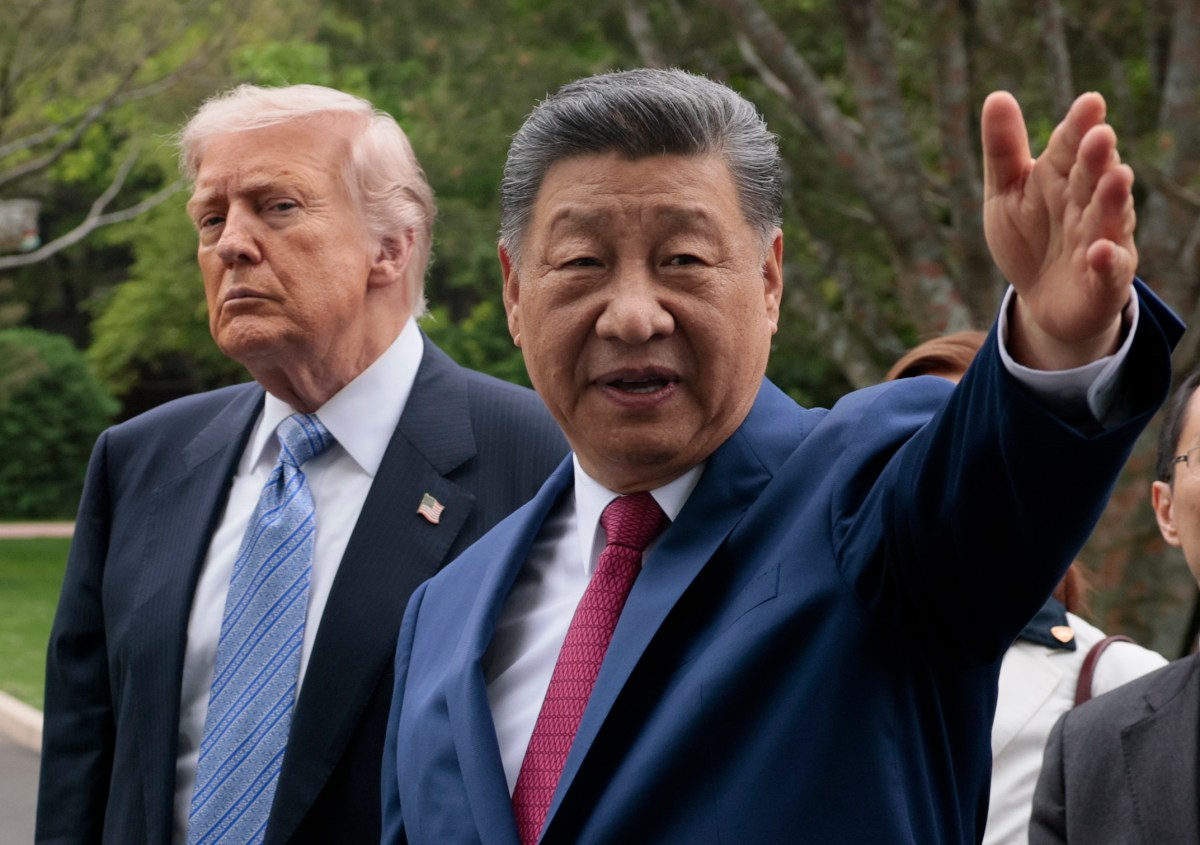
When Chinese President Xi Jinping lands in Washington, D.C., later this month, he should bring one with him to play with U.S. President Donald Trump—because they’re stuck in an Iranian finger trap.
The U.S.-Israeli war against Iran, which crippled energy flows through the vital Strait of Hormuz, is now joined by the Houthis’ campaign against Saudi Arabia, damaging major oil infrastructure and disrupting the alternative route for shipping in the Red Sea.
Over the past week, the Houthis have made their biggest land grab in years, storming down Yemen's Red Sea coast to the Bab el-Mandeb chokepoint, while firing on Saudi energy sites and tankers.
Energy markets are delivering the obvious verdict to both of the region's main oil corridors being squeezed at the same time: prices have surged again.
U.S. crude passed $100 a barrel this month, while the national average price of diesel hit a record $6.45 a gallon, amid disruptions around Hormuz and Russia's export ban after Ukrainian strikes on its refineries.
The situation has become critical enough that the Saudis asked China to intervene with Iran, a major oil supplier to Beijing. The Houthi militants in Yemen are ultimately a proxy of the regime in Tehran, and backed heavily by Iranian resources.
According to Reuters, citing anonymous sources, the Chinese have now asked Tehran to help pull the Houthis back from their attacks on Saudi Arabia. This is more than just a favor to Riyadh, as Beijing seeks to expand its influence and status in the Gulf.
It is in China’s interests as the world’s second-largest economy—and a manufacturing powerhouse that imports most of its crude, including from the Saudis—to contain the damage unfolding in the energy markets.
Chinese purchases account for more than 80 percent of Iran's seaborne oil exports, roughly 1.4 million barrels a day, according to Kpler data. Iran supplies only a modest share of China's imports, well behind Russia and Saudi Arabia.
Tehran needs Beijing far more than Beijing needs Tehran.
It’s also in American interests. Gasoline prices are soaring, from below $3 a gallon before the war to over $4 today, creating serious cost of living tensions for ordinary consumers and fresh pressure on businesses.
Farmers face the double whammy of higher fuel and fertilizer costs. And all of this ahead of the midterm elections, in which Trump’s Republicans face an uphill struggle to keep their twin congressional majorities.
Trump bound himself to the Iranian finger trap in February, when he launched the war to decisively remove the potential for Tehran to develop a nuclear weapon and neutralize the threat it posed to commercial energy traffic through the Strait of Hormuz.
Now, though imposing severe economic consequences on a militarily depleted Iran, Trump has nonetheless been unable to bring the war to a conclusion that delivers him the major strategic victory he believed was a matter of weeks away back in February.
Meanwhile, his military is bogged down with Iran as the American people continue to pay an economic price back home.
The Chinese bound themselves to the Iranian finger trap long before. They have been a key strategic partner of Iran for some time, leaning heavily on large-scale discounted oil purchases from Tehran to fuel China’s rapid economic development.
With war breaking out in Iran over its shrouded nuclear activities and the regime’s perennial threat to Israel and the wider Middle East, China was exposed to the conflict through its consumption of Iranian oil.
This situation gives both the U.S. and China leverage over each other. Trump, who is mulling a renewed intensification of attacks against Iran, could choose more war and hit China harder with sanctions for its Iranian trade, causing Beijing more pain.
Treasury Secretary Scott Bessent’s latest "Operation Economic Outcast" against Iran is a campaign that has conspicuously spared Chinese banks ahead of the Trump-Xi summit.
But China knows that the U.S. will also feel much of that pain too, and can complicate matters with its own economic sanctions or tariffs. What Beijing can also do is pressure an Iranian regime that is reliant on Chinese trade.
That’s very useful to Trump, and he is by nature a transactional man. Trump could relieve some of the current American pressure on Iran so more oil flows, and in exchange, Xi could apply some of his own on Tehran to play ball.
It hasn't happened because both men think they can outlast the other. Trump is betting high prices hurt Chinese factories more than American drivers, while Xi is gambling that a mired and distracted U.S. military is worth the fuel bill.
But that is the finger trap, pulling feels like strength but only tightens the weave. Trump and Xi can only escape from this Iranian mess by coming closer and working together. They will do that literally in September. Perhaps it will free them.