Trump Approves New Fuel Economy Rules, Says Car Prices Will Fall
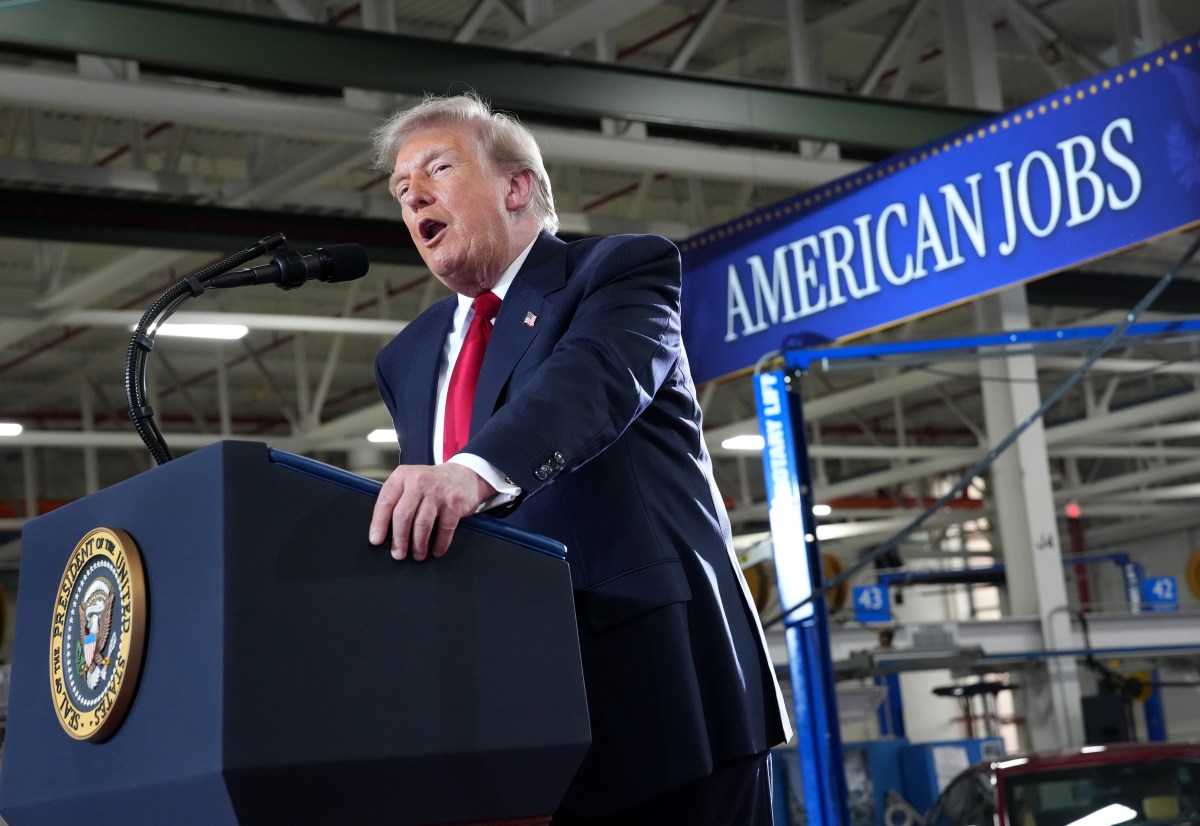
President Donald Trump said Saturday he had approved new fuel economy standards that would end what he calls the Biden administration's electric vehicle mandate, while claiming the changes would lower car prices and boost U.S. auto manufacturing.
In a Truth Social post, the president wrote that the previous standards increased costs for automakers and consumers while pushing manufacturers toward electric vehicles.
"These new Standards will take the waste out of building cars in America. That means LOWER PRICES, saving families thousands on a new, beautiful, and safe car," Trump wrote.
Not everyone agreed that consumers would save money.
"With Americans struggling to afford gasoline that is more than $4 a gallon, the Trump administration is going to force them to pay more at the pump," Atid Kimelman, an attorney at the Natural Resources Defense Council, said in a statement to Newsweek on Saturday. "Oil companies will get a windfall from gutting the fuel economy standards, but the rest of us are going to be handing over more of our hard-earned paychecks to fill up the tank."
The president did not provide details of the standards he said he approved, and the administration had not immediately released a final rule accompanying the announcement. Earlier administration proposals sought to significantly lower future fuel economy requirements for automakers.
Transportation Secretary Sean Duffy wrote on X that "a major victory for America's auto workers is COMING MONDAY," though he did not specify whether he was referring to the fuel economy standards cited by Trump. A White House spokesperson referred Newsweek to Duffy's post when asked for comment on Saturday.
Newsweek reached out to the Department of Transportation, Duffy and the National Highway Traffic Safety Administration (NHTSA) on Saturday for comment.
Trump said the new standards would help bring manufacturing jobs and investment to states including Michigan, Ohio, Indiana and South Carolina, while making it easier for automakers to build vehicles consumers want to purchase.
The Plants are coming back, and Jobs are returning, to Michigan, Ohio, Indiana, South Carolina, and all over our Country," the president wrote.
He also thanked Duffy and Commerce Secretary Howard Lutnick for helping advance the administration's auto policy agenda.
Trump also said executives from General Motors, Ford and Stellantis had told him they wanted to expand manufacturing in the United States.
The administration signaled in August that it was preparing sharply lower fuel economy requirements than those adopted under former President Joe Biden. Duffy said at the time that the administration wanted automakers to focus on vehicles consumers want rather than vehicles favored by federal policymakers.
The Corporate Average Fuel Economy (CAFE) standards have been periodically updated since its inception in 1975 to make vehicles more efficient. A December proposal from the NHTSA projected a fleetwide average fuel economy of roughly 34.5 miles per gallon by 2031, compared with approximately 50.4 mpg under Biden-era standards. However, it was not immediately clear whether the standards Trump referenced Saturday match that proposal or contain additional changes.
The Biden administration's fuel economy rules were intended to reduce fuel consumption and greenhouse gas emissions while encouraging automakers to produce more fuel-efficient and electric vehicles. Supporters of the Biden-era standards argued they would reduce oil consumption and help limit transportation-sector emissions. While Trump and his allies have frequently described those policies as an EV mandate, the rules did not require consumers to purchase electric vehicles.
NHTSA has argued that prior fuel-economy standards relied too heavily on projected electric-vehicle adoption and compliance credits when setting requirements, an interpretation the agency says conflicts with federal law. In June 2025, Duffy published a rule titled “Resetting the Corporate Average Fuel Economy Program,” claiming that the Biden administration "illegally" factored electric vehicle adoption rates and compliance credits into its calculations when determining maximum feasible fuel economy under the 1975 Energy Policy and Conservation Act.
Supporters of the proposed rollback argue it could lower vehicle prices and reduce compliance costs for automakers.
NHTSA estimated that its earlier proposal would reduce the average upfront cost of a new vehicle by about $930. The agency also projected that the proposal would increase fuel consumption by roughly 100 billion gallons through 2050, add about $185 billion in fuel spending and increase carbon dioxide emissions by approximately 5 percent.
In December, Duffy said the transportation department's “Freedom Means Affordable Cars” proposal is projected to save Americans $109 billion over the next five years and save families $1,000 on the average cost of a new vehicle.
Congress previously ended federal tax credits for new, used and commercial electric vehicles acquired after September 30, 2025, including a consumer credit worth up to $7,500 for qualifying new EV purchases. It also moved to block California's ability to implement rules requiring all new passenger vehicle sales to be zero-emission by 2035, a move that has sparked legal challenges and ongoing debate over the state's regulatory authority.
Newsweek’s reporters and editors used Martyn, our AI assistant, to produce this story. Learn more about Martyn here.
Contact Newsweek editors for this story: Steve Mollman and Anthony Murray.