Trump Blames America’s High Prices on Biden: What the Data Shows - Newsweek
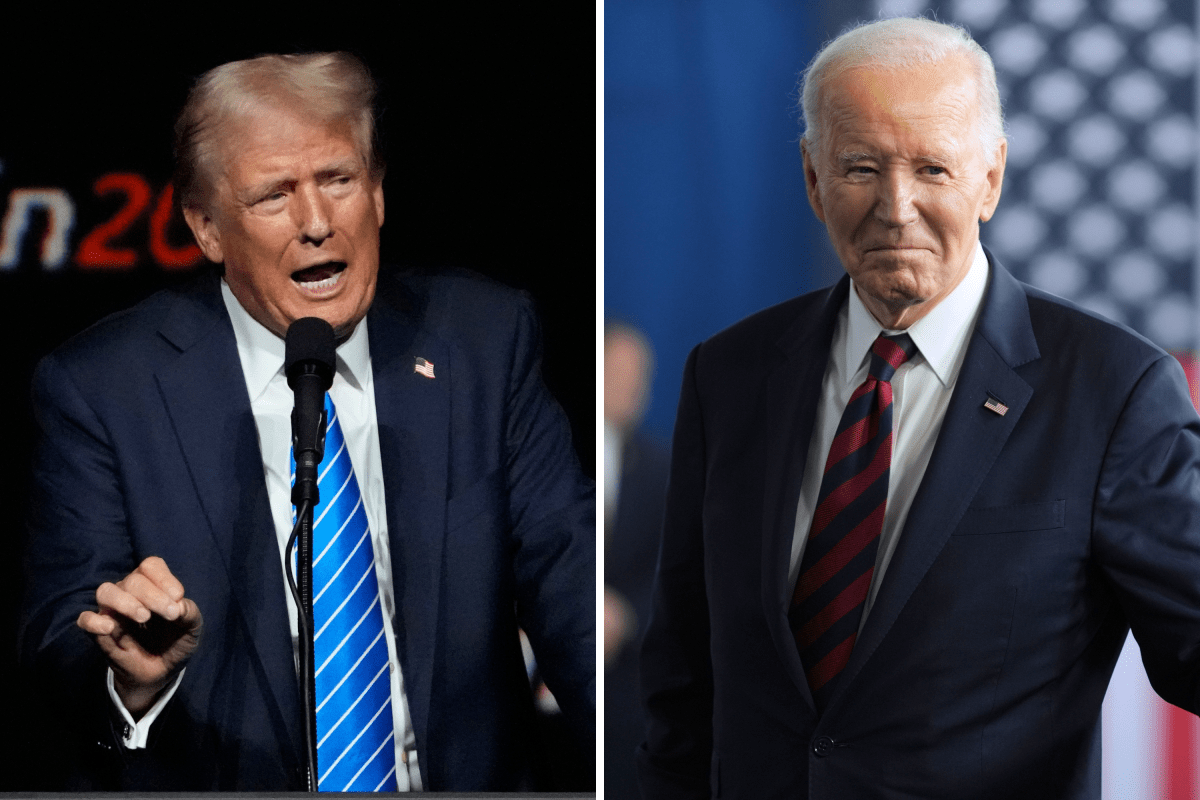
President Donald Trump is blaming his predecessor for Americans’ higher prices, arguing that inflation and rising costs are the legacy of President Joe Biden rather than his own administration.
In Truth Social posts on Monday, Trump wrote that “price increases throughout America were caused by Sleepy Joe Biden and the Biden Administration, not by ‘TRUMP.’” He added that oil was higher under Biden and said that, apart from oil, “prices are coming down sharply.”
Trump has made similar claims in recent months, pointing to falling food prices—particularly eggs—as evidence that his administration's economic policies are delivering lower costs. At a Republican midterm convention speech last week, he cited falling egg prices while arguing that prices for food and other goods were coming down.
The latest data from the Bureau of Labor Statistics (BLS) show a more mixed picture. Consumer prices rose 3.4 percent in August from a year earlier, while prices for food purchased at home rose 2.2 percent. Gasoline, meanwhile, was up sharply from a year earlier as global oil prices surged to above $100 a barrel amid disruptions and uncertainty in global energy markets amid ongoing wars in the Middle East and Eastern Europe.
And while inflation has cooled dramatically from its 2022 peak, consumers' perception of the economy has not necessarily improved along with it.
The University of Michigan's preliminary September survey found consumer sentiment fell to 47.8, down from 51.7 in August and 13.2 percent below its level a year earlier. The reading was the second lowest in the survey's history if confirmed in the final report.
The deterioration was accompanied by a sharp increase in consumers' expectations for inflation. Americans now expect prices to rise 4.6 percent over the next year, up from 4 percent in August. The survey's director, Joanne Hsu, said the renewed rise in fuel prices and concerns about economic conditions were weighing on consumers.
The most important distinction in comparing prices under Biden and Trump is between the level of prices and the rate at which prices are rising.
Inflation has slowed substantially from the highs reached during Biden's presidency, when it reached 9.1 percent in June 2022, the highest annual increase in consumer prices in more than four decades. The rate spiked due to a combination of massive pandemic-era government stimulus, global supply chain disruptions, and energy shocks but has since fallen dramatically.
The latest BLS data show consumer prices were up 3.4 percent in August from a year earlier. Food purchased for consumption at home was up 2.2 percent. That overall grocery number, however, masks large differences among individual products.
Eggs have fallen sharply. Beef remains costly. Milk has moved more modestly. Individual fruits and vegetables have gone in different directions.
The national average for regular gasoline is now above $4 a gallon. AAA's national average was around $4.30 on Monday, while crude oil prices climbed above $100 a barrel.
That is considerably higher than the roughly $3-a-gallon range that Americans were paying around the end of Biden's presidency.
But it is also below the extraordinary peak reached in 2022, when the national gasoline average briefly topped $5 a gallon.
So, Trump can point to a period under Biden when gasoline was considerably more expensive than it is today. That does not mean gas is cheaper today than when Biden left office. AAA's January 2025 data show the national average was around $3.10 shortly before Trump's inauguration.
Oil is a global commodity, meaning disruptions outside the United States can affect American prices. The conflict involving Iran has disrupted energy markets and raised concerns about shipping through the Strait of Hormuz, a critical route for global oil and gas supplies. Traffic through the strait has fallen sharply amid the conflict.
But the Iran war is not the only factor.
Ukraine's attacks on Russian oil infrastructure have also disrupted supplies and contributed to volatility in global fuel markets. Trump himself has argued that Ukraine's attacks on Russian energy infrastructure are contributing to higher fuel prices.
And on Monday, oil prices jumped again after attacks disrupted a major Saudi pipeline and raised concerns about additional supply disruptions. Brent crude rose above $107 a barrel.
Beef is one of the grocery categories where consumers continue to feel substantial price pressure.
Unlike crude oil, beef prices are determined primarily by the domestic cattle market, including herd sizes, feed costs, production and the supply of cattle available for slaughter.
The cattle supply has been unusually tight, helping push beef prices higher even as inflation overall has moderated.
That means a consumer can experience very different price trends at the same grocery store: gasoline may be responding to a geopolitical shock halfway around the world while beef prices are responding to years of changes in the U.S. cattle market. For the Trump administration, that distinction matters because a decline in the overall inflation rate does not necessarily translate into cheaper individual products.
Trump announced in August that his administration would be waiving tariffs on some imported beef to address high grocery prices, as affordability looms over the midterms in November. He said the plan would allow up to 300,000 metric tons of ground beef to be imported with “no out of quota tariff” over a 90-day period.
On September 4, the president said the United States would be importing beef from “primarily Argentina and Brazil.”
Eggs provide the strongest example of a major grocery price reversal.
Egg prices soared during the first part of Trump's current term, reaching record levels as the egg supply was hit by outbreaks of highly pathogenic avian influenza. They have since fallen sharply as supplies recovered. The decline means consumers are paying substantially less for eggs than they were at the height of the 2025 egg-price spike.
Trump has repeatedly highlighted the decline, including at the Republican National Committee’s midterm convention last week, when he said, “We got eggs down” and claimed that food prices and “almost every other item” were rapidly falling.
But the drop in egg prices is not, by itself, evidence that presidential policy caused the decline. The biggest factor has been the recovery of egg supplies following the bird-flu outbreak.
Milk and fresh produce offer a less dramatic but similarly mixed picture. Some products are more expensive than they were when Biden left office, while others have declined. Seasonal conditions, transportation costs, weather, labor costs and supply can all affect fresh-food prices.
That means there is no single “grocery price” that captures what has happened to American households.
The BLS food-at-home index, which covers groceries purchased for consumption at home, provides a broader measure. It was 2.2 percent higher in August than a year earlier.
That is far below the pace of grocery inflation seen during the worst of the post-pandemic inflation surge.
While it is true that inflation surged during the Biden administration, meaning Trump inherited an economy in which the overall price level was already elevated compared with before the pandemic, that does not mean every price Americans are paying today can be attributed to Biden—particularly more than a year-and-a-half after Trump returned to office.
The current surge in gasoline prices illustrates the complications of assigning prices to a single president. Oil is traded in a global market, but some of the forces driving prices higher are connected directly to decisions made by the Trump administration. Trump ordered U.S. military strikes on Iran alongside Israel in February, triggering a conflict that has disrupted energy supplies and shipping through the Strait of Hormuz.
Other factors are also contributing to the current volatility, including attacks on Russian energy infrastructure, disruptions to Saudi oil infrastructure and attacks by Iran-aligned Houthi forces. Shipping through the strait has fallen sharply since the conflict began, while recent attacks have further threatened global supplies.
That makes the current oil-price increase different from simply inheriting a high price level. The broader global oil market is outside any president's direct control, but Trump's decision to enter the conflict is one of the factors affecting the supply disruption and price increases Americans are experiencing now.
Consumer sentiment is also now lower than at any point during Biden's presidency. The University of Michigan's preliminary September 2026 reading was 47.8, compared to 70.1 just two years prior under Biden in September 2024, and around 30 points under his peak of 79.0 in January of that year. It was also lower than Biden's previous low, a then-historic 50.0 in June 2022.
So, while Trump can point to real examples of prices falling, like eggs, the broader data show a mixed picture. Inflation is far below its 2022 peak, but prices have not broadly returned to their pre-inflation levels, and some of the most visible costs facing households, including gasoline and beef, remain elevated.
Contact Newsweek editors for this story: Samantha Beech and Anthony Murray.