Trump Draws Ire Over Calling Putin His 'Friend' as Europe-U.S. Rift Widens - Time Magazine
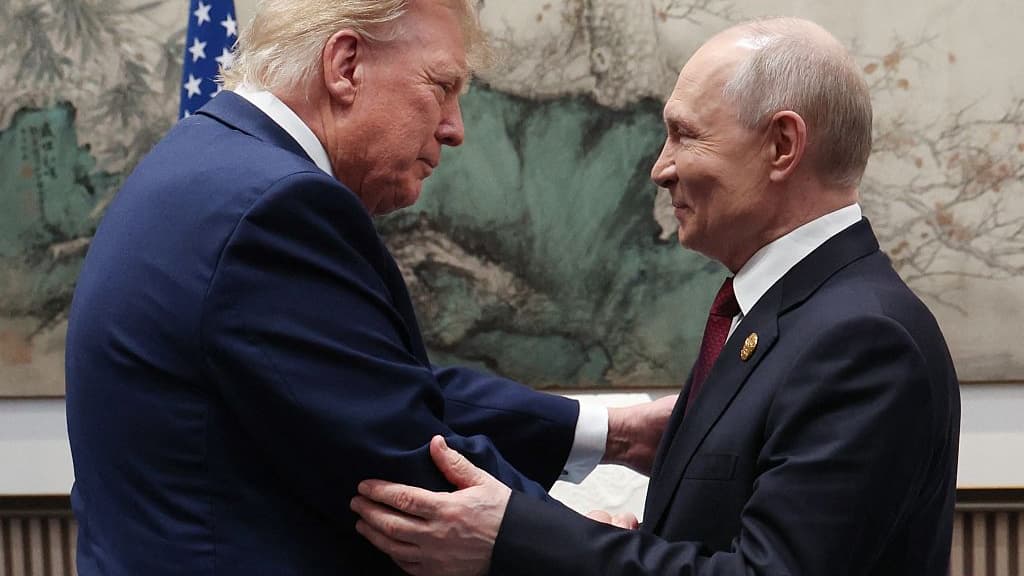
President Donald Trump’s warm greeting for Russian President Vladimir Putin on the sidelines of the Asia-Pacific Economic Cooperation (APEC) summit in China Thursday has sparked concern and ire from some European lawmakers.
Polish Prime Minister Donald Tusk appeared to mock Trump’s labeling of Putin as “my friend” with a pointed social media message that read: “God, protect us from such friends.”
The post was shared just hours before Tusk headed to a meeting in Berlin of the “Coalition of the Willing,” an initiative intended to bolster support for Ukraine more than four years after its invasion by Russia. Tusk joined leaders from Germany, France, Britain, and Italy, along with NATO chief Mark Rutte and Ukrainian President Volodymyr Zelensky. Also in attendance were U.S. envoys Steve Witkoff and Jared Kushner, who briefed the group on Trump’s meetings with Putin in China. The sit-down saw Europe secure a seat at the negotiating table for the next stage of U.S.-mediated talks between Russian and Ukrainian delegations.
Tusk, meanwhile, made another apparent dig at Trump during the meeting as he posted a picture of himself sharing a laugh with Zelensky and British Prime Minister Andy Burnham alongside the caption: "True friendship."
Further critique came from Polish Foreign Minister Radosław Sikorski, who reportedly told the media: “The optics of this cosying up to Putin—calling him a 'friend'—cause us some concern, because it raises the question: with whom is he truly friends?”
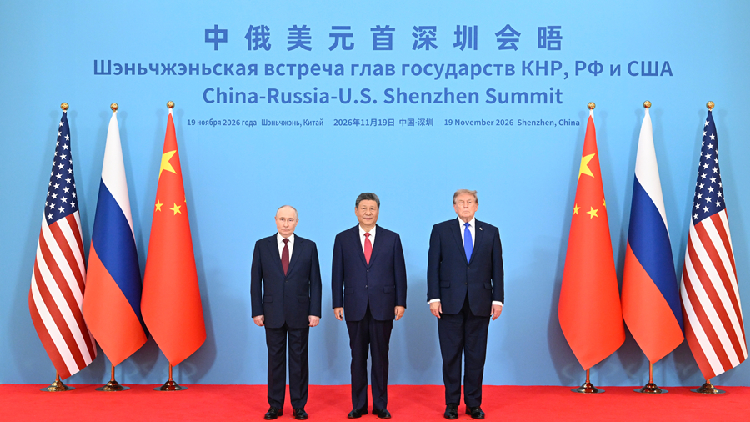
Trump hailed his "great relationship" with Putin ahead of their historic trilateral sit-down with Chinese President Xi Jinping. Addressing the matter of Ukraine at the top of the meeting, Trump said: "I think things are happening. I think that he and—I hope—the other side would like to see an end to that war.” However, the China-U.S.-Russia “peace declaration” published by Chinese state media after the trilateral summit notably included no mention of Ukraine.
European leaders vowed to support Ukraine "for as long as it takes" at the close of the session in Berlin.
Emphasizing the need for Europe to be involved in talks moving forward, German Chancellor Merz told reporters: "Should peace negotiations take place, we will be involved. Negotiations can only succeed if Ukraine and Europe are part of the process together. A 'Yalta-style' format will not bring about peace.”
Trump called into the meeting to discuss the Russia-Ukraine war, Kushner said in a post-meeting press conference.
With negotiations between Russian and Ukrainian delegations over territory deadlocked, U.S. mediators have sought to instead steer discussions toward post-war security guarantees and reconstruction. In line with this, Kushner told reporters that the U.S. is open to giving Ukraine NATO-like security guarantees.
"I will say from America’s perspective, giving an Article 5-like security guarantee is a really, really big deal. And I think that that’s something that President Trump is open to, but obviously it has to be in America’s interest to do that," he said, before going on to claim that Russia is “comfortable” with the idea, also.
TIME has reached out to the White House for comment.
Zelensky celebrated the assured inclusion of Europe in future negotiations, which are set to look at the continent’s wider security arrangements. "There is a decision that Europeans will participate in the negotiation formats with the Russians. This is important. Europe will be represented by five countries plus the European Union and NATO, and America fully understands why strong and coordinated European participation in the negotiations is necessary," he said.
The wartime leader went on to express the need for progress to be made ahead of Ukraine being plunged into its fifth winter at-war.
"We must take the necessary steps to ensure that Russia engages in serious, substantive work instead of wasting time. This is very important to us because people are dying—our Ukrainians," he urged. "Pressure is needed. Europe is ready with new sanctions and new steps to support Ukraine and the Ukrainian people. It is important that the United States of America exert its influence on Russia."
Donald Tusk (left to right), Andy Burnham, Volodymyr Zelensky, Friedrich Merz, Emmanuel Macron, Giorgia Meloni, and Bart De Wever are seated at the "Coalition of the Willing" meeting in Berlin on Nov. 19, 2026. Kay Nietfeld—AP
While European leaders have banded together to place further sanctions on Russia, in a bid to ramp up economic pressure on the Kremlin to end the war, there has been growing concern over Trump’s approach to Putin.
Last month, Trump waived sanctions on Russia in order to progress the controversial diesel deal he made with Putin in an attempt to lower fuel prices, which have soared in the wake of his war with Iran.
Amid the deal, Trump announced an “energy cease-fire” between Russia and Ukraine on Oct. 11, calling on the two countries to stop targeting each other’s assets. Zelensky accused Moscow of breaking the apparent agreement and resumed strikes against Russian oil facilities, defying pressure from Washington. Trump called Ukraine's fresh wave of strikes a "disgrace" and said Zelensky was "more difficult to deal with than Putin."
After meeting with Putin in Russia last week, Witkoff told reporters that he thought "progress" had been made, but Russia and Ukraine have traded strikes in the days since. The sit-down in Moscow came after two days of U.S.-led talks between Russian and Ukrainian delegations in Abu Dhabi yielded no major breakthroughs.
Meanwhile, the European Union’s foreign policy chief Kaja Kallas said Monday that ministers had approved new listings to target Russian refineries, banks, e-commerce, and companies that support Russia’s shadow fleet, a network of vessels that help Moscow evade sanctions on energy exports. Kallas added that the 22nd sanctions package against Russia would be presented in-full within the next few days.
The united response from Europe, and the continued economic pressure, stands in stark contrast to how the Trump Administration is currently dealing with Putin.
Further tensions between Europe and Washington have stemmed from the early days of the Iran war, after European leaders refused to actively get involved in the conflict—earning public rebuke from Trump. The global energy crisis that has since ensued, and the soaring fuel costs, has also soured relations. Other topics of contention include NATO spending and tariff rows.
The Democrats’ sweeping victories in the midterm elections earlier this month were viewed by some European leaders as a rebuke of Trump and his Administration’s policies. “American society voted against policies that only make people poorer. Against hate. Against sexism. Against climate denial and against elite privilege,” said Spanish Prime Minister Pedro Sánchez, who has previously clashed with Trump.