Trump is set to give his spy chief Jay Clayton another job: ‘AI czar’
Want to bookmark your favourite articles and stories to read or reference later? Start your Independent Membership today.
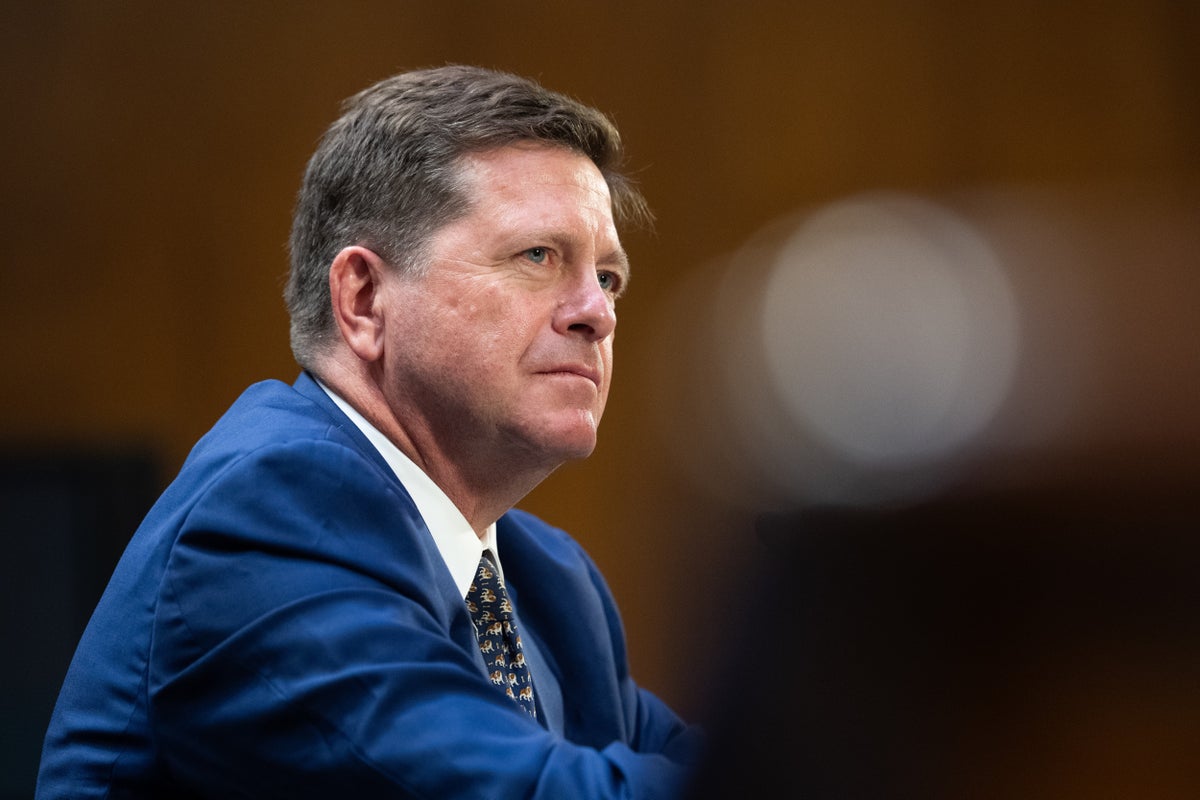
Director of National Intelligence Jay Clayton is expected to become President Donald Trump's primary adviser on artificial intelligence, a role previously referred to by the president as "AI czar," according to reports.
Clayton currently leads 18 US intelligence agencies as the chief spy for the nation and is anticipated to maintain that post.
In response to inquiries regarding Clayton's selection, a White House official told Reuters: "Any personnel announcement will be announced directly by the president," adding, "Any reporting until then is baseless speculation."
Trump's move to select a new AI czar follows warnings from AI researchers that individuals developing the technology believe it could kill humans within a decade.
Last month, Trump stated he planned to appoint a new "AI czar" and establish an "AI force," though he provided no specific details about either proposal or how they would be carried out.
This marks the second occasion Trump has designated an adviser to handle AI-related decisions across his administration.
Venture capitalist David Sacks held the AI czar role early in Trump's second term prior to leaving the White House. Sacks continues to counsel Trump on AI matters and participated in a Tuesday meeting with the president and sector executives.
The report regarding an AI czar was initially disclosed by CBS.
Clayton took over Tulsi Gabbard’s role in the Trump administration after she resigned in May to support her husband through a cancer diagnosis. Her resignation letter cited her husband’s diagnosis of “an extremely rare form of bone cancer” as the reason for her decision.
A former Democratic congresswoman who underwent a MAGA evolution, Gabbard spent most of her tenure sidelined as Trump abandoned his prior aversion toward war and embraced military interventions in Venezuela and Iran.
Gabbard reportedly told Trump that killing Iran’s supreme leader, Ayatollah Ali Khamenei, would usher in a more authoritarian government more likely to seek weapons of mass destruction.
During a congressional hearing in March, she dodged questions about whether the White House had been warned of potential fallout from the conflict. However, she repeatedly said it was Trump’s decision to strike in Iran, not hers.
“It is not the intelligence community’s responsibility to determine what is and is not an imminent threat,” she said.