
Trump Promised $5,000 Checks. Mike Johnson Won’t Guarantee Them - Newsweek
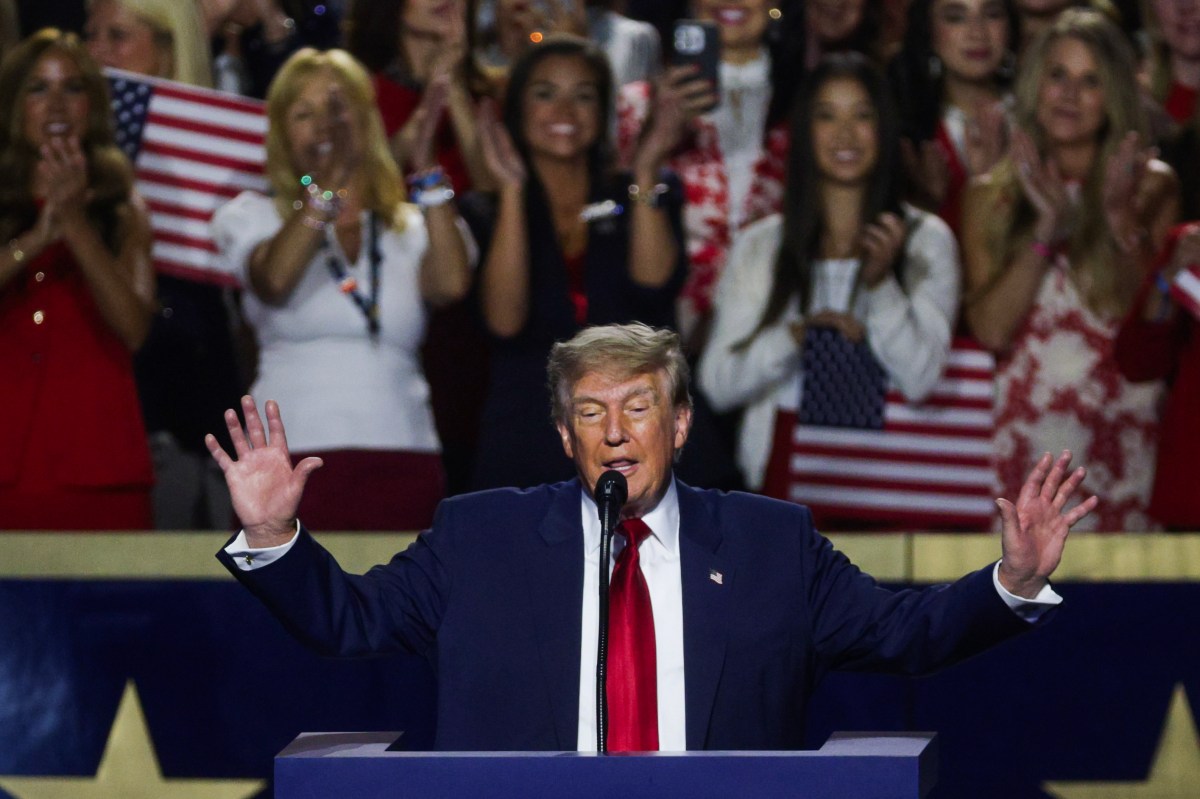
House Speaker Mike Johnson, a Louisiana Republican, declined on Sunday to guarantee that Americans will receive the $5,000 payments promised by President Donald Trump on Wednesday if the GOP maintains its majority in Congress in this year's midterm election, raising questions about the viability of one of the administration's signature economic proposals.
Newsweek reached out to the White House for comment on Sunday morning.
During the first-ever Republican National Committee midterm convention in Dallas, Trump announced that every adult American citizen would receive a $5,000 payment if Republicans retain control of both chambers of Congress after the midterms.
"Because of our tremendous strength and success economically, I will issue a dividend to every adult citizen in the United States of America for $5,000," the president said. "Very much like a successful company will do a cash distribution to its shareholders."
But when Johnson appeared on NBC News' Meet the Press on Sunday and was asked by moderator Kristen Welker whether Americans could count on receiving the money, the House speaker would not make that promise.
"I commit that Congress will work through it and find consensus on that like they have to do everything else," Johnson said.
Welker pressed again, noting that Trump himself had already promised the payments.
"I'll work with the president hand-in-hand as I do all the time," Johnson responded. "And we'll deliver for the American people. That's the promise."
Johnson's response is significant since Congress, not the White House, would have to authorize and fund any nationwide payment program. Constitutional and budget experts have noted that the president cannot direct the U.S. Treasury to send more than $1 trillion in payments without congressional approval.
Marc Goldwein, the senior policy director at the Committee for a Responsible Federal Budget, a think tank in Washington, told the Associated Press that Trump has no authority to send money to Americans without approval from Congress.
Goldwein added that dividends are something that companies pay when there’s a surplus, but the U.S. is running $2 trillion annual deficits and has $40 trillion in debt.
“The idea that we’ve had fiscal success is backwards and bordering on laughable,” he told the AP. “We don’t have surpluses to give away.”
Appearing later on the same edition of Meet the Press, former Transportation Secretary Pete Buttigieg, who worked in the Biden administration, said the speaker's reluctance to endorse the proposal showed it was unlikely to be implemented.
"I just heard on your program Speaker Johnson hemming and hawing because even he can't endorse what President Trump has been saying like this idea that everybody's going to get $5,000," he said. "I think that tells you everything you need to know that that's just not going to happen."
Trump kept the requirements for getting a dividend check extremely vague during his speech, saying that every adult citizen would be eligible.
Senator Bernie Moreno, an Ohio Republican, posted on X that he would get a bill ready so that if Republicans win in the midterms they can pass the Trump Dividend "immediately."
Trump added in his speech that the dividend must be spent in the U.S., adding that he doesn't want people going to Canada, China or Germany to spend the money. It's unclear how the government would monitor the spending of the dividends.
One of the biggest unanswered questions is how the proposed checks would be paid for.
Trump initially linked the payments to the country's economic growth. Other administration officials have offered different explanations.
Vice President JD Vance told Fox News that the money for the checks would at least partially come from the tariffs, which have "generated a lot of revenue." He said it's not "controversial" and is a way of showing the American people that if they keep working with Trump and give his party the ability to stay in power, that will benefit them.
Commerce Secretary Howard Lutnick said Thursday that the proposed payments would not come from taxpayers or add to the deficit, pointing in part to the administration's yet-to-launch Trump Platinum Card program. Lutnick told NBC News that more than 100,000 people were already on a waiting list for the program.
"We have a waitlist of more than 100,000 people who want to come," Lutnick said. "That's $500 billion."
National Economic Council Director Kevin Hassett has said the dividend could be advanced through a congressional budget reconciliation package.
Meanwhile, Senate Minority Leader Chuck Schumer accused Trump of “trying to bribe the American people for their votes,” while Representative Robert Garcia, the top Democrat on the House Oversight Committee, called it an “empty promise.”
California Governor Gavin Newsom accused Trump of trying to “buy your vote with $5,000,” while Representative Dan Goldman of New York called the pledge “corrupt and blatantly illegal,” arguing that Congress, rather than the president alone, would have to authorize such spending.
The proposal has even drawn skepticism from some conservatives, including Representative Thomas Massie, who warned about the inflation that could result from such a large payment, and former Representative Marjorie Taylor Greene. Writing on X after Trump's announcement, Greene questioned how Republicans could criticize government handouts while backing a proposal she estimated could cost about $1.6 trillion.
"No matter which party you vote for you get socialism," she wrote.
Justin Amash, a former Republican congressman who left the party, also criticized the proposal, calling it “economically illiterate” and a “trillion-dollar-plus redistribution scheme.”
Representative Ralph Norman of South Carolina said he could not support the idea without a clear explanation of how it would be financed, while Senator Susan Collins of Maine questioned tying tax and spending decisions to election outcomes.
"The doomers and naysayers have consistently doubted President Trump: when he pledged to create the historic Trump Accounts, lowered prescription prices with Most Favored Nations, secured the border with no crossings, cleaned up our streets, ended taxes on tips, grew real wages, renegotiated broken trade deals, and reshored key manufacturing back to the United States," White House spokesperson Davis Ingle recently told Newsweek when asked about how the payments would be funded.
He added: "President Trump has consistently proven his doubters wrong, drawing a clear contrast with the Democrats’ record of historic inflation, unfettered illegal immigration, skyrocketing crime, and weakness on the world stage. With the continued support of the American people, President Trump will keep delivering real results."
The latest proposal is also not the first time Trump has embraced the idea of sending direct payments to Americans.
Last year, Trump backed discussion of a so-called "DOGE Dividend" that would have returned part of the savings generated by the Department of Government Efficiency to taxpayers. Supporters talked about $5,000 checks, but the proposal never became law.
Trump later promoted the idea of tariff-funded payments worth as much as $2,000 for Americans. That proposal also never advanced into an approved federal program, and no checks were sent.
A recent RealClearPolling compilation of national surveys showed Democrats leading Republicans on several generic ballot polls. Economist/YouGov polling placed Democrats ahead by double digits, while other surveys showed smaller but consistent Democratic advantages. Democrats generally hold a lead of approximately 5 to 6 percentage points nationally.
Democrats need only a handful of House pickups to regain control of the chamber. Historical trends also tend to favor the party that does not control the White House during midterm elections. Trump acknowledged the difficulty facing his party during his speech, saying the president's party usually loses seats in the midterms.
Republicans nevertheless remain competitive in dozens of battleground districts and continue to emphasize economic issues, immigration and government spending as they seek to defend their majority.
A delegate from Tennessee told Newsweek that they didn't think the checks would sway anyone's vote.
"I think people already know which way they're going to vote," the delegate said. "I don't think it would convince people who are not Republican to vote Republican."
The Senate map presents a more favorable landscape for Republicans. While Democrats appear to have national momentum, many of the most competitive contests are in states that have historically been difficult terrain for Democrats.
Election analysts continue to rate several Senate races as tossups. The outcome will likely depend on a handful of battleground states rather than the national popular vote.
Democrats need to flip four seats to take control of the Senate, and political analyst Nate Silver has Democrats leading in four races. The Cook Political report tells a similar story, and the outlet has shifted six key battleground races in Democrats’ favor since April. Texas and Iowa both moved from Lean Republican to Toss Up last week.
Contact Newsweek editor for this story: Anthony Murray.


