Trump rejected truce plan. Qatar now tries to get US and Iran talking again
Days after Donald Trump rejected Iran's proposal for a seven-day truce, Washington and Tehran are preparing to test diplomacy once again. Qatari mediators are expected to hold separate talks with Iranian Foreign Minister Abbas Araqchi and US officials on Monday or Tuesday, in an effort to find common ground on a ceasefire, the Strait of Hormuz and the broader terms for ending the conflict.
According to news agency Reuters, the talks are expected to focus on an amended version of a seven-day proposal put forward by Tehran on the sidelines of the United Nations General Assembly last week.
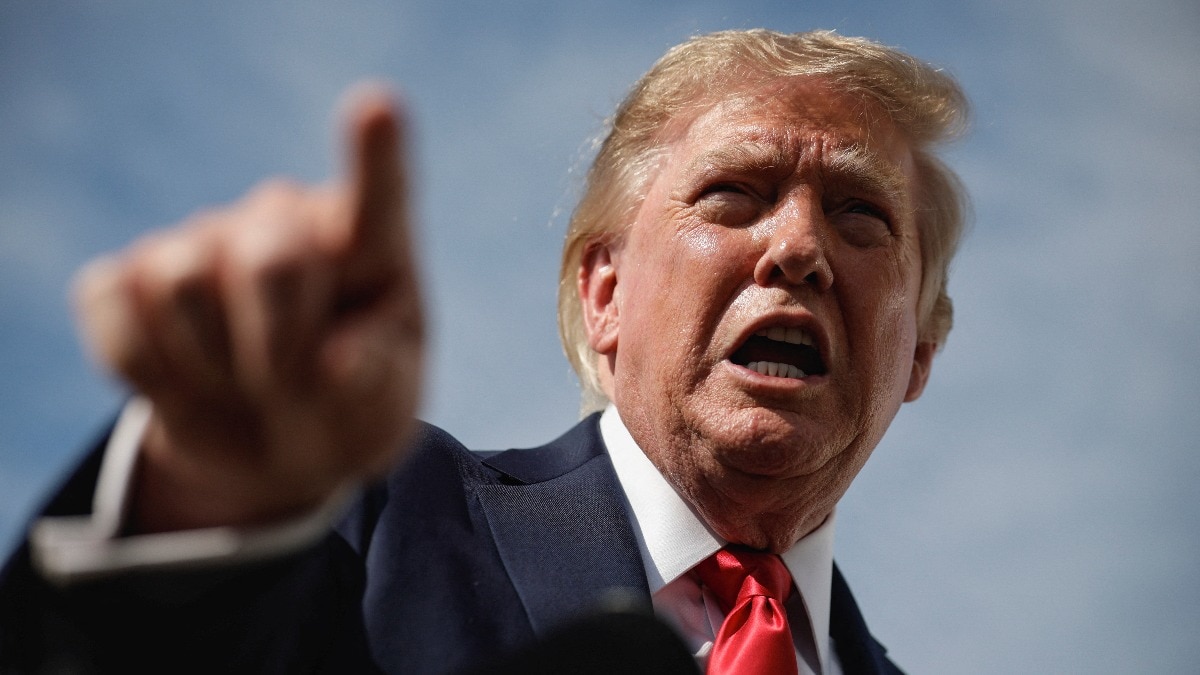
The planned meetings come just days after US President Donald Trump said he had rejected Iran's proposal to reopen the strategically important Strait of Hormuz and end the fighting. However, Trump has also indicated that further discussions with Tehran could take place this week, leaving the door open for another diplomatic push.QATAR BROKERS FRESH US-IRAN TALKS
Araqchi remains in New York after attending the UN General Assembly, where the Iranian delegation sought to revive diplomatic efforts with Washington.
Iran's semi-official ISNA news agency confirmed that Araqchi would meet the mediators on Monday morning, New York time. The meeting, ISNA said, would "examine the latest proposals and views regarding the current situation".
However, there was some uncertainty over how long Araqchi would remain in the US. Iranian Foreign Ministry spokesperson Esmaeil Baghaei later said Araqchi's stay in New York had not been extended and that the foreign minister would return to Tehran according to his original schedule.
It was also not immediately clear who would represent the US side in the separate discussions with Qatar.
The use of mediators reflects the difficulty of direct US-Iran negotiations. Qatar has been acting as an intermediary, not Pakistan, carrying messages between Washington and Tehran as both sides remain publicly divided over the terms of any ceasefire or wider settlement.WHAT IS IRAN'S SEVEN-DAY PROPOSAL?
At the centre of the diplomatic effort is a seven-day roadmap proposed by Tehran. Under the plan, Iran has called for an end to hostilities in Iran and Lebanon, the unfreezing of billions of dollars in Iranian assets and the lifting of sanctions on Iranian oil. Tehran has also demanded an end to the US blockade of Iranian ports.
In return, Iran would allow the Strait of Hormuz to reopen and resume negotiations with Washington over its nuclear programme.
Trump, however, said on Saturday that he had rejected the proposal. He argued that Tehran was seeking a rapid agreement because of the severe economic pressure it was facing. Despite that rejection, Trump told Axios on Sunday that US negotiators were expected to engage in further talks this week.
The latest mediation effort therefore appears aimed at finding a version of the proposal that both sides can continue discussing, rather than immediately producing a final agreement.KHAMENEI WARNS US OVER ARABIAN SEA
While diplomats prepare for another round of indirect discussions, Iran's Supreme Leader Mojtaba Hosseini Khamenei has adopted a far more confrontational tone. In a written message released by Iranian media on Monday, Khamenei claimed that Iranian forces had already pushed foreign military forces away from waters near Iran's southern coast and towards the Arabian Sea.
He warned that those forces would soon be pushed farther away.
"Some see us as the fourth superpower in the world. Today, the enemy's forces do not dare to venture beyond the Arabian Sea. Soon the day will come when the Arabian Sea will be purged of their presence. Our people fill the squares and streets across the country with their responsible presence," he said.
The Iranian leader did not identify the foreign forces by name in the quoted remarks. His comments came as tensions between Tehran and Washington remain centred on the Strait of Hormuz and the wider conflict. He also claimed that Iran had inflicted serious losses on its adversaries in waters around the country.
"The two southern seas of Iran were the roaming grounds of enemy forces. Today, however, due to the painful blows they have received from the brave warriors and guardians of the Strait of Hormuz, they do not advance past the Arabian Sea. Whenever they have braved this danger, they have brought harm upon themselves -- and soon, the Arabian Sea too will be cleared of them," he said.
The timing of the message is significant because it comes as Tehran tries to balance two very different messages: maintaining pressure on the battlefield while keeping diplomatic channels open.
The coming days could therefore test whether the two tracks can move forward at the same time. The immediate focus will be on whether Qatar can persuade Washington and Tehran to work from an amended version of Iran's seven-day proposal.- Ends