Trump Rejects Iran Deal to Reopen Strait of Hormuz - Newsweek
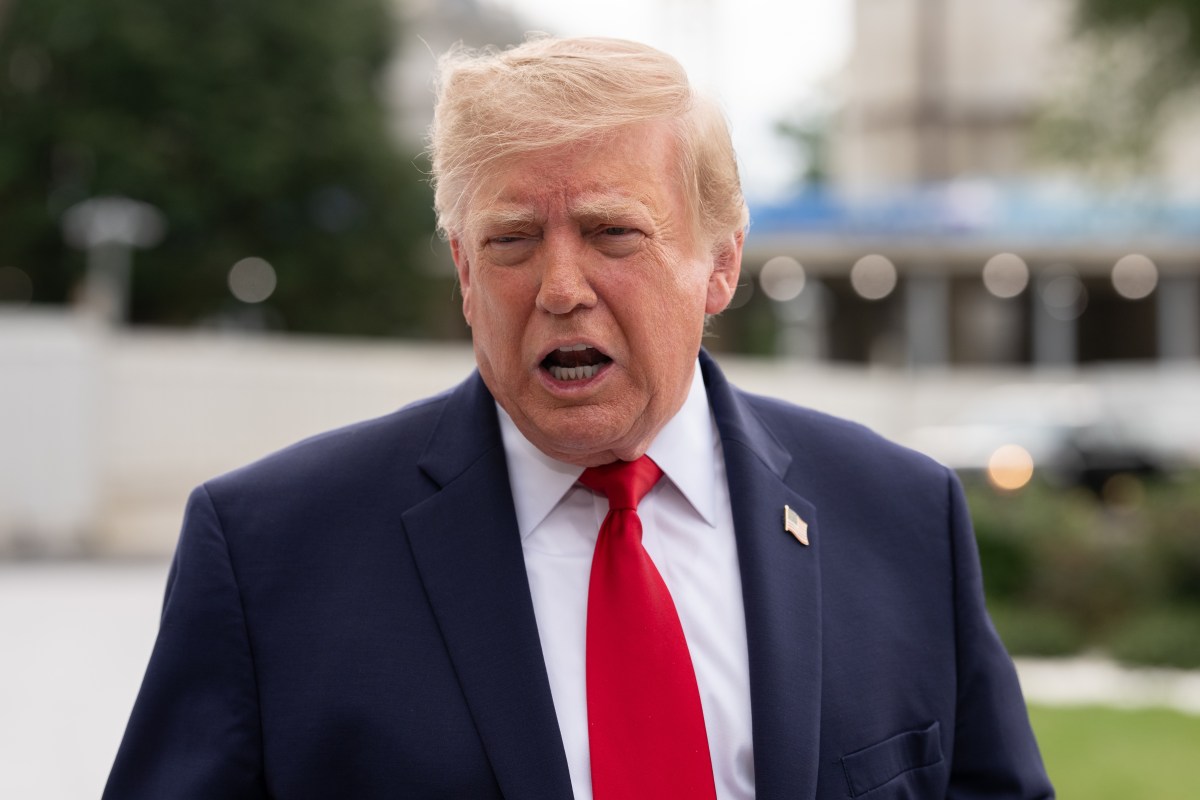
President Donald Trump said Saturday that he rejected Iran's latest proposal to reopen the Strait of Hormuz and halt fighting amid the ongoing war, calling the offer unacceptable while signaling he remains open to future negotiations.
"They want to make a deal and I think that's fine," Trump told reporters before he left the White House and boarded Marine One. "I'd like to make a deal, too. But that deal would not be acceptable."
He added: "They want to make a deal where they open the strait immediately because they’re losing so badly."
Before he rejected Iran's latest proposal, Trump posted an image on Truth Social on Friday evening of the Strait of Hormuz labeled as “Trump Strait."
Meanwhile, the president's comments mark a setback for diplomatic efforts to end the seven-month conflict between the United States, Israel and Iran, which has disrupted global energy markets and sharply reduced shipping through one of the world's most important oil transit routes.
Newsweek reached out to the White House for comment on Saturday morning.
Iranian officials said this week they had presented a proposal through mediators that would reopen the strait within seven days, restart talks over Tehran's nuclear program and reduce regional hostilities before broader negotiations resumed.
Iran also sought several concessions from Washington, including relief from economic pressure as the U.S. continues its naval blockade against Iranian ports as well as its sanctions against Tehran.
The proposal followed indirect contacts between U.S. and Iranian representatives during the United Nations General Assembly in New York earlier this week.
Traffic through the vital waterway has fallen sharply since the conflict escalated earlier this year. The disruption has affected global oil supplies and contributed to economic concerns well beyond the Middle East, with gas prices rising in the U.S. as the November midterms approach.
Trump's rejection comes just days after he delivered a stark warning to Iranian leaders during his address to the U.N. General Assembly.
In that speech, Trump said Tehran faced a choice between reaching an agreement with the U.S. or risking what he described as "annihilation."
Iranian President Masoud Pezeshkian responded the following day by telling world leaders that Iran remained open to "dialogue and diplomacy and negotiations" but would not accept what he described as the "language of force."
The administration has argued that military and economic pressure have strengthened Washington's negotiating position, with Trump portraying Tehran's latest proposal as evidence the strategy is working.
Amid the war, diesel prices in the U.S. have soared past $6 per gallon, hitting a new all-time high. As of Saturday afternoon, the national average price for diesel was $6.48 per gallon and $4.48 for regular gas, according to AAA.
Energy prices have risen all across the world and across the country, with diesel being hit harder than gas as it depends heavily on refinery output and global freight markets.
Higher gas and diesel prices have pushed up the cost of living in the U.S. over the past few months, forcing Americans to pay significantly more than they did before the war.
"Every truck, every delivery, every package, every grocery run just got more expensive. The cost of moving everything in America just hit a record," Patrick De Haan, head of petroleum analysis at GasBuddy, wrote on X earlier this month.
Diesel is used to power many commercial vehicles, including freight and delivery trucks, as well as trains, agricultural equipment, and construction machinery. And some businesses facing higher costs as a result of these increases have already passed on this additional pressure to consumers in the form of added fees.
Rising diesel prices could have "broad inflationary consequences," according to Adam Turnquist, chief technical strategist for LPL Financial. "Higher fuel costs can increase agricultural production expenses, place upward pressure on freight rates and transportation costs, and raise heating bills," he said in a recent statement shared with Newsweek.
Trump recently predicted the conflict would continue through the November midterms, saying Iran was delaying a deal until after voters go to the polls.
The president also declined Saturday to say whether the U.S. could resume military strikes after the election.
Earlier this month, Trump told reporters that "it’s going to take a little bit longer than the midterms" for gas prices to come down.
But he added: "Right after the election, oil prices are going to be tumbling downward."
Newsweek’s reporters and editors used Martyn, our AI assistant, to produce this story. Learn more about Martyn here.
Contact Newsweek editors for this story: Steve Mollman and Anthony Murray.