Trump Says $5,000 Checks ‘100%’ Happening; Republicans Are Less Sure - Newsweek
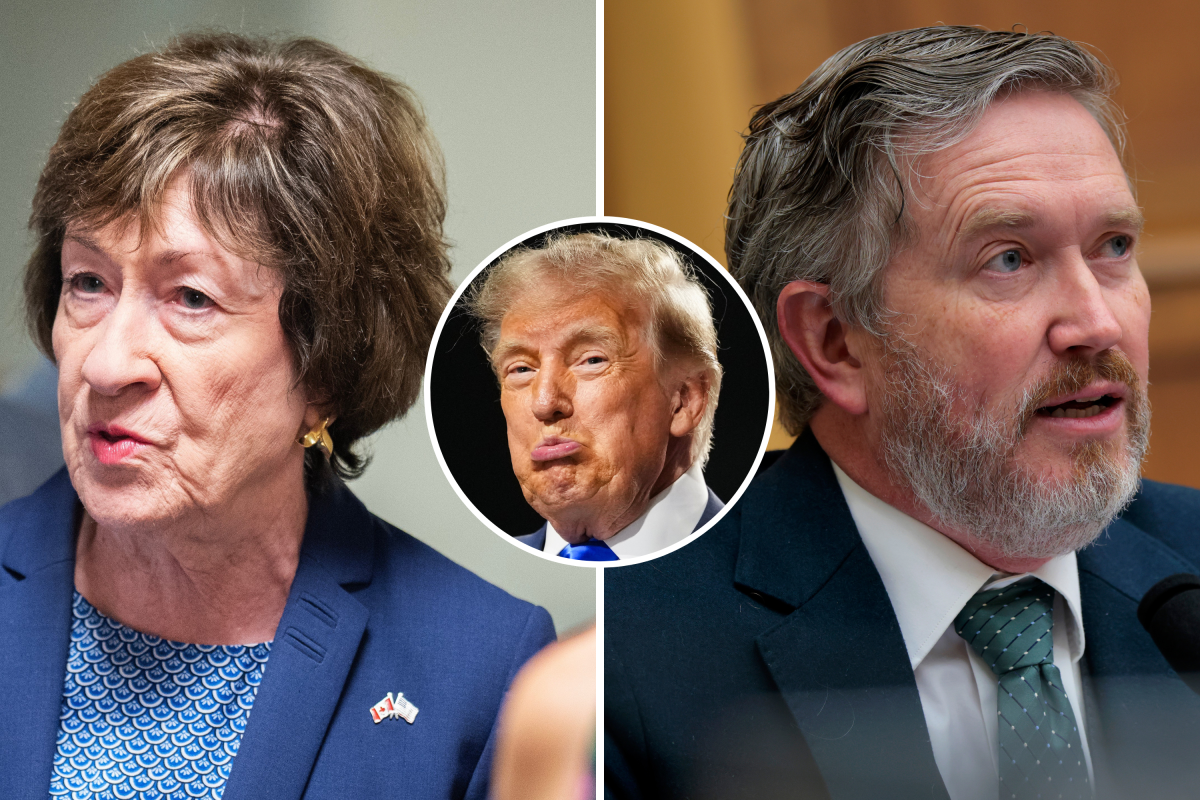
President Donald Trump has again promised that his $5,000 "dividend" will go out to the American public if Republicans are successful in the November elections, even as experts and lawmakers from his own party cast doubt on the likelihood and merits of the proposal.
"Because of our tremendous strength and success economically, I will issue a dividend to every adult citizen in the United States of America for $5,000," Trump said last Wednesday. "Very much like a successful company will do a cash distribution to its shareholders."
Over the weekend, Trump said that the dividend would be "easy" to fold into the federal budget, and told reporters outside Air Force One that "the $5,000 is going to happen, 100 percent."
In interviews on Sunday, however, House Speaker Mike Johnson, a Louisiana Republican, called the plan "creative" but said Congress had had "zero time" to consider it seriously, while declining to guarantee that the GOP could deliver on Trump’s pledge.
"The doomers and naysayers have consistently doubted President Trump," the White House told Newsweek last week, when asked to respond to those who were bemused by Trump’s announcement at last week's GOP midterm convention.
"President Trump has consistently proven his doubters wrong," said Spokesman Davis Ingle, adding that, "with the continued support of the American people, President Trump will keep delivering real results."
Newsweek has contacted the White House for further comment on Monday and is awaiting a response.
Administration officials and supporters have touted the checks as evidence of the administration’s commitment to sharing what Trump called the "fortune" earned by the economy during his second term.
But Republican lawmakers, including soon-to-depart members of Congress and more reliable backers of Trump’s other policies, have questioned whether this idea is possible or responsible given the country’s mounting fiscal challenges.
In an interview with CNN, Johnson said that GOP leadership would need to "figure all that out" in response to a question on whether he could guarantee the $5,000.
Previously, when Trump lent support to a $5,000 check funded with spending cuts by the Department of Government Efficiency (DOGE), Johnson said the U.S. should prioritize using any savings to pare down the national debt.
The Republican representative from Kentucky, who will be leaving Congress in January after losing his primary to the Trump-backed Ed Gallrein, said he was "insulted" by the proposal.
"I don't know about you all, but frankly I'm insulted by the notion that my vote this November could be bought for 5k," Massie, now among the most vocal Trump critics in the GOP, posted to X. "Not to mention the inflation this would cause. All things considered, I cannot in good conscience accept a penny less than 10k!"
The outgoing congressman, also departing when his current term expires, wrote on X that "dependency is evil & soul-sucking in all its forms," in response to a post defending the Trump dividend.
The Arizona representative, who is not running for reelection to the House, told Reuters he would "personally throw everything of my heart and soul to stop" the Trump dividend from coming into effect, arguing that it would raise interest rates and "do more damage to working people than would ever help them."
While not as critical as his retiring colleagues, Lawler has questioned how the administration or Congress could fund the trillion-dollar expense.
"Whether you call it a stimulus check or a dividend, the question is, how do you pay for it? That's my focus. We have a $40 trillion debt and we have to be serious about tackling that," Lawler told ABC News "This Week" host George Stephanopoulos on Sunday.
The representative pointed to the $40 trillion national debt in telling The New York Times that the proposal was "far-fetched."
"Tying government checks to the outcome of an election starts to sound like pay-to-play politics," he wrote in a post on X. "Republicans should earn the support of the American people through good policy, not by promising another round of checks from Washington."
DeSantis said Thursday during a press conference in Miami that any surplus government revenue should be devoted to tax cuts, and that funding the checks by borrowing would lead to "more debt and more inflation."
Collins, who chairs the Senate Appropriations Committee, called the plan "extraordinarily costly," in a statement last week, while pointing to the lack of an income cap as a particular concern.
"Tax and spending decisions should be made based on the needs of the American people and the state of the economy, they should not appear to be tied to election results," Collins said, as quoted by the BBC.
Cruz criticized the idea of giving checks to all Americans, telling Fox News his support for the proposal hinges on "how it’s structured."
"I would be all for structuring it as a tax refund," he said. "But I think we should be incentivizing work. I don’t think we should be paying people that are not working."
The Senate Republican leader said he liked the idea of the dividends, but told Fox News it was a "good question" whether the proposal could gather enough momentum in the upper chamber.
"We will cross that bridge when we come to it," he added.
The checks promised by Trump hinge on the GOP retaining control of both chambers come November, the chances of which are remote according to recent national polling averages. And legal experts told Newsweek that election anti-bribery laws and Congress’ authority over federal spending means the plan is vulnerable to other challenges.
In addition to the political, legal and constitutional questions, the economics of the Trump dividend are also seen as a major hurdle.
Gifting $5,000 to "every adult citizen," as Trump pledged, would cost over $1 trillion, and be comparable to the amount spent on defense and servicing the national debt each year—the latter expected to swell if the dividend is pursued.
"Trump is happily making a proposal that would cost in excess of $1 trillion without giving any indication how this would be funded," Desmond Lachman, former deputy director at the International Monetary Fund (IMF) told Newsweek. "Congress would certainly need to approve such a spending increase."
Lachman added that were Congress "rash enough to approve" the plan, it would spark "the mother of all bond and financial market crises" and almost certainly create "another inflation spike."
The administration has said this could be funded through new foreign investment and tariffs, though most economists say that the expenditure would need to be funded with borrowing.
"While collections have risen, annual tariff revenues will settle around $200 billion for the federal government if current tariffs are not struck down by court rulings," Erica York, vice president of federal tax policy at the Tax Foundation, told Newsweek, "and the net revenue they generate for the federal government is even less than that."
Commerce Secretary Howard Lutnick told NBC News last week that the checks could be funded in part by a proposal to charge affluent visitors to the U.S. $5 million for visa extensions, and said this would raise around $500 billion. Lutnick added that the "Trump dividend" could be paid for without taxes or deficit spending.
Meanwhile, Kevin Hassett, director of Trump’s National Economic Council, told Bloomberg TV that the administration was considering sharing "all the growth and all the wealth being created in the U.S." via a reconciliation bill in Congress—used by majority parties to fast-track fiscal packages.
"We can do it in a fiscally responsible way," Hassett said. "It is a serious proposal."