Trump showed up for Asean – but on his own terms - The Business Times
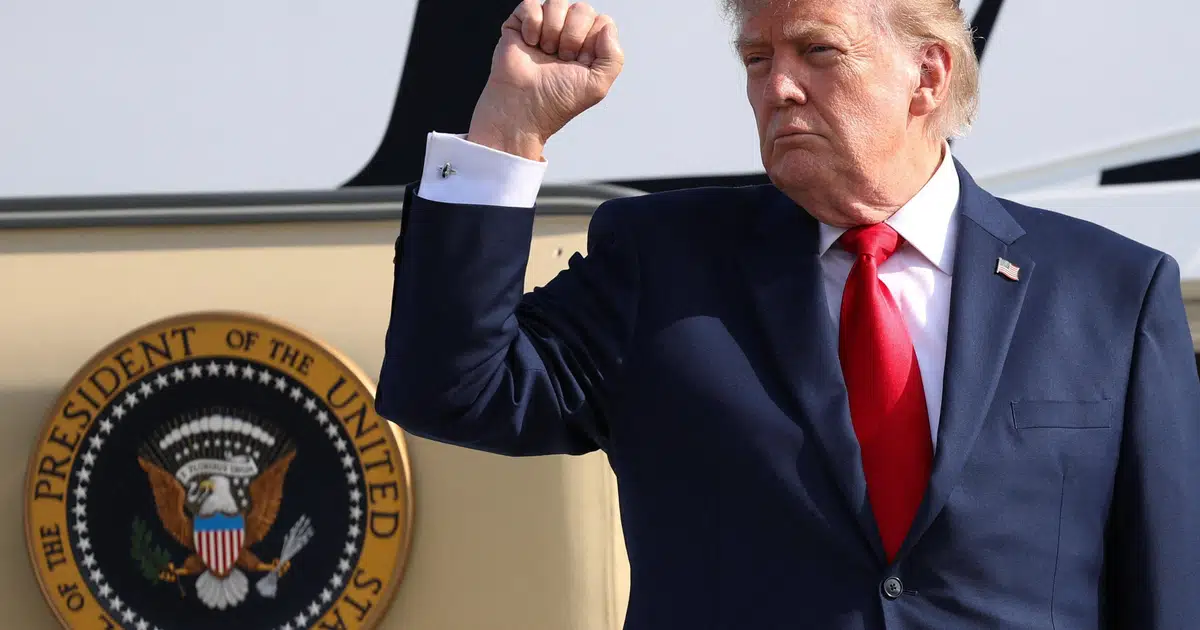
US PRESIDENT Donald Trump arrived in Manila on Tuesday (Nov 17), after the main Asean Summit and related meetings had ended.
He missed the East Asia Summit (EAS), which is the region’s premier leaders-led forum for strategic dialogue, but joined Asean leaders for a special meeting, a cocktail reception and dinner.
Even so, Trump’s presence was important. With ongoing questions about Washington’s commitment to South-east Asia, the US leader still made the effort to attend, even if only briefly.
The way he handled his visit also said a lot about how his administration approaches the region.
Trump came to Manila after a tough midterm election where Democrats took back control of both chambers of Congress. Some might call him a “lame-duck president”, but that would be premature.
The US presidency retains considerable executive authority in foreign policy, trade and national security, even though Congress can set some limits.
High-profile diplomatic events give Trump opportunities to demonstrate his influence abroad, despite political setbacks at home.
For Asean, Trump’s visit is a key sign that South-east Asia still matters to Washington.
He repeated America’s commitment to the region and highlighted the longstanding economic and security ties between the US and Asean countries.
The Special Summit led to two joint outcomes: a Comprehensive Work Plan for 2026-2030 to carry out the Asean-US Leaders’ Joint Vision Statement, and principles for stronger public-private cooperation against online scams.
These are useful commitments. The work plan sets out a broad framework for working together on maritime security, digital technology, trade, investment and energy.
Still, most of these documents were drafted before Trump arrived, and they offer no new initiatives or direct answers to Asean’s concerns about tariffs or tech restrictions.
In fact, some of the most telling events happened outside the Asean-US meeting.
Trump and Thai Prime Minister Anutin Charnvirakul signed a joint statement confirming that they had mostly finished talks on a two-way trade agreement.
The deal is not final yet, but Thailand’s promise to cut tariffs and other barriers for American exports shows the current administration’s continued preference for making deals directly with individual countries.
For South-east Asian governments, these deals may offer more certainty about market access, but they also highlight the unequal bargaining power between the US and its partners.
Just before Trump arrived, the US announced new restrictions on advanced artificial-intelligence chips, adding fresh trade and compliance uncertainties for the region.
New licensing rules for Singapore, Malaysia, Thailand and Indonesia could make it harder to invest in data centres and AI infrastructure.
Washington sees these steps as necessary to stop China from getting around export controls. Yet, they also show how US economic and security policies can affect South-east Asian countries that want to keep tech partnerships with both major powers.
Trump’s participation in the Quad Leaders’ Summit on Tuesday was also telling.
The meeting with Australia, India and Japan produced several concrete plans, including working together on Indo-Pacific maritime surveillance, holding a joint exercise with maritime patrol aircraft in 2027, expanding cooperation on AI and cybersecurity, and launching the first Quad Business Leaders’ Forum the same year.
These developments show that Washington values smaller groups of like-minded partners to achieve specific strategic and economic goals.
This does not mean the Quad takes away from Asean Centrality. The two groups have different roles, and the Quad leaders confirmed their support for Asean.
Still, the difference between them is clear. Asean is an open platform for engaging all major powers, while the Quad gives Washington a more targeted way to pursue shared strategic interests.
Trump’s decision to skip EAS is also consistent with his earlier record.
During his first term, the president went to the 2017 Asean-US Summit in Manila but left before the EAS plenary. Trump also missed the EAS meetings in 2018, 2019, 2020 and 2025.
He seems to prefer special Asean gatherings and receptions over the usual regional forums, showing less interest in multilateral processes that do not bring quick or clear political benefits.
This points to a preference for arrangements that match American priorities.
Trump’s preference for high-profile great-power diplomacy may become even more apparent as he heads to the Apec Summit in Shenzhen on Wednesday, where he will meet Chinese President Xi Jinping and Russian President Vladimir Putin.
This rare meeting of three major nuclear leaders will likely draw much global attention. Yet, its importance may lie more in optics than real results, since their interests often clash.
Some also worry that this G3 setup could remind people of the 1945 Yalta Conference, raising fears that major powers might try to divide the world into spheres of influence without thinking enough about smaller countries.
For Asean, the takeaway is not to pull back from Washington. The US is still an important economic and security partner, and Trump’s visit to Manila is a positive sign.
However, the bloc must remain clear-eyed about the increasingly transactional nature of American engagement.
As Singapore takes over the Asean Chairmanship in 2027 with the theme “Deeper Integration, Wider Partnerships”, the main goal should be to boost the region’s economic strength, broaden partnerships and retain its strategic autonomy.
Trump’s Manila visit showed that Washington still values South-east Asia.
The more critical question is whether that interest translates into sustained support for Asean’s collective priorities, rather than engagement primarily on American terms.
Taylor Swift has over 300 trademark filings. Why do most SMEs have none?