Trump Truth Social Post Mistakes Brazil for India - Newsweek
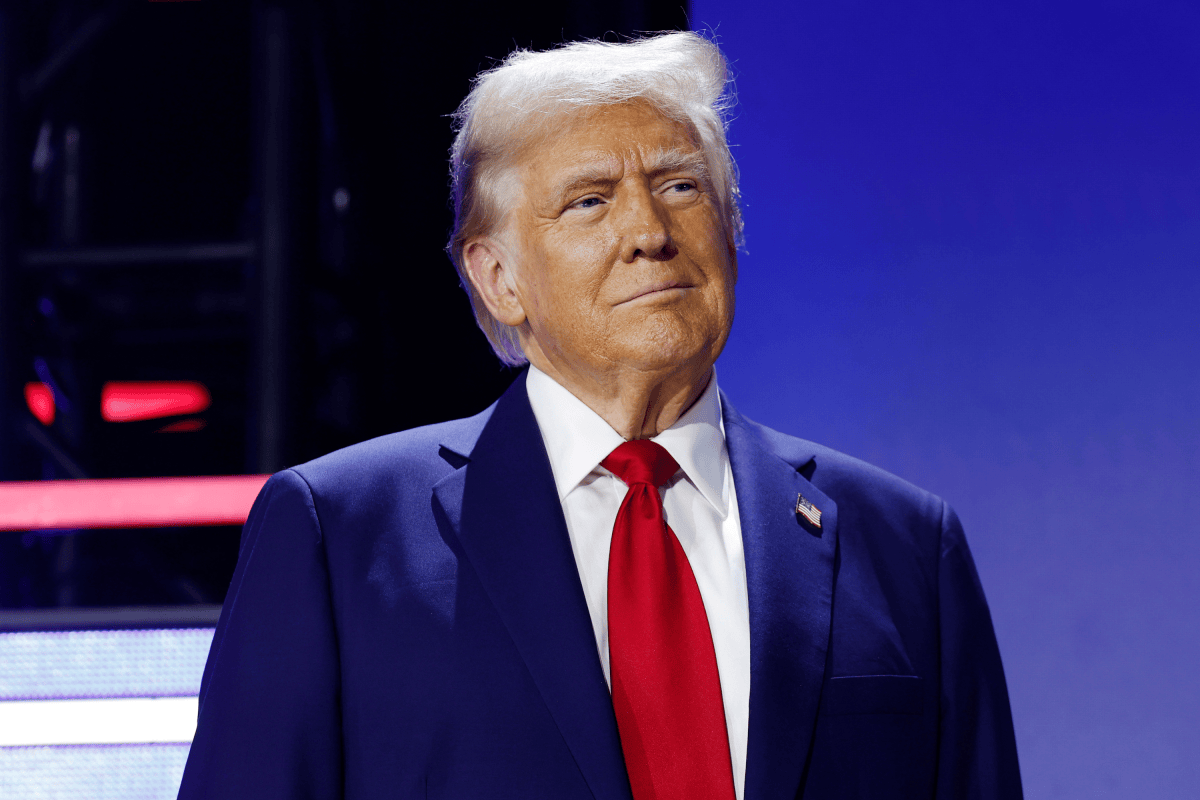
President Donald Trump briefly referred to India instead of Brazil on Truth Social while praising the speed of the country's election results as he criticized U.S. vote counting.
Screenshots of the apparent error circulated widely online on Monday, including in a post the official White House Rapid Response account shared on X. The post on Trump's Truth Social account now mentions Brazil, which held the first round of its presidential election on Sunday.
Newsweek contacted the White House for comment outside regular office hours on Monday.
According to screenshots of Trump's Truth Social post, the president wrote: "125 Million People voted today in the first round of India's Presidential Election."
Trump went on to praise the speed of the vote count, saying results were available shortly after polls closed. He then contrasted that process with vote counting in parts of the United States, writing, "Voting in America is CORRUPT!!!"
The White House Rapid Response account shared a screenshot of that version on X, where it has been viewed over 300,000 times.
The post on Trump's Truth Social account now mentions "Brazil's Presidential Election," but it otherwise appears to contain the same wording as the initial post.
No explanation for the change was immediately available, and it remains unclear whether the original wording was the result of a typo, drafting error or another mistake.
Brazilian election authorities, who facilitated the first round of the 2026 presidential election on October 4, are known for releasing results quickly after polls close because the country's voting system is fully electronic.
India's president, meanwhile, is not elected by direct popular vote. Instead, the office is chosen by an electoral college consisting of elected members of Parliament and state legislative assemblies. India's most recent presidential election occurred in 2022, and the next is not due until 2027.
Vote counting in the U.S. can take longer than in countries such as Brazil because elections are administered by thousands of state and local jurisdictions rather than a single national authority. Many states continue processing absentee, military, overseas and provisional ballots after Election Day, while election certification occurs separately from election-night reporting.
California, which Trump named in his post, has some of the country's most expansive vote-by-mail laws. Ballots postmarked by Election Day can arrive several days later and still be counted, and election workers must verify signatures before those votes are added to the tally. Because of the state's size and the volume of ballots cast, final certified results can take weeks even when the outcomes of major races are known much earlier.
Election administrators say the procedures are designed to ensure that every eligible ballot is counted accurately and in accordance with state law, but Trump has long argued that these timelines undermine confidence in the electoral process and that election results in the U.S. should be available more quickly.
The president frequently points to foreign voting systems to support his case. In August, while promoting the SAVE America Act—a proposal that would require documentary proof of U.S. citizenship to register for federal elections—Trump highlighted India's voter identification requirements and large electorate as an example of what he described as stronger election safeguards.
Trump has also repeatedly criticized mail voting, though he recently urged Republicans to take advantage of every available voting method, including voting by mail, ahead of November's midterm elections. The shift marked a notable change in the president, who has spent years attacking mail ballots as being vulnerable to fraud, despite voting by mail himself on multiple occasions.
Brazil's presidential race is now headed to a runoff election on October 25 after no candidate secured an outright majority in the first round of voting.
Voters are set to choose between incumbent President Luiz Inácio Lula da Silva, the leader of the Workers' Party who is seeking a fourth nonconsecutive term, and Senator Flávio Bolsonaro, an ally of President Donald Trump and the son of former Brazilian President Jair Bolsonaro.
The election takes place against a backdrop of rising concerns about violent crime, public security and allegations of foreign influence in Brazilian politics. Lula has largely campaigned on continuing state-led economic development and defending Brazil's national sovereignty, while Bolsonaro has promoted tough-on-crime policies and pledged to seek the release of his father, who is serving a prison sentence for attempting a coup.
The runoff will determine who leads Latin America's largest economy for the next four years.
Newsweek’s reporters and editors used Martyn, our AI assistant, to produce this story. Learn more about Martyn here.
Contact Newsweek editors on this story: Tobias Meyjes and Shakeema Edwards.