
Trump Wants Ukraine to Stop Striking Russian Refineries. What Would That Mean for the War? - Time Magazine
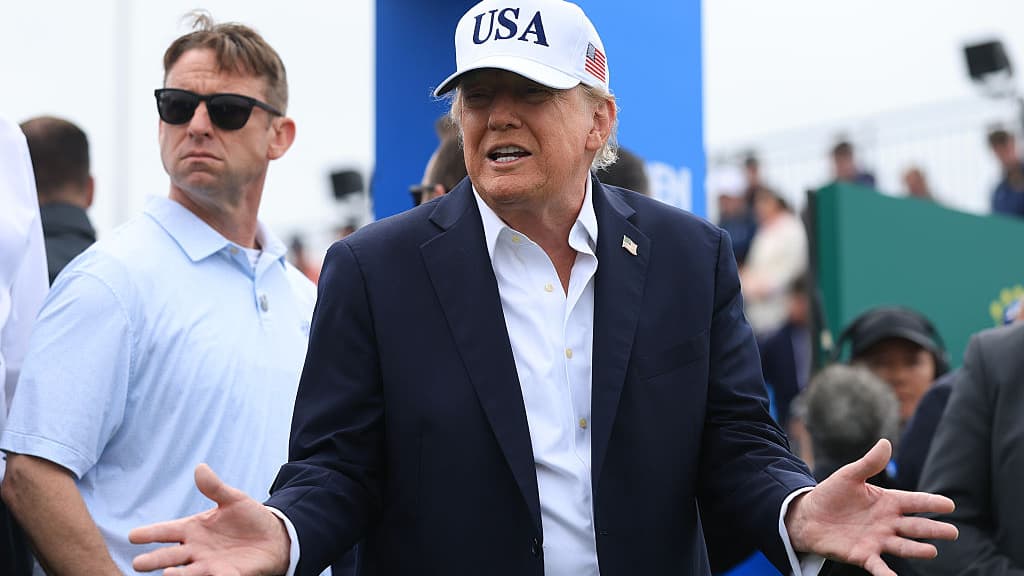
President Donald Trump called on Ukrainian President Volodymyr Zelenskyy to halt strikes on Russia's diesel fuel infrastructure and refineries, claiming the attacks are contributing to a fuel shortage.
“Mr. Zelenskyy has to do one thing. He has to stop knocking out diesel fuel in Russia,” Trump told reporters Sunday in Ireland. “Let him go after targets but not diesel fuel, because he’s causing a shortage.”
The request asks Ukraine to curtail one of its principal means of imposing pressure on Moscow. Yet energy-market data indicates that the much larger source of the global diesel squeeze stems from the ongoing conflict in the Middle East, raising questions about how much Trump’s proposal would even impact the shortage—and what it could cost Kyiv.
Though the U.S.-Iran war has dramatically limited the distribution of oil since February, Trump said that it is not responsible for current shortages.
“This isn’t done by the Middle East,” Trump said. “This is done by what’s happening with Russia and Ukraine. So we spoke to Mr. Zelenskyy about it.”
Trump’s comments appeared to be referring to last week’s mediation efforts which saw U.S. envoys Steve Witkoff and Jared Kushner visiting Russia and Ukraine to discuss a path toward peace. Witkoff said afterward that he was “confident that there'll be a good resolution here.”
Washington’s intervention in the peace efforts had previously stalled last spring following the outbreak of war with Iran.
Throughout the summer, as Ukraine stepped up its long-range attacks, it increasingly set its sights on oil refineries. Overnight into Sept. 13, Ukraine targeted two Russian refineries—one of which, the Slavyansk Oil Refinery, is one of the “largest independent oil refineries in the south of the Russian Federation” according to the General Staff of the Ukrainian Armed Forces.
Zelenskyy has not publicly responded to Trump’s comments, but he has previously said that these refineries fund and fuel Russia’s war with Ukraine. He said that his country’s attacks are meant to disrupt Moscow’s financing capacity.
"Every dollar paid for Russian oil is money for the war,” Zelenskyy said on X in April.
Olena Lennon, a Practitioner in Residence of National Security at the University of New Haven, says ending the attacks would deprive Kyiv of an unusually effective source of leverage.
“Taking away one of Ukraine’s most effective pressure points inside Russia—one that has actually put Russia on the back foot—would significantly weaken Ukrainian leverage and set Ukraine back, leading to more Ukrainian deaths,” Lennon tells TIME.
TIME has reached out to Zelenskyy’s office for comment.
Disruptions to Russia’s oil refineries have undoubtedly impacted Russian fuel markets, as well as those in Central Asia.
When Ukraine intensified its attacks on Russia’s energy facilities in late 2025, the northern nation faced a domestic gasoline shortage estimated at around 20%. It began instituting export restrictions. The disruption persisted, however, with Russian refinery runs reaching a 24-year low last month.
Those restrictions then reverberated across Central Asia. According to the Carnegie Russia Eurasia Center, part of the Carnegie Endowment for International Peace, Central Asian nations saw a rise in retail gas prices as a result of Moscow’s restrictions—by as much as 25% year over year. Some countries, like Kyrgyzstan and Tajikistan, turned to suppliers in China as a result.
But Russia is only one contributor to a global fuel squeeze driven more substantially by disruptions in the Middle East. The effects of that broader supply shock have been felt worldwide.
In Australia, the government launched an A$20 million National Fuel Security Campaign that encouraged citizens to voluntarily reduce fuel consumption as a result of shortages. It ran from April to June. Fuel prices are set to rise again in the country as fighting once again ramps up.
Last week in Brazil, President Luiz Inácio Lula da Silva introduced 30-day tax cuts on gasoline and ethanol, along with a subsidy of one real per liter for diesel producers and importers, as the U.S.-Iran war drove up global oil prices. Although Brazil is a major crude exporter, it still depends on imports of refined fuels.
In the United States, the Strategic Petroleum Reserve is at its lowest level since 1982. The reserve holds just 285.4 million barrels as of Sept. 4, which is less than half of the 638 million barrels held at the beginning of 2021—and significantly less than the reserve’s peak of 726.6 million barrels in 2009. The reserve has dwindled following releases under both Trump and former President Joe Biden, including emergency drawdowns intended to shield consumers from escalating crude-oil prices.
In light of this, Lennon finds Trump’s request “purely hypocritical.” “If Trump’s primary concern is the disruption of global energy markets, then the much larger issue is America’s continued war with Iran, which has contributed far more significantly to the current fuel shortage,” she says.
The International Energy Agency has also identified the conflict in the Middle East as the principal source of the broader global supply shock, saying in June that global markets are dealing with “their largest supply disruption in history resulting from the near closure of the Strait of Hormuz.”
The Strait of Hormuz, the vital passageway through which 20% of the world’s oil flowed prior to the war, was effectively closed by Iran after the U.S. and Israel coordinated attacks on the nation on Feb. 28. Control of the Strait has been a sticking point in peace negotiations, and the U.S. and Iran most recently traded strikes in the Strait on Sept. 9.
For the first time since July, Brent crude oil prices have surged back above $100 a barrel this week, with the average diesel price in the U.S. rising above $6 for the first time ever.
Oil transit has grown even more fraught following advances last week from Yemen’s Houthi rebels.
On Sept. 10, the Houthis—who are backed by Iran—took control of Yemen’s port city of Mokha, which is vital to controlling shipping through the Red Sea. The next day, the group captured Perim Island. The island is located within the Bab el-Mandeb Strait, a waterway through which 8.1 million barrels of oil and petroleum products per day passed during the second quarter of 2026, according to the U.S. Energy Information Administration. If the group takes control of the Strait, oil prices could rise further, as it was a lifeline for the global economy when the U.S.-Iran war effectively shuttered the Strait of Hormuz.
On Sept. 11, Saudi Arabia closed a critical oil pipeline after it was struck by drones launched from Iraq. An investigation is underway to ascertain who is behind the attacks, but no group has claimed responsibility. Saudi Arabia—a U.S. ally—is facing mounting threats from the Houthis, which has pulled the Saudi government further into the Middle Eastern conflict. Trump said Saturday, without providing evidence, that Iran was “probably responsible.” Amid Iraq’s investigations into the drone attacks, it has closed down three border crossings with Iran.
If the pipeline does not restart within days, the shutdown could remove up to 4% of global oil supply, according to Saudi oil buyers and traders. It is unclear when the pipeline might reopen.
The White House has not responded to TIME’s request for comment on how Trump’s remarks Sunday might sit in contrast with comments he made last week linking elevated oil and gasoline prices to the war with Iran.
On his way to the Republican midterm convention in Dallas last week, Trump told reporters that he expects the U.S. and Israel’s war with Iran to end “immediately after” the midterm elections. He claimed that Iran was prolonging the conflict to influence the election.
He added that “it’s going to take a little bit longer than the midterm” for gas prices to come down, indicating that would happen as soon as Iran was ready to reach a resolution to end the war.
If Ukraine were to comply with Trump’s request, it would relinquish one of its most effective tools for damaging Russia’s energy sector. The International Energy Agency said last week that the cumulative strikes degraded Russia’s refining system, with sanctions making damaged equipment more difficult to replace.
Halting the campaign could give Moscow greater opportunity to repair its refineries, preserve fuel and revenue for its war effort, and resume some exports. That could ease one source of pressure on global diesel supplies—but it would not make up for the much larger disruption caused by the war with Iran.
Beyond those practical consequences, Lennon says, “Trump’s request reflects a larger pattern of the U.S. leveraging its power to put more pressure on Ukraine while reducing pressure on Russia.”
Even so, compliance might not alter the war’s trajectory as significantly as the campaign’s economic impact suggests.
George Beebe, director of grand strategy at the Quincy Institute, acknowledges that Ukraine has “hurt Russia’s energy sector,” but argues that it has not been “nearly enough to force Putin to capitulate to Ukraine's war demands.” He points to Russia’s “damaging counter-escalation on Ukraine's energy infrastructure, ports, and transportation networks.”
“In short, Ukraine's campaign of deep drone strikes in Russia has backfired, producing far more Russian destruction in Ukraine than Ukraine has inflicted on Russia,” Beebe tells TIME.
Beebe’s assessment comes as Russia has ramped up its air campaign in recent weeks, including attacks on Ukraine’s power grid and gas stations ahead of winter. Ukraine is struggling with a shortage of U.S.-made Patriot missile interceptors, leaving a critical gap in its defenses against Russian ballistic missiles.
But Lennon believes that Trump’s request is “in and of itself further evidence that Ukraine’s drone strikes have become increasingly effective in reducing Russia’s economic and combat power—and that Ukraine’s leverage has grown exponentially.”
“The refinery campaign has actually allowed Ukraine to offset some of its quantitative disadvantages of fighting a much larger power by using relatively inexpensive, domestically produced drones to inflict significant costs on Russia,” Lennon continues.
Separate from the debate over the campaign’s effectiveness is whether Ukraine is capable of fulfilling Trump’s request as narrowly as he described it.
Konstantin Sonin, a professor with the University of Chicago Harris School of Public Policy, says that the Ukrainian military is not necessarily trying to hit diesel fuel in particular—it is just trying to target Russia’s energy sector.
Sonin says Ukraine lacks the intelligence and targeting process necessary to distinguish among installations producing different fuels. “When they strike a refinery, they strike what is vulnerable there,” he tells TIME. “They use their precious resources to create as much damage as possible.”
By Sonin’s analysis, complying with Trump’s request would therefore be difficult without broadly curtailing attacks on Russia’s energy sector—something Ukraine does not appear poised to do.
Lennon, however, believes Ukraine could halt refinery strikes without abandoning its broader deep-strike campaign.
“I would not say that halting refinery strikes would necessarily kneecap Ukraine’s deep-strike campaign,” she says. “Ukraine still has other important targets inside Russia, including airfields, ammunition depots, missile and drone production facilities, and logistics hubs.”
The more important issue, she believes, is what would happen if Ukraine chooses to eschew Trump’s request.
“Although European partners have increasingly assumed the brunt of the burden for supporting Ukraine and have demonstrated that they can replace a substantial portion of the financial and military assistance previously provided by the U.S., they have not eliminated Ukraine’s dependence on critical American capabilities,” she says, referring to the Patriot missile interceptors—an area in which she says Europe can supplement U.S. support but cannot replace it.
For that reason, the question becomes whether the U.S. would choose to add sanctions and otherwise pressure Putin to scale back—or continue pushing for Ukraine to abandon that source of leverage.
“Over time, that choice could significantly affect the strategic balance of the war and its outcome,” Lennon says.
