Trump, Xi and Putin agree to boost oil supplies in ‘peace declaration’ - The Telegraph

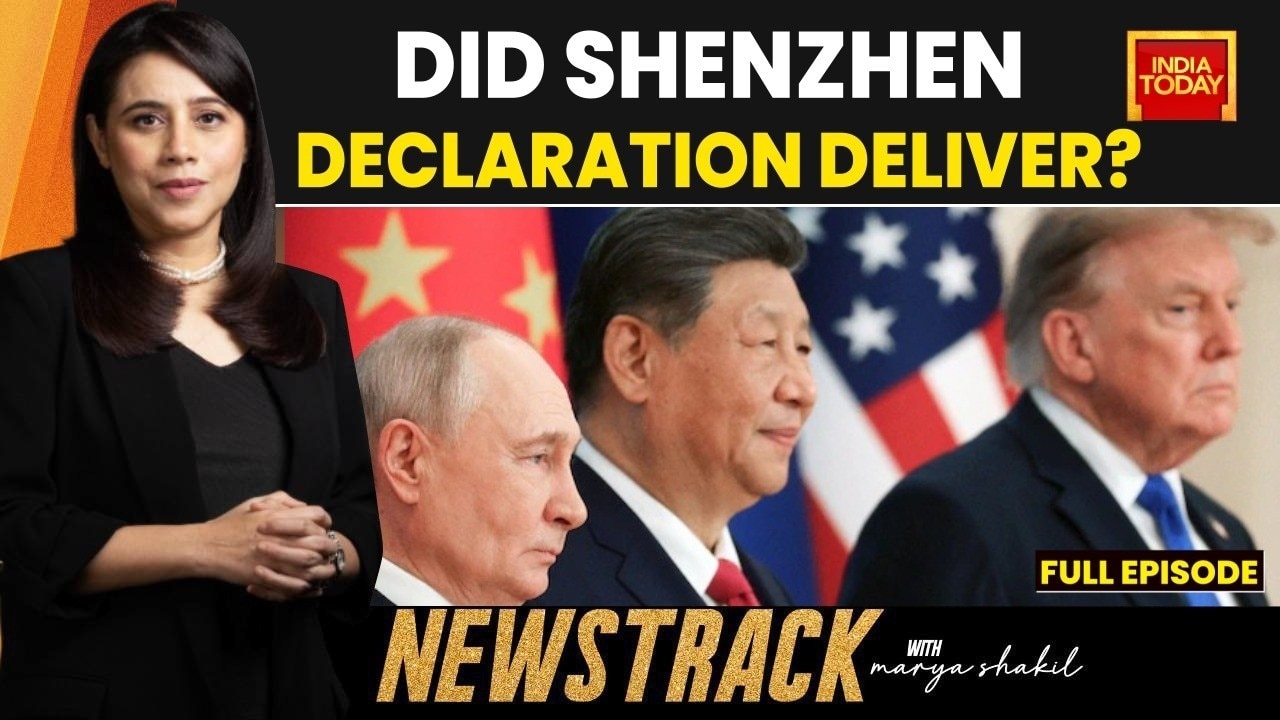
Vladimir Putin, Xi Jinping and Donald Trump met at a historic trilateral summit Credit: Getty Images/Win McNamee Joe Barnes Diplomatic Editor Show biography Joe is based in Brussels, where he focuses on European politics and defence. He has covered the Ukraine war and its peace negotiations and reported on US elections from Washington DC
Donald Trump, Vladimir Putin and Xi Jinping have pledged to boost global energy supplies after an unprecedented trilateral summit.
In a four-point statement, the leaders also vowed to work together to reform the United Nations and International Criminal Court.
Their talks are likely to trigger global unease after Mr Trump appeared to sign up to Moscow’s and Beijing’s effort to shake up a Western-dominated world order.
Putin declared the summit “a chapter in the history of diplomacy”, while Chinese and Russian state media described the subsequent statement as a “peace declaration”.
Their agreement could pave the way for a further weakening of American sanctions on Russia, the world’s second-largest producer of oil.
Mr Trump previously waived measures against Moscow in the hope that it would boost global supplies and bring down the price of fuel before the midterm elections.
A similar move would prove controversial amongst Washington’s Western allies, which have sought to squeeze Russia’s export markets in response to Putin’s invasion of Ukraine.
In a discussion with Mr Xi after the talks, the Russian president said: “Thank you for organising this. I don’t think anyone even expected everything to go so well.”
Putin, Mr Xi and Mr Trump agreed to a four-point statement Credit: AFP/WIN MCNAMEE However, the meeting, on the fringes of the Asia-Pacific Economic Cooperation (Apec) summit in Shenzhen, China, appeared not to yield any concrete results.
The war in Ukraine, which Mr Trump is trying to mediate an end to, was not mentioned in the public statement, and the US president’s wish for China to commit to a non-nuclear proliferation treaty was only given lip service in their joint statement.
Before their trilateral meeting, Mr Trump had separate talks with both Putin and Mr Xi.
In his session with the Russian president, he described the Kremlin leader as “my friend”, even though he has repeatedly ignored American calls for a ceasefire in Ukraine.
The two leaders last met privately in Anchorage, Alaska, in 2025, which led to a 28-point peace plan that heavily favoured Russian demands.
Putin used the summit in Asia as an opportunity to promote himself as a serious player on the world stage, shrugging off Western attempts to isolate him.
During an afternoon press conference, the Russian president said he hoped that there could be a “mutual understanding” between Moscow and Washington, adding that “only the Lord God” knows what could happen next.
He said: “I have no doubt that President Trump genuinely aspires to resolve conflicts, including the Ukrainian one, and sincerely desires to regulate bilateral relations in a whole series of areas, including importantly for us, Russian-American relations.”
Chinese state media also presented talks between Xi and Mr Trump as “positive and constructive”, adding that the two leaders had put their tensions over trade behind them to pursue a plan for a “stable relationship”.
During their meeting, the Chinese leader said the US president should do the “right thing” on Taiwan to prevent any major setback in the relationship.
Meanwhile, Mr Trump reportedly said Washington did not support the self-governing, democratic island’s claim to independence.
Fears over military activity in the Indo-Pacific resurfaced on Thursday when two Russian Tu-95 nuclear-capable strategic bombers were spotted flying over Taiwan’s eastern coast, the second time such an incident had been reported this week.
Only on Wednesday had Moscow and Beijing said that they would pursue further military ties, including cooperation on developing aircraft.
China views Taiwan as its own territory, a position Russia has repeatedly backed.
Some of Ukraine’s allies had expressed concern that Thursday’s three-way meeting would be an attempt to replicate the Yalta Conference between the Soviet Union, Britain and the US that set terms for the global order after the Second World War.
That 1945 summit is scorned in much of Eastern Europe as a betrayal, because it is widely seen as having ratified Moscow’s dominance over countries occupied by Soviet troops at the time, which remained under Communist control through the Cold War.
Putin rejected the suggestion that there was anything wrong with either event.
“There was no division of the world into ‘spheres of influence’ at Yalta. Yalta simply acknowledged the realities that had emerged in the wake of the Second World War. What else were they supposed to do, keep the war going?” he asked.
“Yalta merely codified the existing reality. And in today’s conflicts, too, we will have to come to terms with the realities on the ground.”
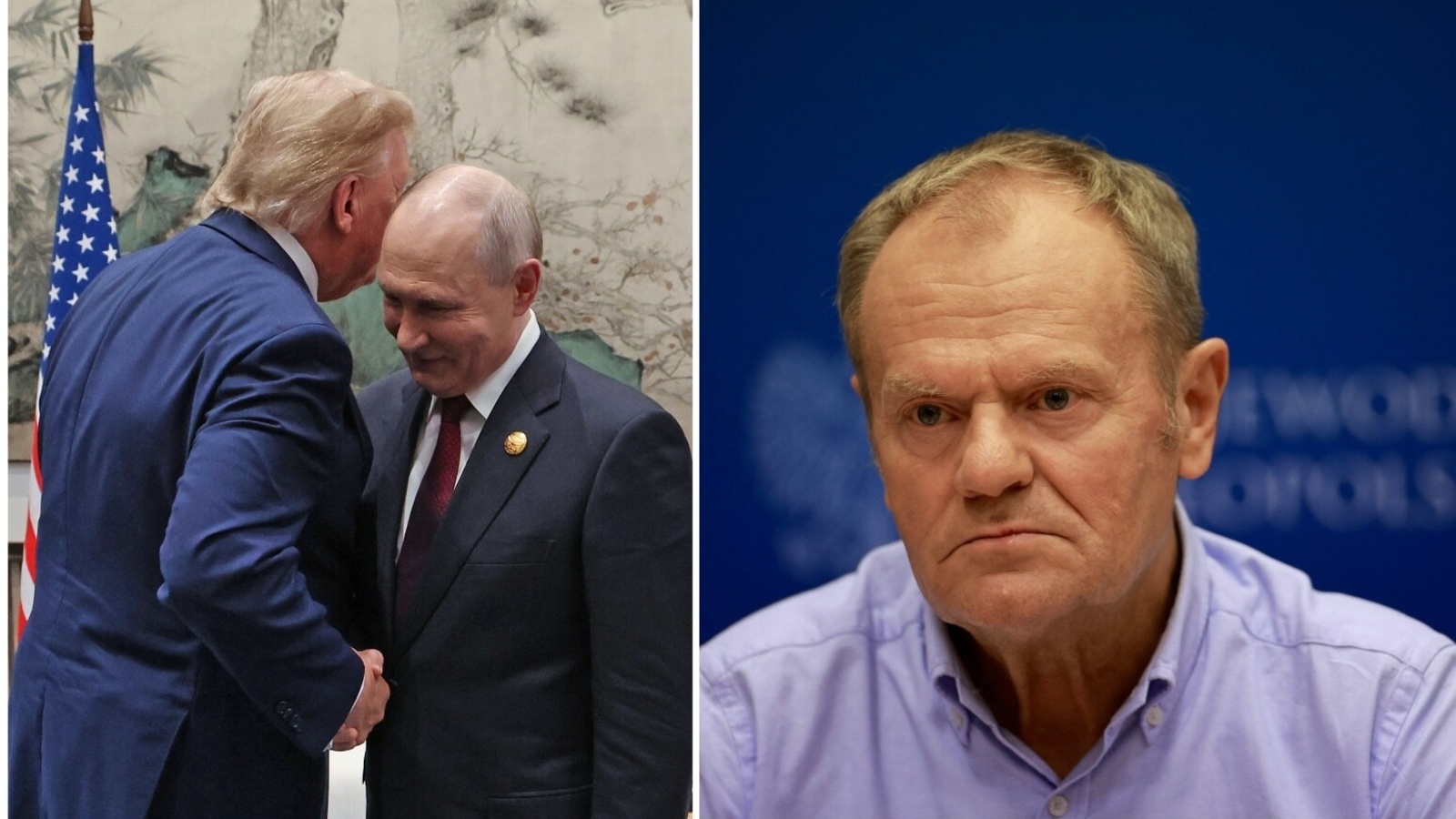
While Mr Xi, Putin and Mr Trump met in Asia, they were mocked by Europeans preparing for their own gathering in Berlin.
Donald Tusk, the Polish prime minister who is known for his abrupt statements, wrote online: “God, protect us from such friends.”
He will be one of almost 40 leaders huddled in the German capital for a meeting of the Coalition of the Willing.
Contributors to the Anglo-French initiative, which is planning post-war security guarantees for Kyiv, believe that their show of support for their war-torn ally is crucial.
Johann Wadephul, the German foreign minister, said the meeting would send a strong signal to Moscow that the West takes any peace talks seriously.