
Trump-Xi Summit: 5 Takeaways From Their White House Meeting - Tempo.co English
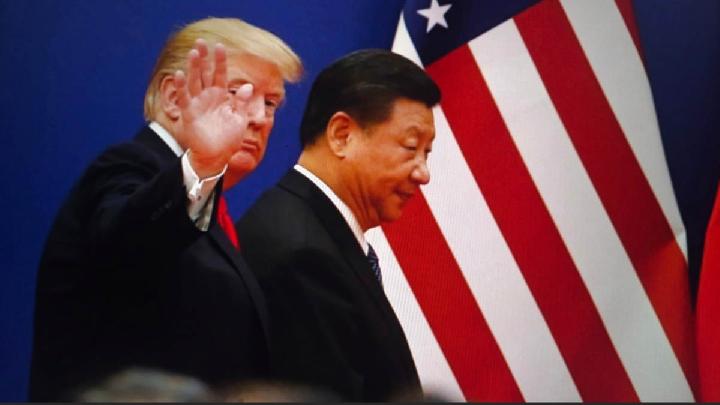
TEMPO.CO, Jakarta - U.S. President Donald Trump and Chinese President Xi Jinping struck a warmer tone at their White House summit on Thursday, September 24, as the two countries sought to stabilize ties while leaving several major disputes unresolved.
Trump called the meeting “great” and highlighted his personal relationship with Xi, while the Chinese leader urged both sides to manage their competition and avoid confrontation.
The summit extended a fragile U.S.-China trade truce, but produced no major breakthroughs on issues including Taiwan, the war in Iran and artificial intelligence.
Here are the key takeaways from Xi’s visit to Washington, based on reporting by Reuters and Al Jazeera.
The United States and China agreed to extend their existing trade truce, which had been due to expire in November.
U.S. Treasury Secretary Scott Bessent said the extension would give Washington and Beijing more time to negotiate their economic differences. However, key issues including tariffs, Chinese purchases of U.S. goods, rare-earth supplies and technology restrictions remain on the negotiating table.
The extension therefore keeps the current trade arrangement in place without resolving the broader economic disputes between the two countries.
Despite the warmer rhetoric at the White House, the summit did not produce major breakthroughs on several of the most sensitive issues in the U.S.-China relationship.
Taiwan, Iran and AI remained areas of disagreement, while negotiations on trade and technology are expected to continue.
Xi also invoked the “Thucydides Trap,” a term used to describe the risk of conflict between an established power and a rising one. He said the United States and China should pursue competition rather than confrontation.
Xi said the relationship should be a “race of catching up with one another, not a wrestle in which one either wins or loses,” according to Al Jazeera.
Taiwan remained a central point of tension. China’s state news agency Xinhua reported that Xi urged Trump to oppose Taiwanese independence and handle the Taiwan issue “with prudence.”
The White House had not released its own detailed account of the Taiwan discussion at the time of reporting.
Washington has long maintained a policy of not supporting Taiwan independence while maintaining unofficial relations with Taipei and providing it with military equipment. Beijing considers Taiwan part of China and has opposed moves toward formal independence.
The war involving the United States, Israel and Iran also featured in the broader U.S.-China discussions.
Washington has sought Beijing’s help in putting economic pressure on Tehran and reopening the Strait of Hormuz, which has been closed during the conflict and contributed to higher global energy prices.
China, which has close economic ties with Iran, has been reluctant to directly support the U.S. campaign.
No breakthrough on the issue was reported after the Trump-Xi meeting. Xi instead backed efforts for Washington and Tehran to return to an interim agreement that could lead to broader negotiations.
Artificial intelligence was another major issue where Trump and Xi presented different approaches.
Trump has said he wants to refer to AI as “super intelligence,” or “SI,” and has argued against imposing additional guardrails beyond oversight by the U.S. Department of Justice.
Xi, meanwhile, called for the United States and China to manage AI development and ensure that the technology remains under human control.
“We have both the capability and responsibility to develop and manage AI for good, and ensure that the development of AI is always under human control and serves the well-being of the people,” Xi said.
The diplomatic setting itself underscored the effort to present a more stable relationship between Washington and Beijing.
Xi received an elaborate White House welcome, including military ceremonies and a state dinner attended by prominent U.S. business and technology figures.
Trump also emphasized his longstanding relationship with Xi, saying the two leaders had developed “a truly great friendship” built on mutual respect and the interests of their countries.
But the pageantry and warmer rhetoric were accompanied by unresolved differences on trade, Taiwan, Iran and technology. The summit therefore kept dialogue between the two powers going while leaving many of the core disputes for further negotiations.


