
Trump’s $5,000 Checks May Rely on Wealthy Visas—Will Enough Sign Up? - Newsweek
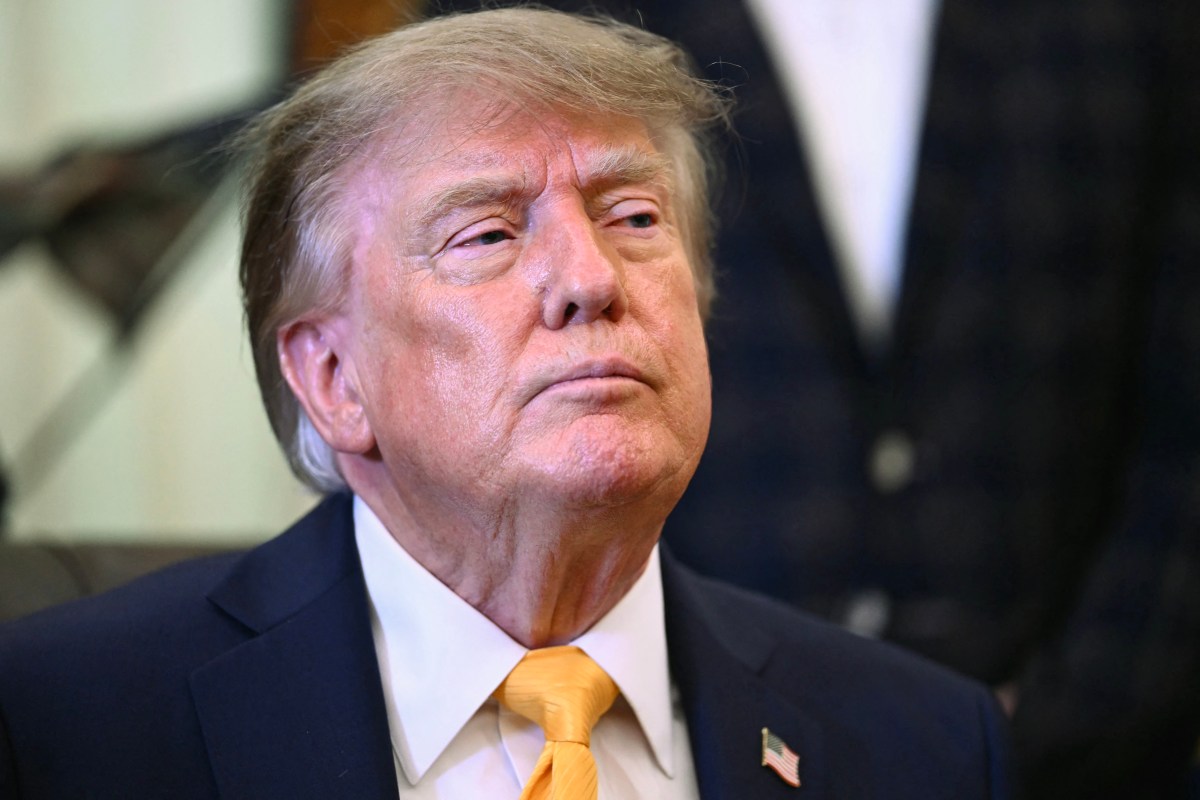
President Donald Trump is doubling down on his promise to send Americans $5,000 checks if Republicans retain control of Congress, but one of the newest ideas for paying for them would depend on tens of thousands of wealthy foreigners handing the federal government $5 million apiece.
Commerce Secretary Howard Lutnick said Thursday that the proposed payments would not come from taxpayers or add to the deficit, pointing in part to the administration's yet-to-launch Trump Platinum Card program. Lutnick told NBC News that more than 100,000 people were already on a waiting list for the program.
"We have a waitlist of more than 100,000 people who want to come," Lutnick said. "That's $500 billion."
Trump reiterated his commitment to the checks in a Truth Social post Friday night after initially announcing the "Trump Dividend" at the Republican midterm convention in Dallas, and criticized Democrats who have said the promise amounts to a bribe for votes in the upcoming November election.
“The doomers and naysayers have consistently doubted President Trump: when he pledged to create the historic Trump Accounts, lowered prescription prices with Most Favored Nations, secured the border with no crossings, cleaned up our streets, ended taxes on tips, grew real wages, renegotiated broken trade deals, and reshored key manufacturing back to the United States," White House spokesperson Davis Ingle told Newsweek when asked about how the checks would be funded.
"President Trump has consistently proven his doubters wrong, drawing a clear contrast with the Democrats’ record of historic inflation, unfettered illegal immigration, skyrocketing crime, and weakness on the world stage. With the continued support of the American people, President Trump will keep delivering real results.”
The president said every adult U.S. citizen would receive $5,000 if Republicans retain both the House and Senate, with the money required to be spent in the United States.
The proposal, if it materializes, will be hugely expensive. The Associated Press calculated that it would cost about $1.23 trillion, based on the number of adult U.S. citizens potentially eligible for the payments. Vice President JD Vance subsequently suggested wealthy Americans could be excluded, although the administration has not announced an income cutoff.
That has left the White House facing a basic question: where would more than $1 trillion come from?
The official Trump Card website describes the Platinum Card as "coming soon." Foreign nationals can currently join a waiting list, but the program itself has not launched.
Once it does, the administration says applicants would pay a $15,000 processing fee and make a $5 million contribution to the government in exchange for the ability to spend up to 270 days per year in the United States without being subject to U.S. tax on their non-U.S. income.
By Lutnick's arithmetic, it means 100,000 people paying $5 million each would produce $500 billion toward the cost of the dividend checks.
But even if every person Lutnick says is on the waiting list ultimately qualified and paid the full amount, that would cover only about 41 percent of the estimated $1.23 trillion cost. Funding the entire estimated cost through Platinum Cards alone would require some 246,000 people to make $5 million contributions.
The government's website says the contribution would be collected when the program launches and an applicant proceeds through the process; a place on the current waiting list therefore does not itself represent $5 million in federal revenue.
The similar Gold Card launched in December 2025, an immigration program offering wealthy foreign nationals an expedited path to U.S. permanent residency in exchange for a $1 million contribution to the federal government, plus a $15,000 processing fee.
Lutnick initially said the government had sold $1.3 billion "worth" of Gold Cards within days. But at a House hearing in April, he said that just one person had actually been approved, while "hundreds" remained in the queue. He has also previously predicted that the Gold Card program could eventually raise $1 trillion and help toward balancing the federal budget.
Other Trump officials have given various methods for how the checks could be financed. The vice president has suggested tariff revenue could be used to pay for the promise. Trump himself has repeatedly connected the dividend to tariffs, telling Fox News that the government was bringing in large sums from his trade policies.
But actual tariff collections remain far below the estimated cost of the checks.
The Congressional Budget Office estimated that the federal government had collected about $167 billion in tariff revenue during the current fiscal year at the time Trump announced the proposal. A $1.23 trillion dividend would therefore be several times larger than an entire year's current tariff collections.
FactCheck.org calculated that it would take more than six years of tariff revenue at the recent pace to equal the approximate cost of one round of $5,000 payments.
Lutnick has also pointed to the government's investment in Intel, telling NBC News that the administration had made tens of billions of dollars as the company's share price rose. The underlying agreement gave the Commerce Department up to 433.3 million Intel shares, acquired as part of an $8.9 billion government investment, as well as conditional warrants for additional shares.
National Economic Council Director Kevin Hassett has meanwhile said the dividend could be advanced through a congressional budget reconciliation package.
Congress would ultimately need to authorize the spending. Marc Goldwein, senior policy director at the Committee for a Responsible Federal Budget, told the Associated Press that the federal government is already running roughly $2 trillion annual deficits rather than generating the kind of surplus normally associated with a dividend.
Trump has floated similar payment plans before, when in 2025 he considered returning part of savings claimed by the Department of Government Efficiency (DOGE) to Americans through a proposed "DOGE dividend," and later promised a $2,000 tariff dividend for lower- and middle-income Americans. Neither payment was ultimately implemented.
For the new $5,000 checks, the Platinum Card could become one source of federal revenue if it attracts paying applicants on anything close to the scale Lutnick predicts, but it would still fall considerably short of the entire funding pot needed.
Trump’s Truth Social post came after several Democrats attacked the proposal. Senate Minority Leader Chuck Schumer accused Trump of “trying to bribe the American people for their votes,” while Representative Robert Garcia, the top Democrat on the House Oversight Committee, called it an “empty promise”, pointing to previous Trump proposals for tariff and DOGE dividends that never resulted in checks.
California Governor Gavin Newsom accused Trump of trying to “buy your vote with $5,000,” while Representative Dan Goldman of New York called the pledge “corrupt and blatantly illegal,” arguing that Congress, rather than the president alone, would have to authorize such spending.
Contact Newsweek editor on this story: Edward Pearcey.

