Trump’s Forest Service has been quietly releasing secret case files - on Bigfoot - The Independent
Want to bookmark your favourite articles and stories to read or reference later? Start your Independent Membership today.
The U.S. Forest Service has been quietly releasing a new slew of secret government documents - all related to Bigfoot.
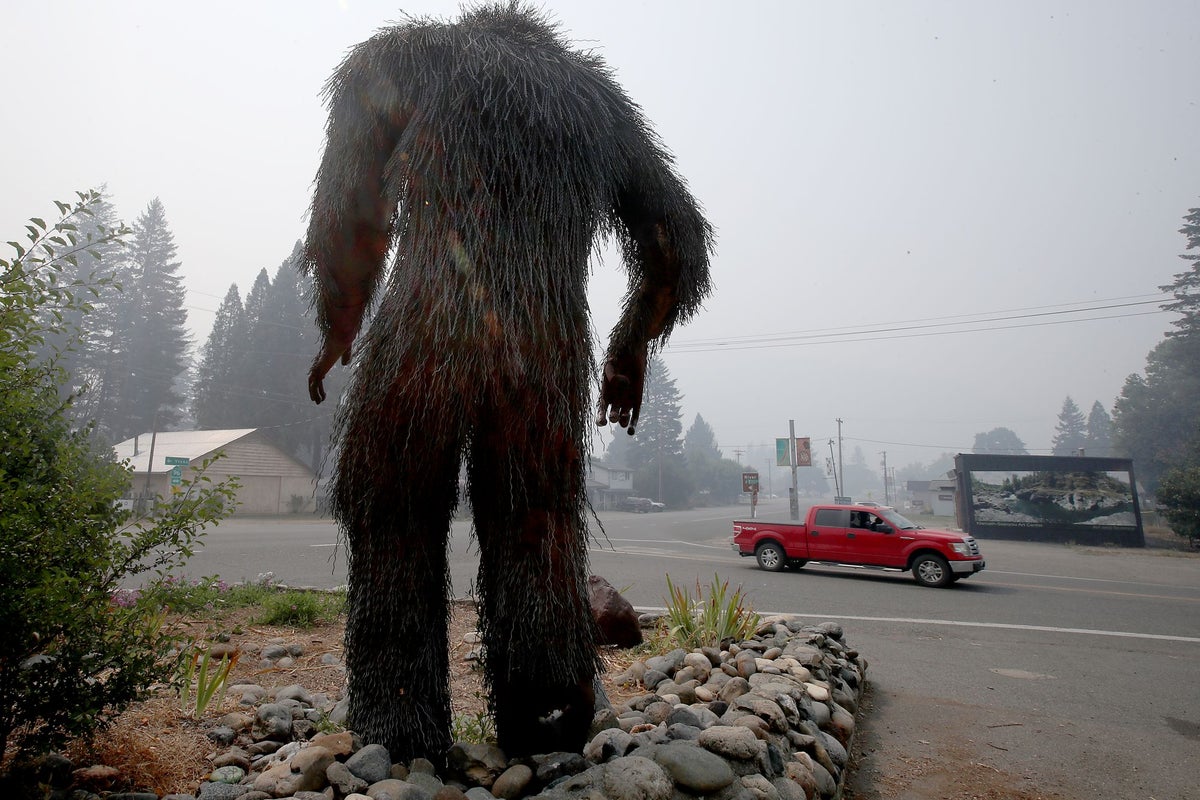
On October 15, the U.S. Department of Agriculture agency dropped three “Bigfoot/Sasquatch Records” from its archive online, sparking excitement among enthusiasts of the mythical creature,The Washington Post first reported. Bigfoot has long been a myth walking through US forest but the only proof ever offered are blurry photos and anecdotal stories.
The new records include details of alleged encounters with the tall and hairy bipedal in Montana and Washington state dating to the 1940s, while agency staff at Stanislaus National Forest near California’s Yosemite hosted a forum on October 8 titled “Bigfoot in Your Backyard.”
Bigfoot enthusiasts questioned why the mysterious files were being released but are hopeful nonetheless that the Trump administration could share more documents over time, as it has for UFOs or “Unidentified Anomalous Phenomena.”
One of the documents was a historical account of Petty Creek, Montana, by Leo T. Kinney written in 1980. The six-page document included an ominous account of a group of hunters in the 1940s who did not see a creature, but observed “tracks, a strong odor and a grunting sound.”
“In later conversations we found out that we all had a very uneasy feeling and could feel chills running up and down our backs,” the account read.
Another document released by the agency was a 1982 investigation titled “Sighting of ‘Bigfoot’ Tracks in the Mill Creek Watershed” in the Washington section of the Umatilla National Forest. The report stemmed from an alleged sighting by part-time forest patrolman Paul Freeman, who later claimed he found tracks.
But the investigator was not convinced, according to the records. “Based on several things, it is my opinion that the tracks observed at Site A and Site B along Low Creek were made by something other than a 300-pound plus two -ooted being,” the official concluded in the report.
The third document was a newspaper article from 2003 about possible Bigfoot tracks sighted in Sanders County, Montana.
Jeremiah Byron of the Bigfoot Society questioned the timing of the document dump by the government in an interview with the Post.
“Why is all this cryptid and Bigfoot-related stuff happening now?” Byron asked. “I’m hoping what this means is that they could be ramping up government entities to start releasing information about Bigfoot.”
The Forest Service did not reveal the reason behind the release but said several factors are taken into account before documents are released, including the attention they will likely receive from the public, the media and academic researchers.
“Stories of Bigfoot, Sasquatch, and other legendary creatures have long been part of the cultural fabric of the Sierra and continue to add to the rich tradition of folklore that surrounds our public lands,” an agency spokesman said.
At the October 8 meeting in California’s Stanislaus forest, agency staffers made a pitch for Bigfoot tourism, the Post reports.
“If you’re interested in seeing Bigfoot, or having an adventure or maybe catch a little glimpse or seeing some footprints, come to the Stanislaus National Forest,” visitor information service staffer Kathy Marquez said, but added that the agency “cannot confirm or deny” Bigfoot’s existence.
While the legend of Bigfoot tends to be associated with the Pacific Northwest, a group of Sasquatch hunters in New Jersey last month said they believe there is more to discover on the other side of the country.
The Bigfoot Field Researchers Organization listed 79 reported Bigfoot sightings in New Jersey on its website, including 18 in Sussex County, 16 in Burlington County and 11 in Ocean County.