Trump’s midterm defeat hasn’t moved Canada-U.S. trade talks, sources say - Toronto Star
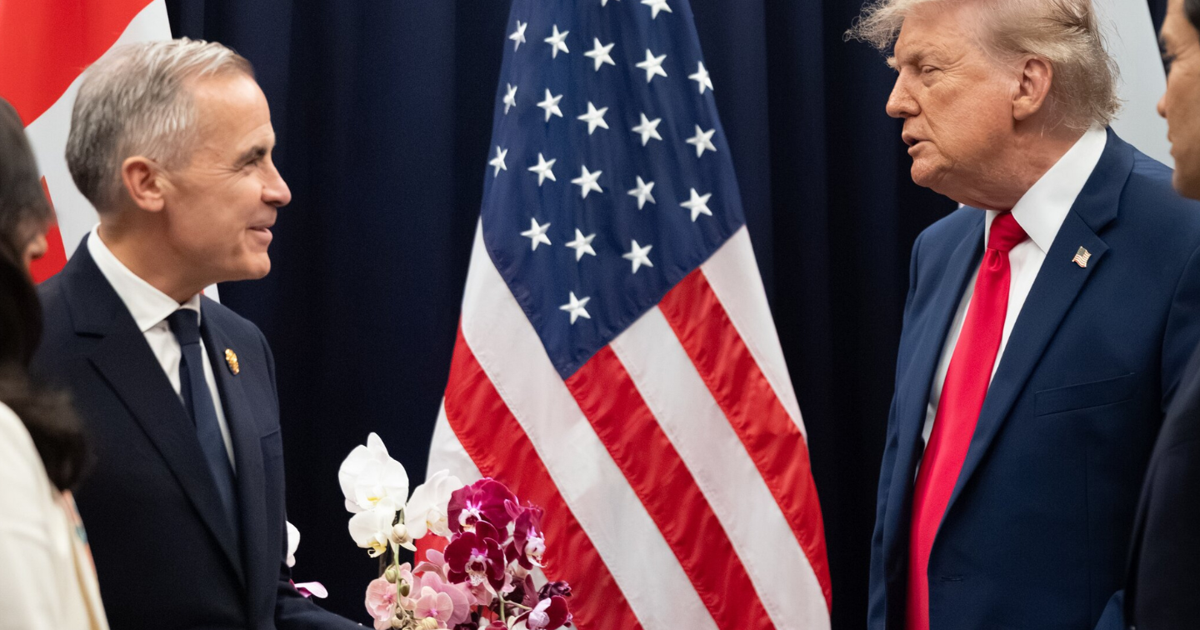
Sources say Canada-U.S. trade talks have not meaningfully changed since the U.S. midterm vote.
Prime Minister Mark Carney meets with President Donald J Trump of the United States of America, on the margins of the 33rd APEC Leaders’ Summit, in Shenzen, People’s Republic of China. 18 November 2026.
OTTAWA — U.S. President Donald Trump‘s walloping in his country’s midterm elections has not gotten Canada any closer toward a trade deal, according to two sources who said Prime Minister Mark Carney’s government appears to be striving for an agreement on U.S. tariff relief before January.
The information stems from an update that Canadian officials gave Thursday to the government’s advisory council on Canada-U.S. economic relations — their first briefing about the ongoing trade talks since the Nov. 3 vote in the U.S.
Speaking to the Star on condition they aren’t named, two people with knowledge of the call said the Canadian side appears to be pushing for an agreement to lower U.S. tariffs that have hammered sectors like steel, auto and aluminum manufacturing by January.
That’s when Trump has threatened to jack up tariffs on Canadian goods — spiking import taxes on autos from 25 per cent to 50 per cent. The new Congress, controlled by Democrats after their landslide victories over Trump’s Republicans this month, will also be installed in January, although Trump will retain veto power over what comes out of Congress, setting the stage for potential battles.
Both sources said that the status of Canada-U.S. talks does not appear to have meaningfully changed since the midterm vote, when Trump’s trade war with Canada was seen as a key issue in many races.
A third source familiar with Thursday’s briefing said the Canadian government seems ready to “move quickly” if the White House signals openness to a deal, but that it appears “no real progress” has been made in recent weeks outside of discussions with each other’s counterparts. (Sources were granted anonymity to speak freely about the briefing.)
Dominic LeBlanc speaks with reporters before a meeting of the Liberal caucus in Ottawa on Nov. 4, 2026.
Appearing on CBC Thursday evening, Intergovernmental Affairs Minister Dominic LeBlanc said there has been “some progress” but that the government is striving for a “comprehensive arrangement that brings tariff relief across the board.”
LeBlanc added that “it would be a mistake” to view the U.S. midterm results as a “magic bullet” that will solve the tariff dispute.
Flavio Volpe, who sits on the advisory council as head of the Automotive Parts Manufacturers’ Association, told the Star, “The threat of new tariffs on Jan. 1 is a natural milestone. It acts like a working date, but I don’t think anyone considers it a deadline.”
Flavio Volpe told the Star that the Trump’s threat of new tariffs on Jan. 1 doesn’t necessarily create a deadline for Canadian negotiators.
With talks picking up in frequency in recent weeks, Carney and other government officials have said they are looking for an agreement that reduces existing U.S. tariffs as much as possible on steel, aluminum, autos, lumber and more.
The ultimate goal beyond that is to enter into talks on the existing trilateral trade agreement between Canada, the U.S. and Mexico. The Trump administration decided not to renew that agreement as part of a scheduled review earlier this year.
Thursday’s update comes as Carney returns from China, where he struck a deal to further deepen trade ties in areas like imports of certain Chinese steel and aluminum products into Canada, and pork and seafood exports to China. Carney also met briefly with Trump in China, where the two leaders spoke about efforts to clinch a “mutually beneficial trade agreement” between the two countries.
The Opposition Conservatives have slammed the idea of forging closer ties to China, saying what Canadian industry needs is a deal with the U.S., especially the auto sector.
At the same time, Carney has stressed repeatedly that his government is striving to find new trading partners so that Canada is no longer so commercially dependent on the U.S. — a long-standing feature of integration in North America that his government views as a liability for Canada, in a new era of unpredictable U.S. leadership.
The two sides were on the cusp of a deal in August, before negotiations collapsed, with officials from each country accusing the other of scuppering the agreement through last-minute demands.
Mark Carney said he plans to meet with Trump later Wednesday, after the U.S. president arrives