Trump’s Press Pool Purge Expands as Politico Faces New Air Force One Ban - Newsweek
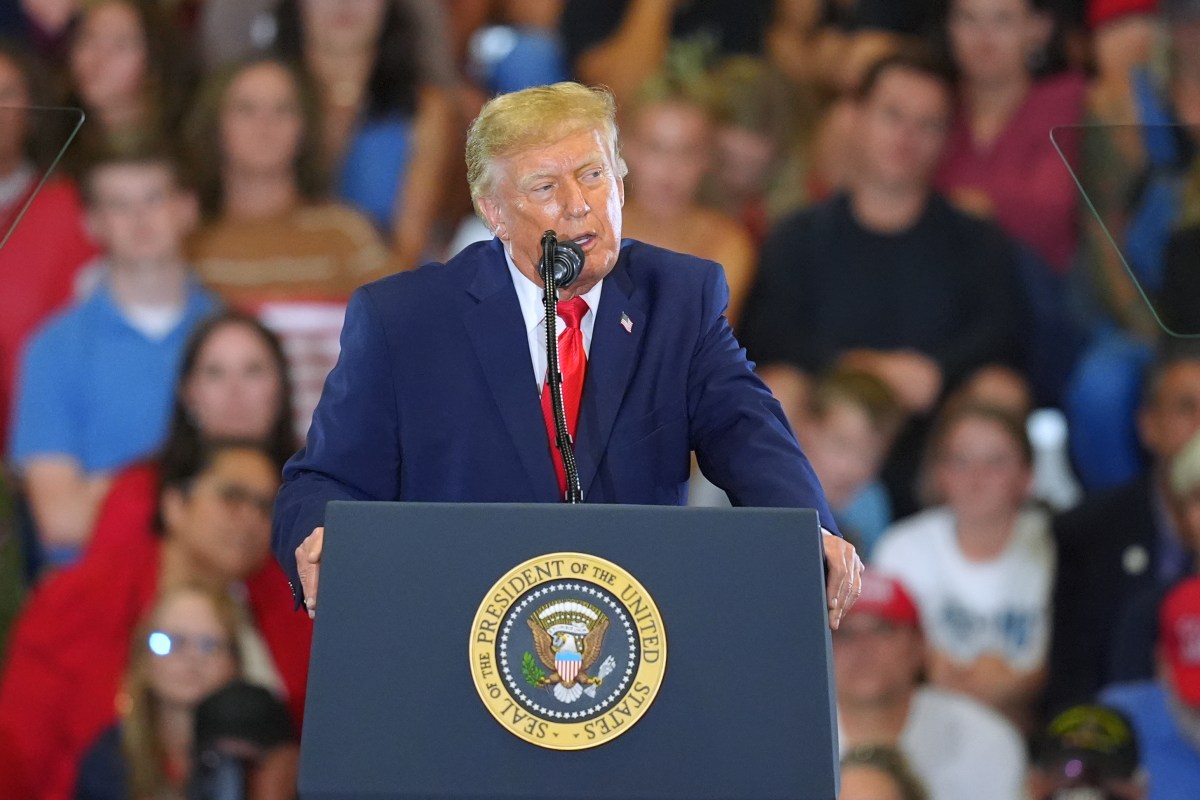
The legal and political standoff between President Donald Trump’s administration and the White House press corps escalated Monday after Politico was blocked from traveling aboard Air Force One.
The move prevented the news organization from carrying out its scheduled duties as the designated print representative in the presidential travel pool, adding a new front to an increasingly contentious dispute over press access.
The administration’s decision comes as Trump’s White House faces legal challenges from several major news organizations over restrictions on access to presidential events and facilities, with press freedom and First Amendment protections at the center of the dispute.
"We can confirm that Politico was excluded from today’s out-of-town travel pool," a Politico spokesperson told Newsweek. "We do not have additional comment at this time, but would refer you back to our legal filings, previous statements and those from our attorney, Ted Boutrous."
The White House declined to comment when reached by Newsweek.
Trump announced on September 18 that Politico, CNN and MS NOW would be barred from the White House, accusing the outlets of publishing what he called “FAKE NEWS” and “FICTION and LIES.”
“I am proud to announce that, effective immediately, I am banning Fake News CNN, MSNOW … and Politico … from the White House as a result of their constant ‘reporting’ FAKE NEWS!” Trump wrote on Truth Social.
Trump did not provide evidence for his claims that the outlets had published false information.
The three outlets filed a joint lawsuit on September 21, arguing that the administration had violated their constitutional rights. In a joint statement, they said they were acting to “protect our First Amendment rights” and defend the principle that “the government does not decide what the press reports or publishes.” They also argued that the White House had revoked their journalists’ credentials “because it objected to our reporting.”
The lawsuit has developed into a broader fight over who controls access to the presidential press pool. Because space is limited at some presidential events and during travel, only a small number of reporters can attend in person and traditionally represent the broader White House press corps, sharing information with journalists who cannot be present.
U.S. District Judge Timothy J. Kelly subsequently ordered the administration to restore the outlets’ White House credentials while the lawsuit proceeds. The White House has maintained that restoring physical press credentials does not automatically give the outlets access to every restricted setting, including the Oval Office or Air Force One.
That argument was reinforced in a Justice Department filing on Friday in which the administration asked the court to allow Trump’s ban to stand. The government argued that Trump had determined the outlets published stories that “adversely affect national security” and that restricting their access would remove one avenue through which they could obtain information the administration considered harmful. The filing is part of the administration’s effort to defend the restrictions as the outlets seek a preliminary injunction.
The media organizations strongly dispute that argument. Ted Boutrous, the lead attorney representing CNN, MS NOW and Politico, told Newsweek that his legal team had already established that the ban was a “blatant violation of the First Amendment and due process.”
“Since then, the president has only made it clearer that he announced this ban to punish reporting he doesn’t like and try to force journalists to cover him in ways he prefers,” Boutrous said.
He said that the White House’s Friday filing showed that the president’s “ban on the free press” was “indefensible.”
“The law is absolutely clear. The harm to our clients, the First Amendment, and the public as a whole is profound,” Boutrous said. “It is critical that the White House is enjoined to keep this unconstitutional ban on the free press out of commission.”
The dispute has continued even after Kelly’s order. CNN was excluded from several pool assignments in late September and early October, including presidential travel, prompting pushback from other members of the press corps. On Monday, the administration prevented Politico from boarding Air Force One for Trump’s trip to Nebraska, despite the outlet’s scheduled position as the print representative in the travel pool.
The administration has argued that the judge’s order restored general White House access but did not require officials to place the outlets in every limited-capacity event or presidential travel pool. White House Communications Director Steven Cheung said last week: “The judge basically ordered them to renew their access back to the White House, but that’s different than allowing the pool into the events in the Oval Office or on Air Force One.”
The case is scheduled for another significant hearing Thursday, when Kelly is expected to consider the outlets’ request for a preliminary injunction that would provide broader protection for their access while the lawsuit proceeds.
Following Politico's exclusion from Monday's flight, the White House offered the vacant travel-pool position to other news organizations participating in the rotation.
Several publications declined the opportunity in solidarity with Politico and the other news organizations facing restrictions, sources familiar with the situation told CNN.
The White House's official Sunday night guidance email also notably omitted the names of news organizations traveling with Trump.
The unusual development underscored the reluctance among some members of the press corps to fill the seat left vacant after Politico was prevented from participating.
The incident is expected to be presented as additional evidence at a hearing Thursday, when Kelly is scheduled to consider the media organizations' request for a preliminary injunction.
The hearing could provide a significant test of the administration's interpretation of the existing court order and the broader question of how much discretion the White House has to determine which news organizations receive access to presidential travel and events.
The dispute comes amid a broader confrontation between the Trump administration and major news organizations over the role of the press in covering the presidency, with both sides offering sharply different interpretations of the constitutional and legal limits on restricting access.
The Associated Press has faced a separate battle with the Trump administration over access to presidential events. The dispute began in February 2025 after the AP continued using the term "Gulf of Mexico" rather than Trump's preferred "Gulf of America."
The administration subsequently restricted AP journalists from certain limited-access events, including the Oval Office and Air Force One. The AP sued, arguing that the restrictions amounted to retaliation for its editorial decisions and violated the First Amendment. A federal judge later ruled that the AP was likely to prevail on its First Amendment claim and ordered the White House to restore its access while the case continued.
The administration appealed, arguing that the White House has broad authority to determine which journalists participate in events where space is limited. An appeals court allowed the restrictions to remain in place while the litigation continued. The AP case has since become an important backdrop to the newer dispute involving CNN, MS NOW and Politico, with both sides offering competing interpretations of how much control the White House has over limited press access and whether that authority can be used to exclude news organizations because of their coverage.
Reuters and the Huffington Post have not faced the same blanket White House ban as the AP or the September restrictions imposed on CNN, MS NOW and Politico.
However, reporters for Reuters and the HuffPost were among those barred from covering Trump's first Cabinet meeting in February 2025. Reuters had been a longtime participant in the presidential press pool, while HuffPost had been scheduled to provide the print pool reporter that day before being removed and replaced by another outlet.
Reuters and the AP also objected to the administration's decision to take control of pool assignments from the White House Correspondents' Association, arguing that limiting the number of wire services with access could reduce the distribution of independent, real-time information about the presidency.
More significantly, in April 2025, the White House eliminated the permanent wire-service position in the press pool. The change affected Reuters, AP and Bloomberg, which had traditionally occupied dedicated wire-service positions. Under the new system, wire services could still be selected for the pool but no longer had a guaranteed place. Reuters said it remained committed to covering the White House accurately and independently.
Contact Newsweek editors on this story: Gabe Whisnant and Dave Siminoff.