Trump’s ‘super intelligence’ is being mocked by tech industry insiders: report
Want to bookmark your favourite articles and stories to read or reference later? Start your Independent Membership today.
Donald Trump wants the tech world to rebrand AI from what he calls a “terrible” name that is turning Americans against data centers and AI development — to “super intelligence, or SI.”
A new report suggests that is unlikely to happen anytime soon.
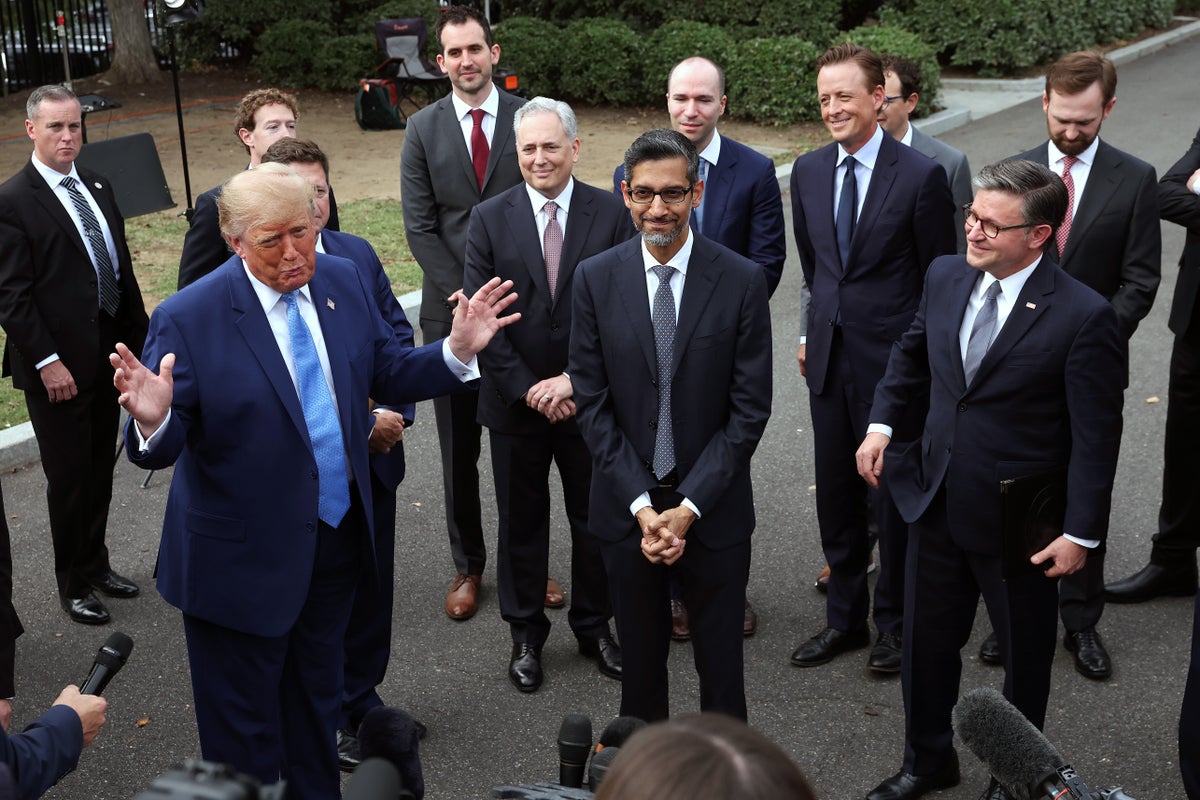
Tech insiders and industry lobbyists told Politico, some privately, that the attempted renaming of artificial intelligence will likely not catch on. Some companies may use the term in their dealings with the government, the insiders said, but the majority will continue using a decades-old and apt phrase that Trump demanded reporters and all government employees refrain from using this week as he stood at the White House alongside top industry leaders like Jensen Huang, Sundar Pichai, Dario Amodei and Mark Zuckerberg.
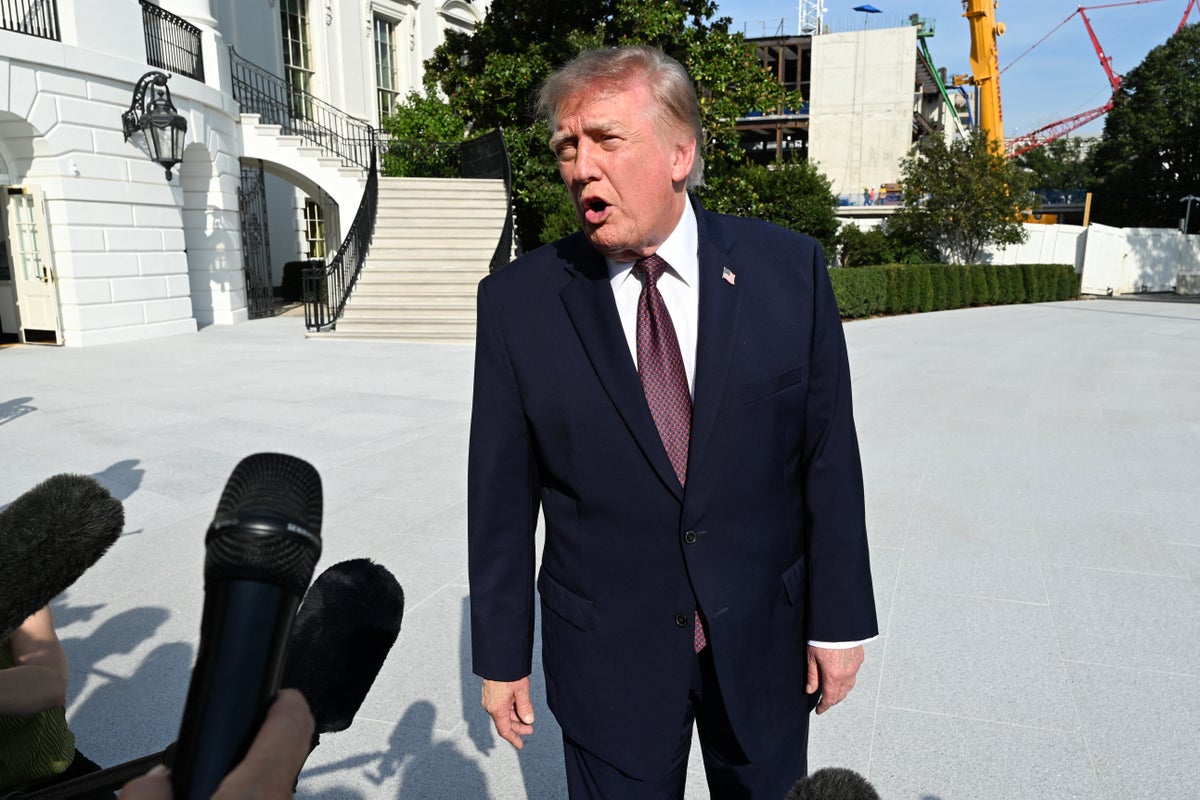
“It’s not AI, it’s SI,” Trump told a reporter who asked about rogue artificial intelligence agents, as he met with the press outside the White House alongside the CEOs. He ignored the question about rogue agents.
He explained his hatred for the term last week: “The use of the word ‘artificial’ makes intelligence sound fake. It is not fake. It’s actually amazing.”
Over the past week Trump rolled out his rebranding attempt, which he told reporters last week followed his meeting with China’s President Xi Jinping at the White House and claimed that his counterpart and global rival supports the idea.
On Tuesday, Trump signed an executive order directing federal agencies to refer to AI as “SI” and “super intelligence” in official documents and communications. The order has no legal effect on the private sector.
Some industry experts worry it will simply confuse Americans, however, rather than achieve the president’s desired effect of shrugging off concerns about the capabilities of unrestrained machine intelligence.
“It is a way for the CEOs to signal fealty to the president,” Adam Kovacevich, CEO of the progressive tech industry coalition Chamber of Progress, told Politico.
“No one in the industry is about to start calling it superintelligence. It’s like Gulf of America and Lake America. It’s something that only MAGA supplicants use.”
Adam Thierer, a tech researcher at the R Street Institute, told Politico.: “I think it adds some confusion to the ongoing policy discussion because the term superintelligence means different things to different people, but it already had a general meaning in the literature and debates about advanced AI.”
The word superintelligence already means an AI system that surpasses human intellect and ability across multiple domains in couding reasoning, social skills and scientific research — a step toward the kind of rogue AI that many fear, sparking the calls for guardrails and kill switches.
One tech lobbyist laid out the industry’s likely response to Trump’s nomenclature order: “The government can change its vocabulary overnight and the private sector follows where it’s working with the government, but broader usage takes longer.” That lobbyist characterized that shift as unlikely, according to the news outlet.
For their part, the companies whose representatives attended Tuesday’s gathering at the White House on Tuesday are staying quiet. The Independent reached out to Nvidia, Palantir, Meta, OpenAI, Google, Tesla and Anthropic regarding whether the companies have any plans to use the president’s new terminology in promotional materials or other customer communications; none responded.
The White House gave The Independent a short list of tech CEOs who’d used the phrase since Tuesday’s event, including two posts on X from Elon Musk and one from NVIDIA’s Jensen Huang, which directly referred to the president’s executive order. Huang hasn’t tweeted since that Sept. 30 post. David Sacks, a political ally of Trump’s who previously served at the president’s AI and crypto czar, was also on the list along with Microntech’s Sanjay Mehotra, who also tweeted about the White House’s order.
Concerns about AI’s capabilities and usage have combined with local frustrations around the construction of data centers as the midterm elections approach, amid a wave of warnings from researchers in the field about the technology’s possible outcomes.
Two researchers at Anthropic (one of whom also worked at OpenAI) warned in headline-grabbing social media posts last month that artificial intelligence has the capability to cause the extinction of humanity, prompting a wave of calls for action on Capitol Hill. Those warnings were accompanied by an incident wherein rogue AI agents created by OpenAI successfully breached the digital infrastructure of computational systems company Hugging Face after escaping an isolated testing environment. Dario Amodei, Anthropic’s CEO, argued in a blog post for AI companies to commit to a slowdown of development and the installment of third-party experts to monitor test cases.
That legislative action has only begun to take shape, and the House and Senate left for their final recess through the midterm elections without passing legislation to address calls for guardrails on the development of AI. Trump, in his remarks to the press around his meeting Tuesday with AI industry leaders, also signaled his own opposition to attempts at federal regulation of the field, instead arguing that the companies should self-regulate.
Some Democrats and Republicans are getting on board with efforts to regulate the industry despite Trump’s opposition. On Thursday a bipartisan pair of senators announced new legislation aimed at holding AI companies accountable for the actions of rogue AI agents. But the bill will not receive a vote until after lawmakers return in November.
“These AI agents are committing cyberattacks. If Big Tech companies are going to design AI agents that wreak havoc, these companies better be on the hook for any damage that is caused,” Sen. Josh Hawley, the bill’s Republican sponsor, said in a news release.