
Trust in IEC declines to 81% despite positive voter experiences, HSRC survey finds - IOL
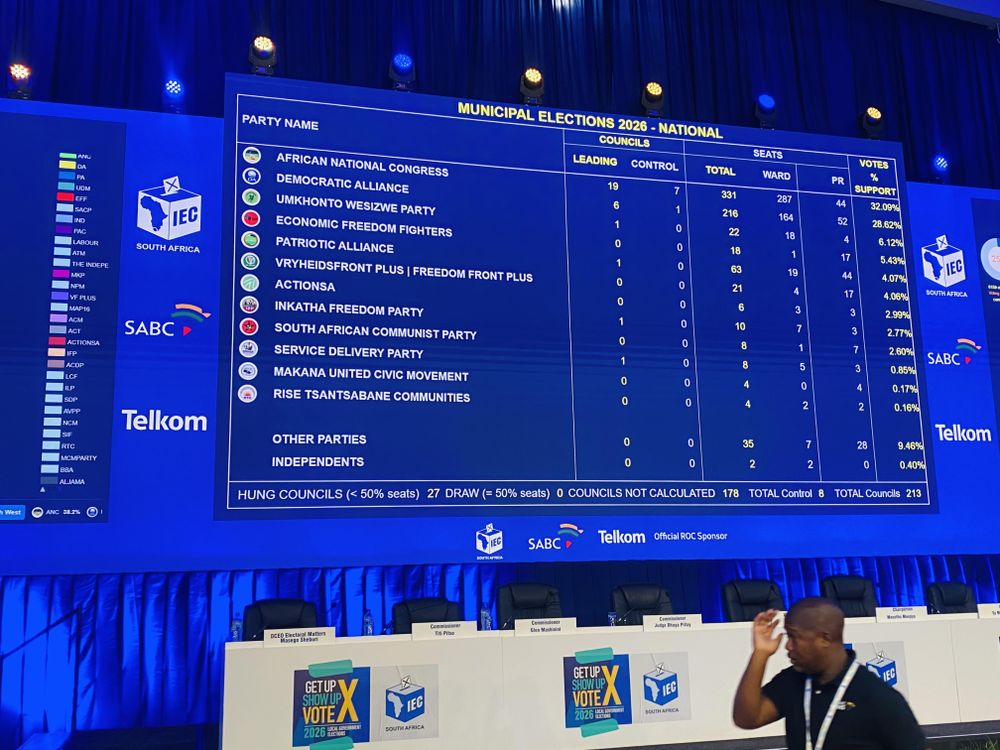
The IEC continues to enjoy the trust of most voters, but confidence in the electoral body has steadily declined over the past decade, falling from 91% in 2016 to 81% in 2026, according to preliminary findings from an HSRC survey.
Trust in the Electoral Commission of South Africa (IEC) has declined to 81% among voters who participated in the 2026 local government elections, down from 91% in 2016, according to preliminary findings from a Human Sciences Research Council (HSRC) survey.
The findings show a gradual decline in confidence in the election management body over successive elections, with trust falling from 91% in the 2016 local government elections to 89% in 2021 and 85% in the 2024 national and provincial elections.
Despite this decline, most voters surveyed expressed satisfaction with the administration of the 2026 elections, with large majorities describing the process as free and fair and praising the service provided by IEC officials.
The findings were presented by HSRC research director in the Developmental, Capable and Ethical State research division, Dr Benjamin Roberts, at the National Results Operations Centre (NROC) in Midrand on Friday.
The research formed part of the HSRC's 2026 Election Satisfaction Survey (ESS), which assessed voter satisfaction and perceptions of electoral integrity during South Africa's seventh local government elections.
Roberts said the survey findings must be understood against a broader decline in public confidence in democratic institutions and satisfaction with the country's democracy.
He said the HSRC had observed increasingly critical views among South Africans about various aspects of democratic life, including a decline in what researchers describe as the demand for democracy.
“The sense that democracy is the preferred or even the only game in town, relative to alternative non-democratic alternatives, relative to a sense of fatalism, you know, that it just doesn't matter anymore, has radically changed in South Africa,” Roberts said.
He added that satisfaction with the way democracy functions had also declined, particularly since the 2010s.
“We've also seen a general decline in satisfaction with democracy, particularly since the 2010s, and it's a very sharp decline in the public's satisfaction with the way democracy is functioning,” he said.
Roberts said trust in core political institutions had also experienced a significant decline over the same period.
“Trust in institutions, the elements we refer to with our results, we're seeing no sort of core political institution has been immune to it. Massive haemorrhaging of trust over the 2010 period and beyond,” he said.
The 2026 ESS was based on interviews with 13,198 voters across the country's nine provinces.
According to the preliminary findings, 90% of respondents regarded the elections as free, while 91% considered them fair.
Approximately 95% said they were satisfied with the quality of service provided by IEC officials, while 96% found voting procedures easy to understand.
The survey also found that 91% of voters waited no longer than 30 minutes to cast their ballots, an improvement compared with the 2024 national and provincial elections.
On ballot secrecy, 95% of respondents said they were satisfied that their votes had remained secret, while 83% said they were completely or very confident that their votes would be accurately counted.
Roberts said these findings reflected generally positive experiences of election administration and continued appreciation for the professionalism of electoral officials.
“An overwhelming majority regarded the election procedures as free (90%) and fair (91%), reflecting continued positive perceptions of electoral integrity,” he said.
While most respondents rated IEC officials positively, the survey identified concerns around perceptions of impartiality.
Roberts said 79% of voters described officials as helpful to a great extent, making helpfulness the highest-rated attribute among the six assessed.
However, impartiality received the lowest rating, with 65% saying officials demonstrated it to a great extent. Close to one in 10 respondents said officials were not impartial at all.
He said the findings highlighted the importance of strengthening public perceptions of impartiality, despite generally positive assessments of electoral staff.
The survey also examined whether voters found ballot papers easy to use, particularly given the number of parties and candidates contesting the elections.
Roberts said researchers had anticipated that the increased competition could affect voters' experiences of identifying their preferred parties or candidates.
However, the findings showed that 93% of respondents could easily identify their preferred party or candidate, while 94% were satisfied with the ballot papers overall.
He said these assessments were broadly consistent with findings from the 2021 and 2024 elections, with more than 90% of respondents in those surveys also reporting that they could easily find their preferred party or candidate.
The HSRC also assessed whether voting stations catered adequately for people with particular needs, including vulnerable groups.
Roberts said most respondents viewed the arrangements positively, although assessments were less favourable regarding provisions for visually impaired voters, pregnant women and voters with babies.
He said some respondents were uncertain about the arrangements, partly because they might not have been exposed to the specific provisions available to these groups.
Roberts said the decline in trust should be considered alongside the generally positive experiences reported by voters who participated in the elections.
The survey found that voters who expressed trust in the IEC mainly attributed their confidence to the Commission's professionalism and competence, the fairness and independence of its operations, and confidence in the accuracy of the vote-counting process.
Other reasons included positive experiences of previous elections, the helpfulness of electoral officials, orderly voting procedures, ballot secrecy and the absence of personal experiences that would give respondents reason to question the institution's integrity.
He said the findings also highlighted a distinction between public perceptions of the broader political environment and voters' experiences at polling stations.
“The consistently high ratings of electoral procedures, service quality, ballot secrecy and electoral fairness demonstrate that confidence in the administration of elections remains resilient, even as trust in the Electoral Commission has declined over successive elections,” he said.
Roberts said the findings pointed to the need to sustain public trust, strengthen perceptions of impartiality, improve electoral inclusivity and address information gaps and reported intimidation.
“Continued monitoring of these dimensions through the ESS series will remain essential for informing electoral management, promoting accountability and reinforcing public confidence in South Africa's democratic electoral processes,” he said.

