Tulu's wait ends, DKS delivers what BJP promised to Karnataka's Hindutva heartland
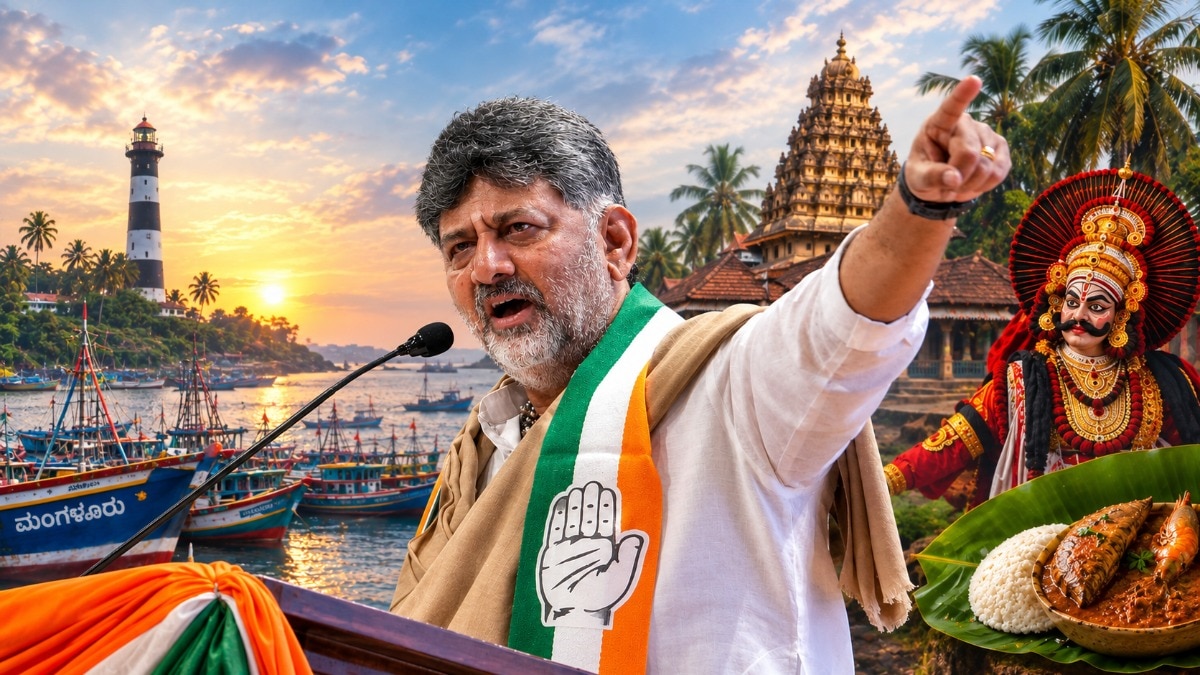
For centuries, Tulu has been spoken across Karnataka's coastal belt, carried through folklore, theatre, rituals and everyday conversation. Yet, despite its deep cultural presence, the language remained outside the state's official language framework. On Friday, that changed when the Karnataka Cabinet, meeting in Mangaluru for the first time ever, decided to accord Tulu the status of the state's second additional official language. Chief Minister DK Shivakumar kept a promise that had been made by the BJP to its loyal voter base nearly two decades ago.
The decision meets one of coastal Karnataka's longest-standing demands and fulfils a promise made by BJP veteran and former CM BS Yediyurappa in 2008. Tulu is spoken in coastal Karnataka, a region where the BJP has maintained a dominant electoral presence for decades. The Dakshina Kannada and Udupi region is referred to be as the RSS's laboratory in South India.
Despite the BJP's repeated electoral dominance in Dakshina Kannada and Udupi and its governments in Karnataka over the years, the demand for Tulu's official recognition remained unresolved. The Congress government led by Shivakumar has finally delivered on that.
The decision was part of a larger package announced at the Cabinet meeting aimed at addressing long-pending demands from the coastal region. Along with recognising Tulu, the government decided to issue a draft notification inviting objections and suggestions on renaming Dakshina Kannada district as Mangaluru district. It also approved a separate tourism policy for the coastal and Malnad regions and announced plans to upgrade Mangaluru's fisheries college into a Fisheries, Marine and Blue Economy University, increasing its intake from 60 to 200 seats.
The Cabinet also cleared projects and proposals worth around Rs 32,611 crore at the meeting. DK Shivakumar, or DKS as he is popularly known as, said the government had received representations from fishermen, industrialists, residents and various organisations on infrastructure and development requirements in the coastal belt.
DKS, however, said that the decision on Tulu and the Tulu-speaking region carried a significance beyond the financial figures.
"I will not question why previous governments did not do it. We have a commitment. We do not play politics on emotions. We do it for life," DKS said during the press conference after the meeting.
India Today Digital had earlier decoded the strategy of DKS of attempting to make inroads into the region's decades-old BJP-Rashtriya Swayamsevak Sangh (RSS) stronghold, with the first-ever Karnataka Cabinet meeting being held in Mangaluru forming a key part of that outreach.A DEMAND FOR RECOGNITION THAT OUTLIVED GOVERNMENTS IN KARNATAKA
The demand for official recognition of Tulu has been around for years, crossing governments and political cycles. Tulu is spoken in Dakshina Kannada and Udupi and by many in neighbouring Maharashtra and Kerala.
For supporters of the demand, the issue has never been merely about administration. It has been tied to recognition of Tulunadu's linguistic and cultural identity.
Former Karnataka CM BS Yediyurappa first took steps and made promises regarding official status and inclusion for the Tulu language in 2008 while he serving as the Chief Minister of Karnataka. He had also assured that the Tulu language would be recommended by the state to be included in the Eighth Schedule of the Constitution.
Campaigns for official recognition gained momentum over the years, with political leaders and cultural organisations repeatedly raising the issue. The demand also became intertwined with the larger campaign for Tulu's inclusion in the Eighth Schedule of the Constitution.
Friday's decision, therefore, marks a shift from a long-standing demand to formal state-level recognition.WHY MANGALURU AND UDUPI MATTER TO DK SHIVAKUMAR
The Cabinet meeting at Praja Soudha in Mangaluru's Padil was the first such meeting held outside Bengaluru. State ministers travelled to the venue in an open-top bus, drawing crowds and attention in the coastal city.
The choice of Mangaluru also came at a time when the Congress government has been seeking to place greater emphasis on regional development beyond Bengaluru.
DKS said representatives from different political parties, including MLAs, MPs and members of the Legislative Council, had brought forward issues concerning their constituencies and the wider region. Consultations were held in Mangaluru and Bengaluru before the Cabinet meeting.
The government presented the exercise as an attempt to address regional development through what DKS called "Team Karnataka".
Moreover, with Congress leader Siddaramaiah having built the larger AHINDA coalition, DKS might be trying to create a voter base that the party has failed to woo till now.THE POLITICAL GEOGRAPHY OF THE COASTAL DISTRICTS OF KARNATAKA
The coastal belt is also one of Karnataka's most distinct political regions.
Dakshina Kannada has been a stronghold of the BJP in Lok Sabha elections for at least three decades. The party won the erstwhile Mangalore Lok Sabha seat in 1991 and has retained the constituency through subsequent elections, including the 2024 election when Captain Brijesh Chowta defeated Congress's Padmaraj R Poojary.
Udupi-Chikkamagaluru has similarly remained a BJP stronghold in recent Lok Sabha elections. The BJP won the seat in 2009, 2014, 2019 and 2024, with the Congress winning a 2012 bypoll in between.
At the Assembly level too, the BJP retained all five seats in Udupi district in the 2023 Karnataka election, while it won six of the eight seats in Dakshina Kannada.
That electoral history makes the Congress government's decision to hold its first Cabinet meeting outside Bengaluru in Mangaluru politically significant as a matter of regional outreach, even though the language demand itself predates the current government.advertisementFROM IDENTITY OF A LANGUAGE TO GOVERNANCE IN THE REGIONThe Tulu decision is likely to be remembered differently from the other announcements made in Mangaluru. A tourism policy can alter investment rules. A new university can expand educational capacity. Infrastructure spending can reshape roads, cities and livelihoods.
Language recognition works differently. It is primarily symbolic, but symbols matter particularly in regions where language is closely connected with cultural identity.
For Tulunadu, Friday's decision was the culmination of a demand that had remained alive through successive governments. For the DKS government, it was also an opportunity to demonstrate that regional demands need not remain confined to election campaigns or political resolutions.
For a region where electoral politics has long been dominated by the BJP, the Congress government's Mangaluru outreach has put regional identity, development and representation back at the centre of the political conversation.
And for Tulu speakers, after decades of demands, campaigns and promises, the language has finally crossed an important line, from being a powerful marker of coastal identity to receiving formal recognition from the Karnataka government.- EndsPublished By: Avinash KateelPublished On: Sep 18, 2026 20:32 IST