Tunisian president eases cybercrime penalties after rights groups' criticism
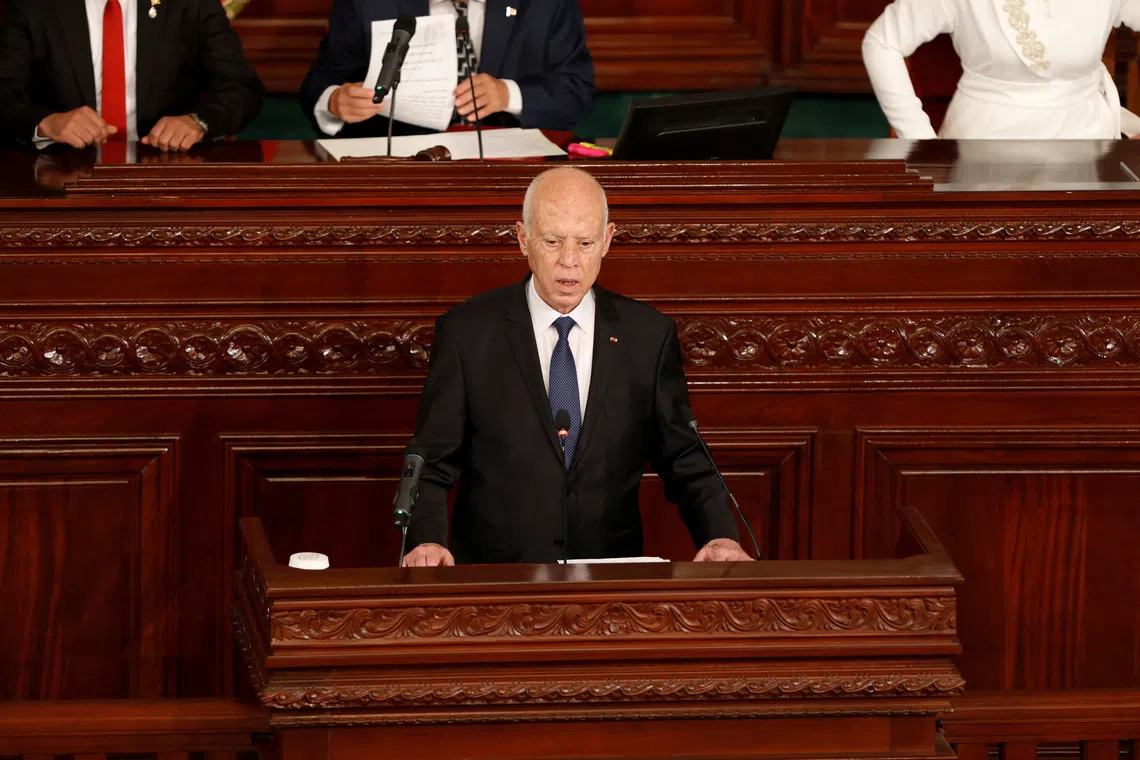
FILE PHOTO: Tunisia's President Kais Saied attends his swearing-in ceremony for his second term at the parliament in Tunis, Tunisia October 21, 2024. REUTERS/Zoubeir Souissi/File Photo
TUNIS, Sept 30 - Tunisian President Kais Saied on Wednesday eased penalties under a cybercrime decree that human rights groups had said was designed to muzzle dissent.
The move marks a rare retreat by Saied since he consolidated control over much of Tunisia's political system in 2021 and came hours after civil society groups, led by the UGTT union, announced plans for a large national march in protest against what they see as curbs on rights and freedoms.
Under the decree amendment, prison terms of up to 10 years in some cases will be replaced by financial penalties ranging from 10,000 to 20,000 Tunisian dinars ($3,370 to $6,740) for first-time offences. Repeat offenders will face six months in prison and a fine of 50,000 dinars.
Under the previous decree, offenders could face up to 10 years in jail when their target was a public official or equivalent, and could be fined up to 100,000 dinars.
The decree, which came into force in 2022, drew widespread criticism from Tunisian and international rights and press freedom organizations, which described it as repressive and used against journalists, activists and political opponents of Saied.
Several journalists and activists have been jailed in cases involving the decree.
The authorities have defended the legislation as necessary for combatting cybercrime, false information and attacks on individuals and public order.
Saied has repeatedly said that freedoms are guaranteed in Tunisia and that he will not become a dictator.
Saied seized additional powers after suspending parliament in July 2021 and dissolved it in 2022, moves that his opponents have described as a coup. REUTERS