Turek’s Surge Against Hinson Has Echoes of Democrats’ Last Iowa Senate Win - Newsweek
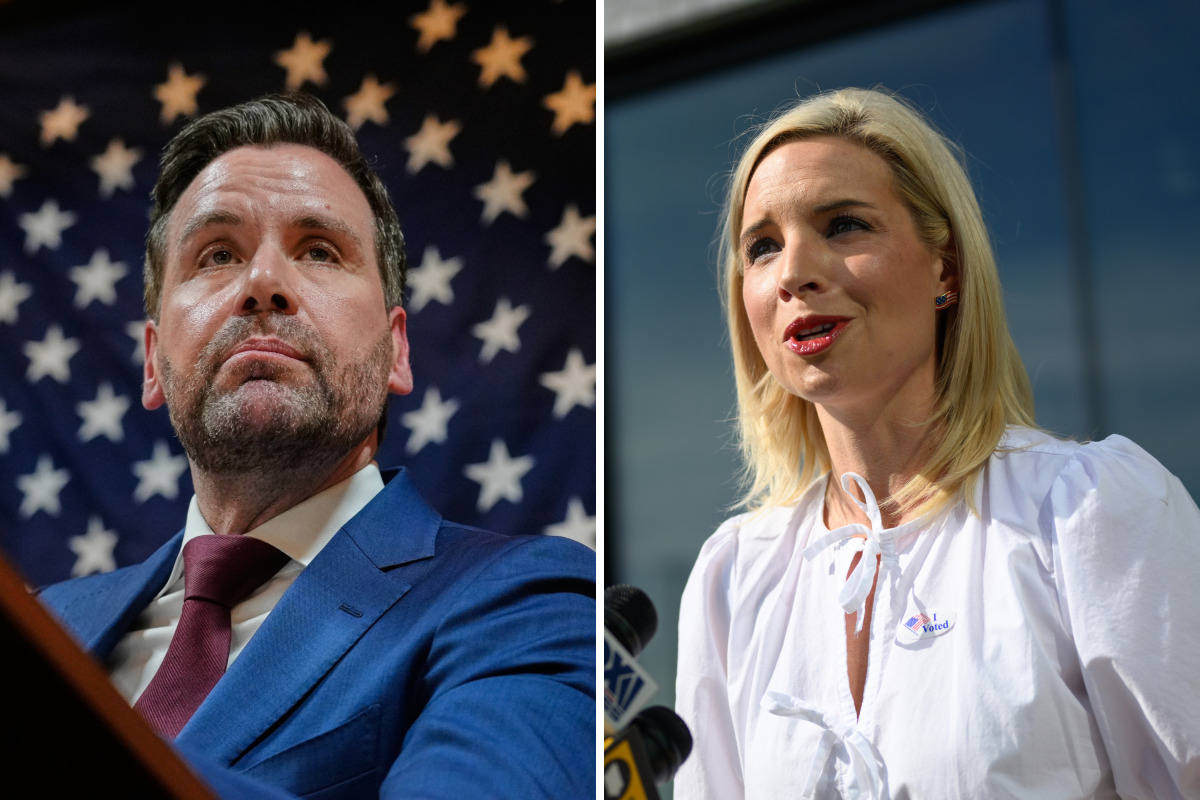
A new Marist poll shows Democrat Josh Turek leading Republican Ashley Hinson in Iowa's Senate election, a competitive race that in some ways parallels the conditions present during Democrats' last victory in a statewide Senate election 18 years ago.
The poll, released on Tuesday, found that 50 percent of registered voters in Iowa back Turek, compared with 42 percent for Hinson. The poll surveyed 1,050 Iowa registered voters and was conducted between September 17 and 20. Registered voters were contacted through phone, text, or online.
The two are competing to succeed retiring Republican Senator Joni Ernst in a contest that could help determine control of the U.S. Senate. Shortly before the poll was released, Hinson publicly broke from President Donald Trump when she called for the end of the Iran war on Monday. Trump endorsed Hinson last September.
The last time Democrats won an Iowa Senate election was 18 years ago, when incumbent Senator Tom Harkin beat his Republican opponent, Christopher Reed. In the elections since, Ernst and Republican Chuck Grassley have had control of Iowa's two Senate seats.
This year's midterm elections could flip control of the House and Senate as Republican candidates work to overcome widespread American concerns tied to the economy, inflation, rising fuel costs, and the Iran war. Although Iowa has voted Republican in the Senate elections since 2008, the state has also had a history of voting for presidential candidates from both political parties, making the current political environment a competitive one. Trump won Iowa the last three election cycles, but before that, President Barack Obama won Iowa twice. On Tuesday, prediction market Polymarket said the Iowa election was now considered a toss-up, as Turek had a 48 percent chance at winning.
Newsweek reached out to Turek and Hinson's campaigns by email for comment on Tuesday.
In some ways, the current political environment parallels that of the 2008 election.
Perhaps the strongest parallel between the two elections is the economic anxiety widespread not only across the state of Iowa, but also across the nation. While there were key differences between both years, such as 2008's concerns being mostly connected to the financial crisis at the time, both cycles have been marked by widespread concerns about rising prices.
Farmers, who are crucial to Iowa's economy, have been hit especially hard by the current economic climate as tariffs, the Iran war, and fuel costs deal repetitive blows.
"Ashley Hinson is losing this race because Iowans are sick and tired of corrupt D.C. politicians who hurt Iowa to benefit themselves and their donors," Iowa Democratic Party spokesperson Drew Myers told Newsweek. "Hinson voted seven times to continue the Iran war, which is sending gas and diesel prices skyrocketing, all while her Big Oil donors rake in record profits. Since getting to Congress, Hinson has increased her net worth by up to 15x, all while raising costs on everything from gas to groceries to healthcare – and that’s exactly why Iowans will reject Hinson in 42 days.”
Hinson appears aware of that political risk. On Monday, she called for a "successful and immediate end" to the Iran war in a post on X.
"Iowans are being squeezed and shouldn’t have to foot the bill at the pump or the checkout line for the war in Iran," she said. "We need to use every option at our disposal to provide some relief from high prices. That includes suspending the gas tax, pausing diesel exports, unleashing E-15 everywhere we can, reinstating the $1/gallon biodiesel tax credit, and creating a diesel relief program to help our farmers and truckers being crushed by the high costs. While doing this, we should also ensure our highway trust fund is replenished, so that Iowans don’t suffer from crumbling roads and bridges while relief comes our way now. These actions to lower costs are needed ASAP, and the war needs to be brought to a successful and immediate end. I am working every day to deliver bipartisan results for Iowans and I will work with anyone who is ready to tackle this challenge immediately."
Turek was quick to respond to Hinson's post. He addressed her directly in a post on X of his own:
"[I]t's easy to send a tweet but when you had the chance to vote to end this war, you chose not to," Turek wrote. "You voted seven times to continue it, including just last week. It's time to actually end the forever wars and put Iowa and Iowans first. Glad you're finally following my lead after waffling on the proposals I put forward last week to address the rising costs of the war in Iran."
The conflict in Iran is also reminiscent of the political climate in 2008, in which the Iraq War was seen as a defining issue in the election. In 2008, Republican presidential candidate John McCain had defended America's decisions regarding the war, whereas Obama had opposed the Iraq invasion.
Despite how Iowa's political environment is similar in some ways to the 2008 race that saw Harkin as victor, there are also some key differences.
For example, the Iraq war was a years-long conflict that involved ground invasion with U.S. troops, whereas the U.S. involvement in the Iran war has been largely limited in the same respect. As far as the 2008 Senate race goes, Harkin was an incumbent with years of experience in holding the seat. In addition, 2008 was not a midterm election, but a general election.
More polls are likely to be released in the days leading up to the midterm election, which will provide more insight into Turek's lead as shown in the Marist poll and whether it can be sustained. Likewise, both campaigns are expected to ramp up spending and efforts to connect with voters as the election, which is set for November 3, looms closer.
The final outcome of the Senate race between Hinson and Turek remains to be seen, but Iowa is shaping up to be one of the most competitive midterm elections this cycle.
Newsweek’s reporters and editors used Martyn, our AI assistant, to produce this story. Learn more about Martyn here. Contact Newsweek editors on this story: Jason Lemon and Gray R. Thomas