Twin Sisters Take DNA Test—Then Discover They Have Different Fathers - Newsweek
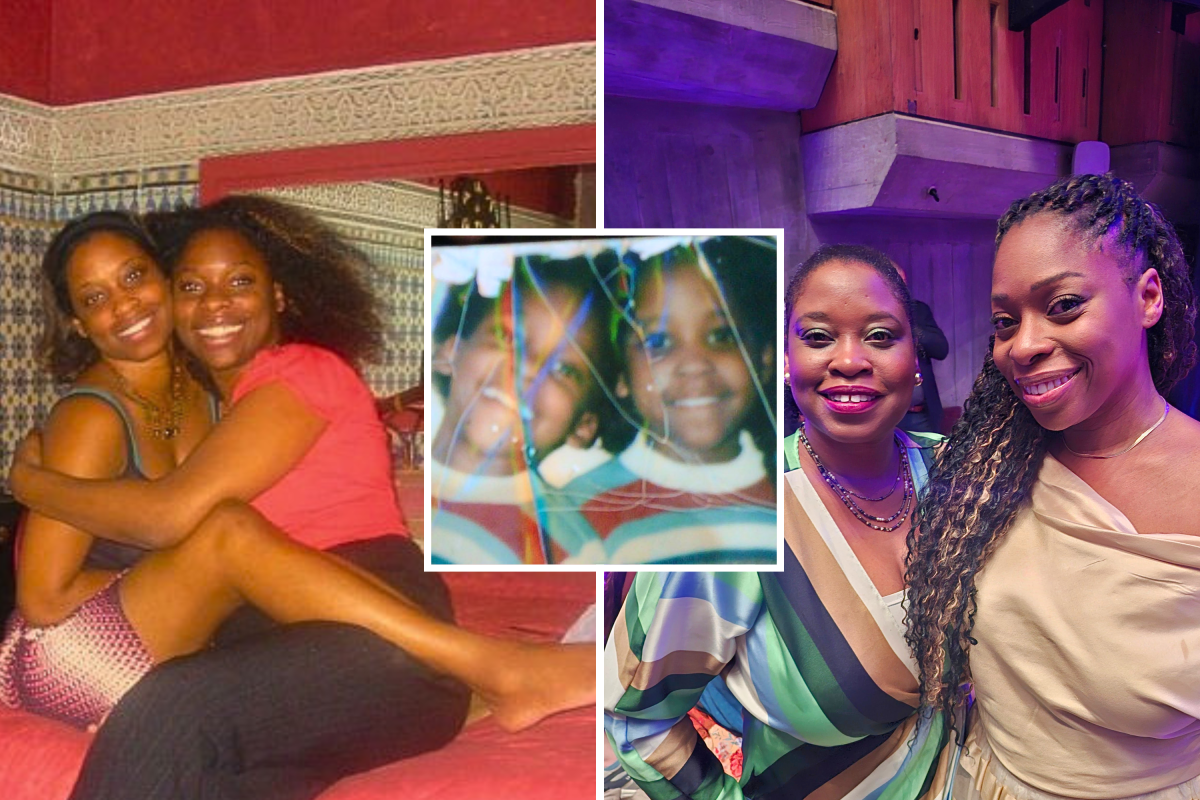
For over four decades, Michelle and Lavinia Osbourne had an infallible sense of who they were.
Twins from Nottingham, England, born in 1976, they thought they were bound by the same mother and father. After all, how else would they have come to be? They faced a turbulent childhood and quickly learned to trust no one but each other. But, in 2022, a DNA test shattered the one certainty they had held onto their entire lives.
What they found was incredibly rare.
The test results showed that despite being twins, Michelle and Lavinia share only enough DNA to be half-sisters because of an extremely rare biological process called heteropaternal superfecundation.
Here, in their own words, Michelle and Lavinia, now 49, tell Newsweek about their journey to discover the truth.
The two were partly raised by a woman they called "Grandma"—the mother of their mother's closest friend. Their mother was young and vulnerable, moving between foster care and children's homes in childhood, later surviving an abusive relationship. Their mother's own family had drifted out of reach since she left Nottingham in her early twenties to study in London. The twins were just a few years old at the time.
"Our closeness was born out of trauma," Lavinia says, reflecting on the instability of their early years. "When you're a child, you don't recognize trauma for what it is—you just recognize who's around."
During that time, Michelle was her foundation.
"It was always me and Michelle. Without her, my whole world became topsy-turvy."
Michelle agrees, though she identifies that closeness differently.
"As children, that was our life—we didn't know any different, so we survived," she says, before sharing how their childhood pain was compounded upon learning the truth about their parents in adulthood.
"Trauma doesn't leave scars that fade, and discovering the truth has been traumatizing in its own right—but it's also the truth, and I think the truth is what we were denied growing up."
The twins had always been told their father was James, the former boyfriend of their mother, but the two reacted to his occasional appearances—which became more frequent after he joined their mother in London—in opposite ways.
"I was insular—I'd observe people, quietly write them off," Michelle says. "Lavinia had hope."
Lavinia tended the relationship "like a garden," in Michelle's words; but Michelle felt it wiser to neglect it.
When James' photograph suddenly resurfaced on her Facebook feed over a decade later, something in Michelle simply knew there was more to the story than they had been told.
"I am certain you are not my father," she remembers thinking. "There was no resemblance, for either of us."
That doubt—and watching their mother's early-onset dementia begin to take hold, pushing answers out of reach—prompted Michelle to take a DNA test.
Lavinia, on the other hand, had in childhood often asked the man they grew up believing was their father: "Are you my dad?" He always said yes.
"But I could never reconcile how a man who claimed us could be so cold, so distant," Lavinia says.
When Michelle first mentioned testing her DNA, it did not sit right with Lavinia.
"It felt disrespectful to mom," she says, but Michelle needed to go ahead.
The results of Michelle's test arrived on the very day their mother died. It was a moment "overwhelming almost beyond words," she says, likening it to "one door closing as another opened."
Soon after, at the funeral, she asked Maisie, "grandma's daughter," about the surname in her results that pointed to the identity of her father.
Maisie did not immediately recognize the surname—but she remembered several young men who had pursued the twins' mother as a teenager, some 40 years earlier, and rattled off three or four names.
"That conversation let me stop guessing and start investigating," Michelle says.
She quickly embarked on what she calls her "detective work," while a grieving Lavinia had not yet taken her own test. Still, Michelle had said she is taking it for both of them.
"I had been disappointed by family my whole life," Lavinia says."It just wasn't a priority."
Despite her reservations, the truth reached her little by little.
Michelle's results revealed that James was not their father, and following a period of struggle in coming to terms with that, Lavinia's curiosity took over and she decided to submit her own sample that August, six months after Michelle.
But when Lavinia's results came through, they would upend everything the twins had left to hold onto. The pair had wanted to know if James was really their father, but the results showed that they only shared enough DNA to be half sisters.
For the twins to share different fathers, their mother would have produced more than one egg during the same cycle, which were successfully fertilized by sperm from the two fathers, with the resulting embryos surviving the pregnancy.
Heteropaternal superfecundation is considered extremely rare, with only a small number of documented cases reported in medical literature.
For Lavinia, the revelation that she and her twin are genetically half-siblings has been particularly painful to reconcile."It's disrupted the reality I had of my twinship with Michelle," she says."Being twins, we have an unbreakable bond, and my heart hurts for my sister," Michelle adds.
Part of her wishes the truth had never surfaced. Seeing the pain it has caused Lavinia, who had always anchored herself to the certainty of their shared genetic identity, is difficult.
Michelle processes the pain by dissociating from it, she says, but "the body keeps score regardless."
She has developed alopecia through the trauma.
"I don't understand my own feelings, I can't articulate them," Michelle says. "I am still quite numb, on autopilot."
"I feel like I'm steering the ship, and it's a really rocky sea, and I'm just stopping the ship from capsizing," she says. "It looks normal inside, but it's a very rocky sea, and I don't have the right tools."
Michelle and Lavinia bicker more than the average siblings now. They feel more distance between each other, and often disagree over what twinship, sisterhood and family are even supposed to mean—fractures from childhood that have only deepened, she believes.
"I feel like I'm the only person with my 50/50 configuration on the planet," she says.
She pauses before naming the hardest truth of all: "I have my twin sister, and she's broken. I've broken her. It's just so overwhelming. I know I can't fix it."
Before Lavinia's results came through, Michelle had been busy narrowing her search to two brothers, either of whom could be their father. The sisters met a woman who could have been a sister or a cousin—neither yet knew which. As she showed them old photographs, Lavinia felt something shift.
"I don't think these people are my family," she recalls thinking. "And if these people are not my family, then who is?"
It was Michelle who eventually found Lavinia's biological father, who welcomed them both into his family. But Lavinia was not ready to look for him before he was found.
"I didn't have hope anymore," she says. "I told myself: if I find out, I find out."
Michelle also, eventually, found her own biological father, though he is in the throes of addiction, and a relationship could not be formed. Today, Lavinia calls the discovery of her biological father, also based in London, "the best thing that has come out of this."
"The truth will set you free," she says. "We understand each other so much better now."
And yet, Lavinia does not feel centered or complete in her new knowledge.
Dr. Navvab Tadjvar, a clinical psychologist based in California who specializes in psychoanalytic therapy, helped contextualize the twins' story and explain why the discovery has caused so much pain.
"When kids grow up in an unstable environment, a sibling can end up being the one steady thing everything else gets organized around. For Michelle and Lavinia, being twins meant more than shared DNA, it was proof that no matter what was falling apart, this one thing about who they were to each other was certain," he told Newsweek. "The DNA discovery can change how they understand that history, forcing them to rewrite the story of their life, and now they're stuck holding onto what was real about their bond while also grieving the version of it they thought they had.
"When they fight about what 'twin' even means, they're really wrestling with a bigger question: what's still solid when the story that used to hold everything together doesn't work the same way anymore? The discovery doesn't erase their relationship, but understanding that intuitively takes longer than understanding it intellectually."
Indeed, Lavinia understands the loneliness Michelle feels completely. It was, she says, the biggest feeling she carried through childhood. Finding out she and Michelle share only enough DNA to be half sisters was confirmation that no one, not even her twin, shared her exact lineage.
"It made me feel really alone, and separated from Michelle," she says. "Like she's got this other half of her that's different from me. And that shouldn't be, because we're twins.
"The results initially made me feel profoundly separate from her because the shared genetic identity I had always taken for granted suddenly changed. I felt lonely at times during my childhood, but the loneliness I experience today is more complicated and is connected to the new distance in our relationship."
She tells her sister as much, directly.
"I feel like a trust has been broken."
That admission is painful, she says, because Michelle was always the person she trusted most. While she still trusts her sister, she no longer feels the same closeness she once did.
There is real distance between them now, both agree—one they are still learning, slowly and imperfectly, to close, as they continue, together, to navigate and process what has been.
Michelle Osbourne is a designer and entrepreneur. Lavinia Osbourne is a blockchain business and Web3 thought leader and consultant. Both women are based in London, England.
Contact Newsweek editors on this story: Kara Dolman and Tony Phillips.

/file/attachments/orphans/ATBBluffers_540909.jpg)