Twin wars, twin escalations: Can the UNGA defuse tensions?
The United Nations General Assembly (UNGA) debate begins today. The formal session will see heads of state, heads of government and other senior representatives from all 193 UN member states take the podium at the UN in New York.
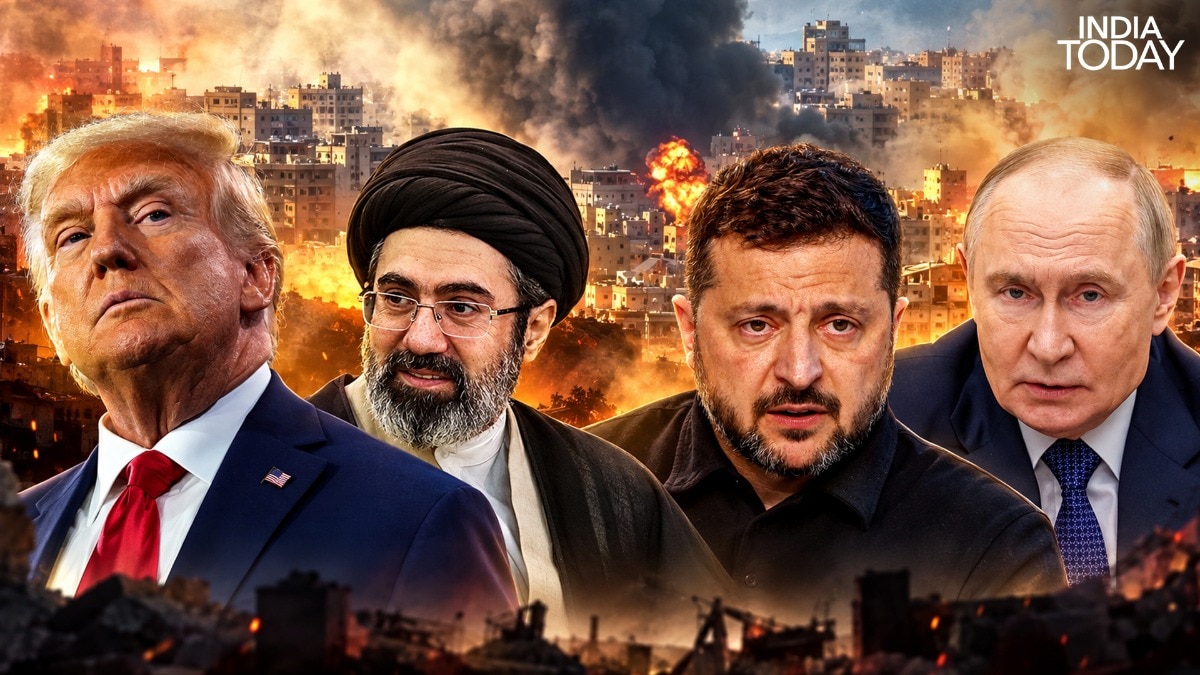
The 81st UNGA session comes at a time when two permanent members of the Security Council are directly involved in warfare. The Russia-Ukraine war, now in its fifth year, has shifted into a new phase of industrial warfare — Moscow and Kyiv are launching thousands of long-range drones targeting cities and civilian infrastructure.advertisement❮❯ Read Full StoryTURMOIL IN MIDDLE EAST ESCALATESThe United States' war with Iran is now in its seventh month. A September 21 New York Times report said President Trump was close to launching airstrikes against the Houthis at the behest of Saudi Arabia, but then recalled his bombers.
Three other members of the Security Council - France, the UK and China - are indirectly involved in these conflicts. Russia has repeatedly accused both France and the UK of being parties to the Ukraine war — not just suppliers — and has threatened strikes on their forces, facilities, and, in at least one case, nuclear retaliation.
Russia has supplied Iran with intelligence and drone components, while receiving Iranian help in its own war in Ukraine. China, a major buyer of Iranian oil, has been accused of providing intelligence and dual-use goods.
The last clear example of four of the current UNSC members being involved in conflict was during the Korean War (1950-53), in which the US, France and the UK fought under the UN command while China (a permanent member in 1971) and the USSR supplied North Korea.
The two global conflicts are intensifying, and old fronts are being reactivated.
Iranian proxy, the Houthis, captured over 5,000 square kilometres of Yemen's Red Sea coast and the Bab el Mandeb strait, halting Saudi Arabia's oil exports through this chokepoint.
Drone strikes on Saudi pumping stations and its East-West oil pipeline have paralysed Saudi oil production. Trump reined in his bombers because he did not want the Houthi-Saudi conflict to distract from the US' main goal — loosening Iran's grip on the Strait of Hormuz. French President Emmanuel Macron meets Ukraine's Volodymyr Zelensky on the sidelines of the 81st United Nations General Assembly (AFP) RUSSIA-UKRAINE WAR STALEMATE
The Russia-Ukraine war's ground element has settled into a brutal World War I trench warfare stalemate — drone swarms have bloodied and stalled advances. But in the air, the conflict has switched to a World War 2 style phase, a throwback to the world's first unmanned cruise missile war — Germany firing about 10,000 V1 cruise missiles at the UK between 1944-45.
The volume, duration and operational routine of Russia-Ukraine strikes put them in a class of their own. Ukraine now reaches farther into Russia than any previous unmanned campaign in history — hitting targets nearly 3,000 km away from the battlefront. In one mid-September week, Russia fired more than 2,000 long-range drones, 1,700 glide bombs and 19 missiles.
The twin conflict zones are now expanding vortices, dragging more states in and wrecking the global economy.WHY THE UNGA SESSION MATTERS?
The 2026 Iran war has led to what the International Energy Agency terms "the largest supply disruption in the history of the global oil market". Two of the three chokepoints of the Arabian Peninsula — which accounts for a fifth of the global energy supplies — are disrupted.
Oil prices have surged over 50% since the start of the conflict in February. Oil-dependent countries like India have been impacted — every $1 increase in the price of oil costs the Indian exchequer between USD 1 and 2 billion.
Worryingly, the use of nuclear weapons hangs, Damocles Sword-like, over both conflicts. Both Russia and the US have contemplated using tactical nuclear weapons to break battlefield stalemates.
Hence, few UNGA sessions will be watched as closely. In various statements over the past few days, President Trump has indicated that he wanted to consult Gulf allies at the 81st session of the UN General Assembly and held out the possibility of meeting Iranian President Masoud Pezeshkian.
The UN was set up 81 years ago to prevent future wars. It has utterly failed to do so. Yet, even in bleak times such as these, the theme of the current UNGA session — 'Restoring trust, managing transformation: a UN that delivers for all' holds out hope that the principal actors in the conflict will pause and reassess the futility of unending conflict.- EndsPublished By: Abhishek DePublished On: Sep 22, 2026 10:49 IST