Two failed executions in Tennessee have left experts questioning the death penalty
Want to bookmark your favourite articles and stories to read or reference later? Start your Independent Membership today.
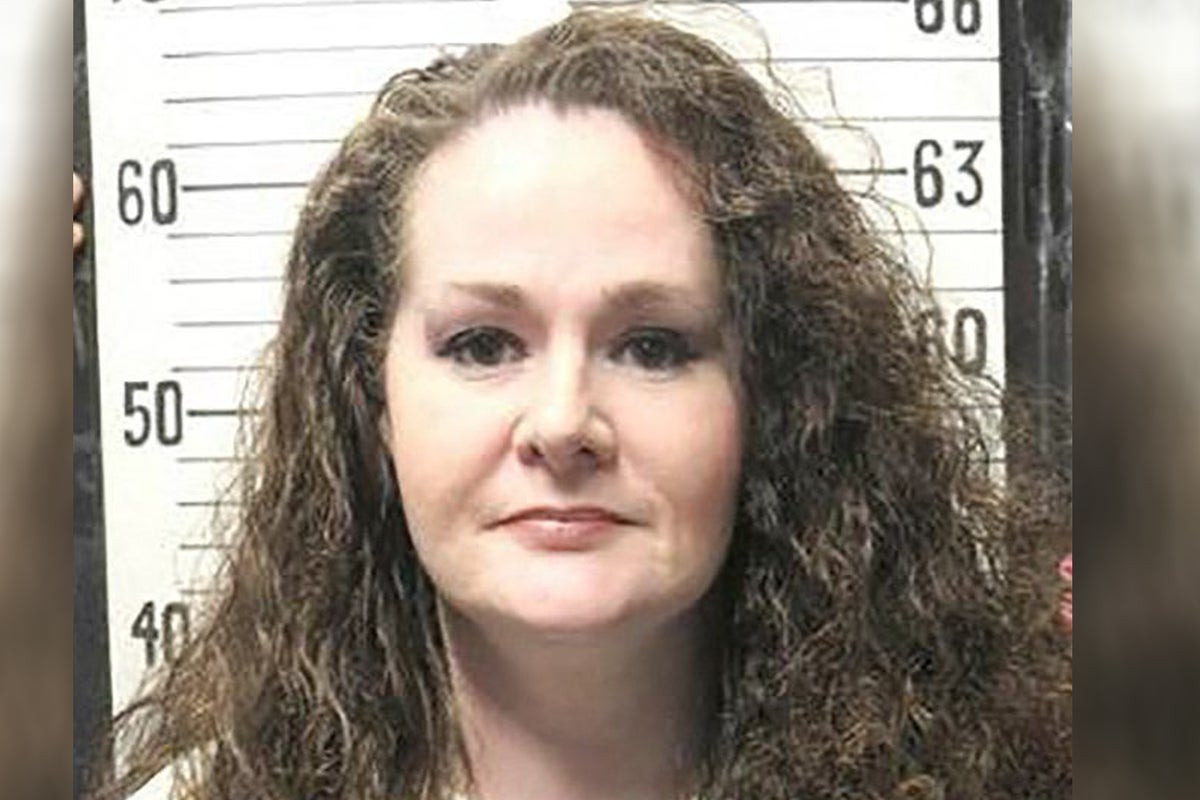
Questions surrounding Tennessee’s administration of capital punishment have resurfaced following the botched execution of Christa Pike, marking the second time since 2022 that the state has suspended the death penalty despite accounting for only a small minority of executions across the United States.
Her legal team reported on Friday that the 50-year-old was left unconscious and hooked to a ventilator in a facility near Nashville. They stated that staff in the death chamber pricked her with needles at least seven times before administering two doses of lethal chemicals, leaving her hospitalised with severe burns and blisters on her arms.
The aborted procedure represents Tennessee's second flawed execution attempt within a four-month span. Figures compiled by the Death Penalty Information Center show that the state has conducted merely four of the more than 140 capital punishments carried out across the nation since 2022.
Following the failed attempt on Pike’s life, Republican Gov. Bill Lee called a halt to all executions statewide and commissioned an external inquiry to determine what went wrong, as demands for reform emerged from both opponents and proponents of capital punishment.
"Number one, I think we need to get better people that are doing these executions because I don’t know that they’re trained well enough to be doing this on difficult patients," stated Republican state Sen. Joey Hensley, a family physician who noted his suspicion that the intravenous line was improperly set.
In an emergency court submission filed on Friday, lawyers representing Pike explained that she suffered severe blistering across her arms days after the attempt, caused by the corrosive, bleach-like nature of the two pentobarbital doses administered to her body.
The legal team expressed their belief that faulty IV placement caused the pentobarbital to flow directly into her body tissue rather than entering her bloodstream properly.
"Apparently at no point did any member of the execution team realize that the IV lines were not correctly placed or that the veins had blown and that the pentobarbital was, in whole or in part, entering Ms. Pike’s body," they detailed in court documents.
The filing added that rather than "remedying this failure", correctional authorities simply prepared and delivered a secondary set of syringes filled with pentobarbital.
Tennessee has previously faced intense criticism over its execution procedures.
Earlier in the year, officials abandoned the planned execution of Tony Carruthers when medical staff managed to secure an IV in his right arm but failed to establish a secondary access point, despite trying locations on his other arm, hand, foot, and ultimately failing to secure a central line.
Lee instructed state authorities to wait at least a year before making any further attempt to execute Carruthers.
Four years prior, the governor initiated an independent review into capital punishment after halting Oscar Smith's execution at the last minute in April 2022 when drug testing errors came to light. Lee subsequently suspended all executions a week later, admitting the state had not ensured proper testing of its lethal drug supply.
Published in late December 2022, the commissioned review revealed that the state had consistently failed to follow its established capital punishment protocols since their revision in 2018.
During that period, Tennessee executed seven prisoners — two using lethal injections and five via the electric chair. The findings noted that in none of those instances, nor in the aborted Smith execution, had the pharmacy performed mandatory endotoxin tests, while the potency of midazolam went untested in one injection.
At that point, the state relied on a three-drug regimen comprising midazolam, vecuronium bromide, and potassium chloride, before later transitioning to single-dose pentobarbital injections.
Authored by former US Attorney Ed Stanton, the report also exposed that the state's unnamed primary executioner lacked formal healthcare qualifications, relying primarily on informal training while on the job.
In the wake of those findings, the Tennessee Department of Correction dismissed its chief legal counsel alongside another staff member.
Steve Ferrell, an attorney representing Pike, expressed doubt regarding any reform since those admissions, remarking that the review merely led to "a less detailed protocol and more secrecy."
According to Corinna Lain, a law professor at the University of Richmond who has authored a book on lethal injections, it is common for execution personnel to possess minimal medical training.
Lain explained that lethal injection gained widespread adoption because it appears less gruesome, concealing the inherent violence of state executions. However, she stressed that significant risks remain even when guidelines are followed—a point raised by numerous attorneys in lawsuits asserting the method violates constitutional protections.
Across the nation, Lain identified only roughly ten licensed medical physicians willing to assist authorities with executions. Practitioners she interviewed explained that participating directly contradicts their fundamental oath to care for human life.
Capital punishment remains heavily veiled in secrecy across many jurisdictions, where the identities of executioners, drug sourcing mechanisms, and sometimes even the events inside the execution chamber are kept strictly confidential from public view.
"Tennessee has botched executions so badly that two people this year have survived their own executions," Lain said. "That’s quite something."
Nevertheless, legal scholars including Jordan Steiker, co-director of the Capital Punishment Center at the University of Texas, anticipate that lethal injection will remain an option for states retaining the death penalty.
Steiker attributed this persistence largely to the judiciary's lenient stance toward state execution procedures, which has consistently granted authorities wide latitude to proceed with capital punishment.
"I think it gives states confidence that even if they take shortcuts, it’s unlikely that the courts will intervene in their ability to carry out executions," Steiker said.